ICC Warrant of Arrest in Tagalog
Ang pinal na hatol ng Kamara: Mandato ng Pag-aresto laban kay Duterte para sa crimes against humanity – murder bilang indirect co-perpetrator.

Former President Rodrigo Duterte’s bloody “war on drugs” has killed more than 30,000 individuals. Many of the victims were small-time drug peddlers or drug users. Some were not using illegal drugs at all.
Duterte’s campaign failed to eliminate the proliferation of illegal drugs. Under the administration of Ferdinand Marcos Jr., drug-related killings have continued.
Here are the stories of the families who were left behind by the victims of Duterte’s campaign against illegal drugs. Bulatlat continues to follow their stories until Duterte is charged with crimes against humanity before the International Criminal Court.
Ang pinal na hatol ng Kamara: Mandato ng Pag-aresto laban kay Duterte para sa crimes against humanity – murder bilang indirect co-perpetrator.

The posts you requested could not be found. Try changing your module settings or create some new posts.

“Online bashers have clearly demonstrated the continuing threat of a Duterte ‘hate’ network to families-victims as well as to witnesses of drug war killings."

Activists demand accountability for Duterte's war on drugs, calling for conviction and justice for victims of extrajudicial killings.

UN Special Rapporteur Mary Lawlor and Amnesty International Secretary General Agnes Callamard have emphasized the importance of this moment for the victims of Duterte's controversial "war on drugs," calling for further accountability and legal action. As Duterte prepares for his initial hearing on March 14, the international community has urged continued efforts to address ongoing human rights violations in the Philippines.

The National Democratic Front of the Philippines International Office said that Duterte’s crimes are beyond his so-called “war on drugs,” pointing out that his government carried out systematic killings of its peace consultants, aerial bombings of civilian communities, and the torture and execution of captured Red fighters (hors de combat). These, they added, are all in blatant disregard of the laws of war.

“With Duterte's invocation of his role as lawyer and prosecutor as some kind of authority in his recent testimony at the hearings at the House of Representatives and the Senate, we believe it is time for victims of human rights violations to speak up."

Liezel Asuncion, widow of slain labor leader Emmanuel “Ka Manny” Asuncion, recounted the harrowing events of that day, detailing how the police raided their home and shot her husband. "They claimed my husband fought back, but I was there—I saw what really happened," she said. Asuncion highlighted the use of defective search warrants and fabricated charges that have plagued similar cases against activists.

Jerrie Abella, an AI campaigner, detailed the three critical stages where human rights violations occur: during arrests, within drug detention centers, and post-release. Abella described so-called "drug rehabilitation centers" as punitive detention facilities where individuals, including adolescents, are subjected to invasive drug tests and forced treatment. These centers, he said, do not offer rehabilitation but instead serve as sites of coercion.

"Ignoring this reality would be counterproductive and will only prolong the entire process and open it to manipulation by the Duterte camp, besides prolonging the agony of the families of victims who have long been seeking justice for their loved ones,” Cristina Palabay said in a statement.

Rosenda Lemita and Liezel Asuncion filed a case at the United Nations Human Rights Committee against the murder of their loved ones. The decision to file a case was not made lightly – it took three years of delays and disappointment from the justice system to push them to seek an international avenue.

“We’re ready to testify before the QuadComm as victims of extrajudicial killings,” Rosenda Lemita said, stressing that they want Duterte and those responsible to face investigation. For these families, the government’s “nanlaban” excuse is not just for the drug war but also for silencing activists.

Former Bayan Muna Representative Neri Colmenares, who has represented the families of drug war victims and a counsel of complainants before the International Criminal Court (ICC), said that the testimony of Duterte exposes the narrative of “nanlaban” as false, rendering the police’s claim of self-defense obsolete.

“The victims, families, have to rely on their own resources. They did not receive any sort of help from the government, especially from the police,” said Ephraim Cortez, president of National Union of Peoples’ Lawyers (NUPL).

The group said that Duterte is not only responsible for the thousands of drug-related killings but also for the summary execution of 422 political activists and the frustrated extrajudicial killing of 544 others.

“The police went on a killing spree because the commander-in-chief was rewarding those who were carrying out the notorious ‘death squad’ template in Davao.”

The two dynasties are competing against their track records in terms of corruption, human rights violations and subservience to foreign masters.
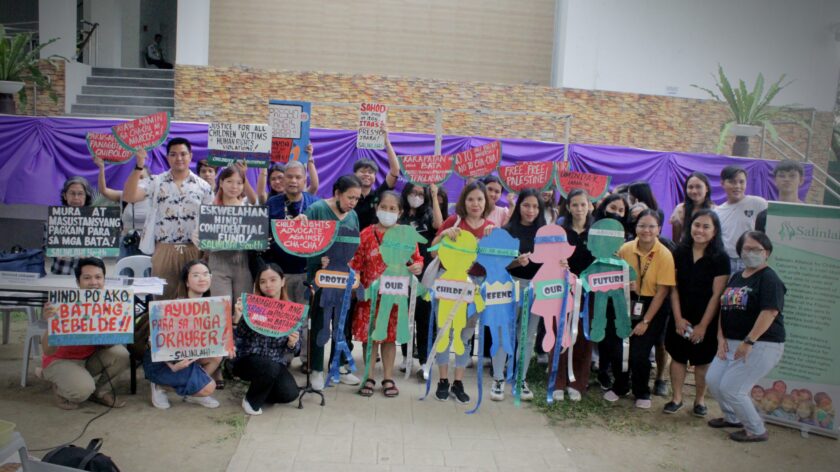
In the first six months of the Marcos Jr administration, the Children’s Legal Rights and Development Center documented 12 children killed. In 2023, 20 children died in Caloocan and Manila alone.