Swastikapayapaan
Ano ang kapayapaan para sa makapangyarihan?

ADVERTISEMENT


The Gospel reading for today presents a powerful message of the “rejected stone becoming the cornerstone.” This message resonates deeply with the struggle for human rights in the Philippines, as it highlights the rejection of marginalized and oppressed individuals and groups, who, like the stone, are striving to claim their rightful place in society.

At two world institutions, the United Nations and the Vatican, despite obstacles, momentous changes are on the way: changes that would ensure women equal rights with men to be elected heads of their policy-making and executive bodies.


In 2021, the Philippine Statistic Authority estimates that about 1.83 million OFWs worked abroad from April to September of the same year. The same data reveal that about “four in every ten” OFWs work low-status or ‘elementary’ jobs, such as street vendors, construction and factory workers, cleaners, domestic helpers, and agriculture laborers. They are the hired workers, doing the 3Ds works, (dirty, dangerous, and demeaning). It was recorded that the majority of OFWs work in Asia, specifically Saudi Arabia, United Arab Emirates, Hong Kong, Kuwait, Singapore, and Qatar.

The 51st Martial Law commemoration protest in Liwasang Bonifacio in Manila on Thursday was a deeply moving experience that went beyond my duties as an intern at Bulatlat.

What we witnessed is the bravery of two environmental defenders in the face of outright repression.

Following Marcos Jr.’s approval of the National Security Policy (NSP) 2023-2028 on Aug. 12, progressive people’s organizations and the human rights community are increasingly protesting the continued threats, including red-tagging, vilification and actual attacks on the country’s human rights defenders and activists.

This Sunday’s readings are focused on three issues: first, on authority (Is 22:19-23), second, on knowledge of God (Rom 11:33-3), third, on the identity of Jesus (Mt 16:13-20). At first glance, they seem to be unrelated to one another, but on deep examination, they are really pointing to a single direction. And that is, the way to our salvation. The mission of Jesus as leading us the WAY, seeking out the TRUTH and urging us to aspire for what is truly LIFE-GIVING. These three related important values in life fully capture this salvation framework.

Jail, after all, is not exempt from society’s great divide based on economic and social status. And even here, the movement for freedom and democracy considers our situation as part of the struggle.

Our gospel reading today made me recall one of the gymnastic events in the Olympics called pommel horse. This is a sport that requires balance, strength, flexibility, agility, coordination, and endurance. One of the top athletes of this sport is Krisztián Berki of Hungary.
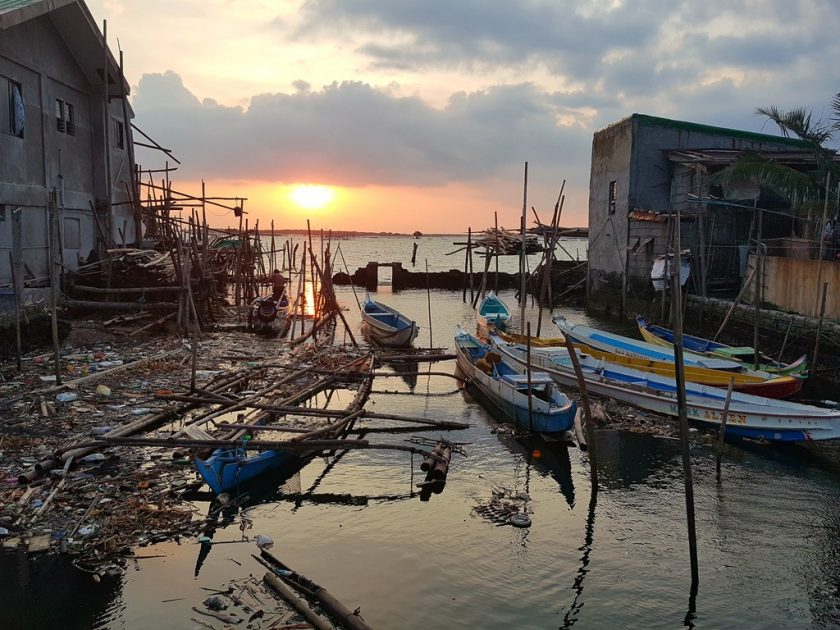
For many years, scientists and environmental advocates have cautioned the government against approving more proposals for land reclamation and coastal development projects in Manila Bay. The historic bay, they emphasize, is unsuitable for such projects because of the risks posed by floods, intensified typhoon-induced storm surges and other related consequences.

Science and development should consider the actual conditions experienced on the ground and prioritize projects that genuinely benefit communities. The situation in Baseco is not an isolated incident but rather a problem prevalent in various parts of the country.

And perhaps, each generation is just defined by vastly different things that represent particular socio-political, cultural, and technological moments.

Resurrection is revealed through the transfiguration moment of Jesus. The historical figures of Moses and Elijah appeared – reminding and reconnecting the disciples about the historic role of Moses and Elijah in Israel’s life. The glorious image of the two is a historical reminder of their great roles in the history of Israel. Jesus was talking to the great men of Israel, and likewise, the disciples saw his glory.
A people’s counter-SONA protest action, noticeably broader and bigger than that of the previous year, presaged bigger and broader protests during Marcos Jr’s second year in Malacañang.

For many Filipino migrant workers abroad, advancements in technology have been able to provide comfort as they navigate the long and painful separation from their children, spouses, and parents back in the Philippines. They can check if their children have done their homework, watch their graduation ceremony live, virtually join a family reunion or birthday celebration, or share a prayer with their ailing mother or father. Smartphones, the internet and social media have become essential tools in their lives as migrants. For most Filipino migrants, visits back to their home provinces are expensive, and these are not even possible for many undocumented OFWs.

Marginalized populations, such as those without official identification documents or those who cannot pay to register, may be disproportionately affected by SIM registration requirements. This may result in their exclusion from necessary communication services and further marginalized groups that are already at risk.
A community of readers and supporters that help us sustain our operations through microdonations for as low as $1.
 Save as PDF