
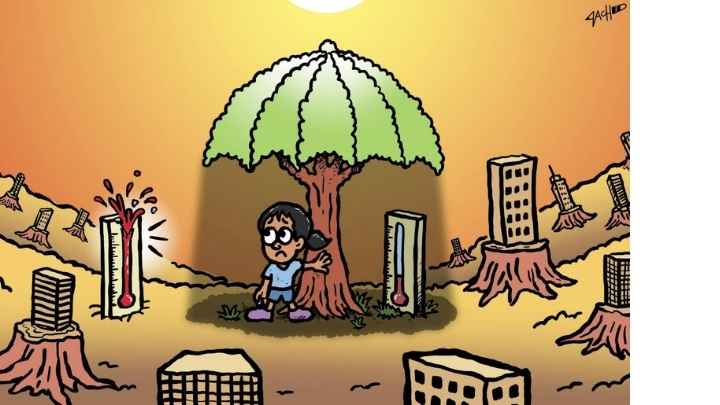
Except for a few small zones, for instance, the whole country has been stripped of its forests due to unmitigated logging and mining operations that, for several decades, have only benefited a few families and transnational corporations. Foreign-funded dams that were built purportedly to provide power for industries and irrigation for large farm estates now disgorge flashfloods that submerge whole provinces and ruin their economies.
The Mining Act of 1995, which the Arroyo government implemented last year in full swing, will subject 13 million hectares or 45 percent of the country’s land area to mining exploration and extraction. Justified by Mrs. Arroyo as urgent in order to address the government’s fiscal crisis, the Act will result in the large-scale displacement of communities and in the destruction of lands, deforestation and the flattening of mountains, erosions, siltations, desertification, pollution of rivers and marine life, and other ecological damages. In areas where new mining operations have started, disaster incidents have taken place including the spread of toxic pollutants and flashfloods.
Definitely, something is wrong when government economic programs are crafted principally to address the fiscal crisis and debt servicing regardless of their grim effects on people and their livelihood. State policies are aligned to international credit institutions’ impositions and preferences for extractive production and commercial exportation while prying the domestic market wider for cheap imports at the expense of the country’s farmers and other small producers. All these contribute to the further marginalization of the people and, consequently, to their exposure to disasters.
There are so-called “safety nets” that claim to minimize the adverse effects of corporate greed, development and infrastructure projects but the series of moratoriums on logging and mining, environment impact assessments, sustainable resource management, building codes, transportation safety measures and, not to forget, billboard advertising codes are followed more in breach.
“Development aggression” and “globalization,” based on UNDP and World Bank reports, has only aggravated the country’s poverty and widened the income gaps between the poor and rich. What these reports forget, however, is the destruction to the livelihood, property, lands and water resources, nay, the future of generations of Filipinos that such policies and laws have wrought making the nation’s poor in worse shape and unable to shield themselves anymore from natural and man-made disasters. “Development aggression” and “globalization” have contributed to the destruction of the country’s ecosystem (considered one of the richest in the world), traditional protective barriers and once self-sustaining economies that used to enable the people to withstand even the most destructive calamities. Today, they spread horror, despair and hopelessness to high-risk communities across the country. Posted by Bulatlat
 Save as PDF




0 Comments