
The development in China in the past 26 years clearly shows that the lofty goals set in the beginning of the Reform have not been accomplished. However, I would like to reiterate that the choices the Chinese authorities had after they had made the decision to develop capitalism were rather limited. I think we can certainly speculate that if Chinese decision makers followed a different set of policies or had avoided certain mistakes, the outcome might have been different than what they are now. However, the difference would only be a matter of degree –not fundamental. In other words, within today’s world capitalist system, any developing country, that wants to develop a capitalist economy has to fill its role in the world capitalist system as it is dictated by global monopoly capital. Hundreds of billions of dollars have poured into China, because China has provided investors with cheap skilled and unskilled labor, lax environment regulations, favorable tax laws, and a potential market. The cooperation of those in power in China and international monopoly capital has been based on their mutual interests. Their cooperation has enabled multinationals to accumulate capital and high ranked Chinese officials to accumulate wealth, while leaving tens of millions of Chinese people behind.
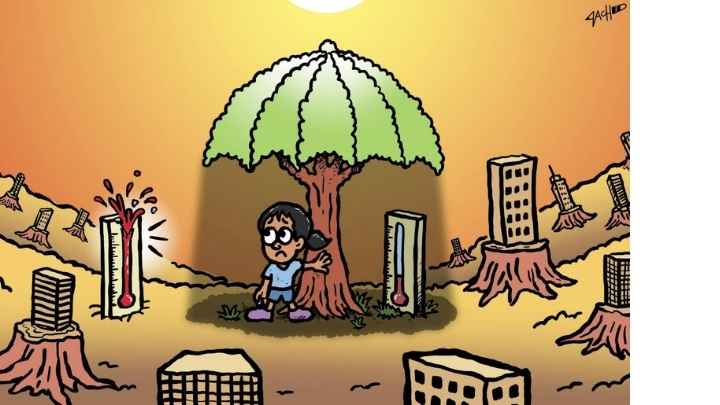
Marx said that capital has to continue destroying the productive forces in order to keep capital accumulation going. History has proved him right: witness the total destruction of productive forces during the Great Depression and subsequently the continuing destruction of productive forces during each economic crisis. In a world of imperialism, however, and especially in the last 30 years as the crisis of capitalism has deepened, the speed of this destruction has accelerated, as international monopoly capital spread its excess productive forces all over the world. When more surplus capital is again generated from these investments, capital again needs other places to expand. Consequently the useful life of these productive forces has become shorter, and they have to be destroyed at faster and faster rate to accommodate the need for the capital expansion. In the process of doing so, vast amounts of natural resources are wasted, because these productive facilities, which were excess to begin with, have to be destroyed in a hurry, as crisis is occurring at shorter intervals. In the process of building and phasing out productive facilities, global monopoly capital makes it profits. However, in the same process, all the activities in the once booming factory towns, special exporting zones and seaports cease to exist as the capital moves on to other locations. Developing countries are thus left with less natural resources (for example, over-harvested forests, exhausted water supply, and dwindling oil reserves) and large quantities of industrial waste. When clean products are exported, the pollutants from producing these products and the unused productive facilities are left behind causing irreversible damages to the environment.
This essay showed that China’s capitalist Reform has created serious internal imbalances in the Chinese economy and between it and the rest of the world. These imbalances are not avoidable, when a less developed country adopts capitalism in today’s world economy dominated by monopoly capital. China’s fast GDP growth has depleted its natural resources and damaged its environment, thus will make long-term development in the future much more difficult. Workers and peasants in China have suffered even during the years of high GDP growth. When these imbalances eventually lead to an economic crisis, their suffering will grow worse. Even the fortunes of the “middle class”, 15% to 20% of the total population, will fall. Therefore, the rapidly growing protests to plant closings, land grabbing, wage and benefit cuts, and corrupt and abusive government officials can only intensify. Posted by Bulatlat
__________________________________________
References
Chinese
Bai, Jing-fu, “The Main Contradiction of Our Country’s Economic Growth during the
11th Five-year Plan, “ http://theory.people.com.cn
China’s Industrial Development Report, 2003, Chinese Academy of Social Science,
School of Industry and Economics Study, Economic Management Publisher, 2003
Han, De-qiang, Peng Chuang (Collision), Beijing, Economic Management Publisher,2001
Li Xiao-yun, Zuo Ting, and Ye Jing-zhong, ed., 2003-2004 Status of Rural China, Social Science Literature Publisher, 2004
Lu, Xue-yi, The study of the Three Related Agricultural Problems – Agriculture, Rural Villages, and the Peasants, Social Science Literature Publisher, 2002
Sun, Jing, Chinese Peasants and China’s Modernization, National Editing and Translating Publishing Co., 2004
Tan Shu-kui, Gengdi Liaohuang (The Study of Land Abandonment), Science Publisher, 2004
Yi, Hui-min, The Warning of Yellow River, Yellow River Utilization Publisher, 1999
You, xuan, ” Inquiring Into the Strategy of Our Country’s Coal Reserves.” Jing Ji Lun Tan (Economic Forum), July, 2005, 11-13
English
Brown, Lester, China’s Shrinking Grain Harvest, The Globalist, March 12, 2004
Eckstein, Alexander, “The Chinese Development Model,” in Chinese Economy Post-Mao,
A Compendium of Papers submitted to the Joint Economic Committee, Congress
of the United States, Vol.1. Policy and Performance, U.S. Government Printing
Office, 1978, 80-114
Groen, Henry J., and James A. Kilpatrick, “China’s Agricultural Production,” in Chinese
Economy Post-Mao, A Compendium of Papers submitted to the Joint Economic
Committee, Congress of the United States, Vol.1: Policy and Performance, U.S. Government Printing Office, 1978, 606-651
Hu, An-gang, “China’s Employment Problems: Analysis and Solutions”, World Economy and China, Number 1, 2001
Hsu, D. Y. and P. Y. Ching, “Labor Reform: Mao vs. Liu-Deng,” in Mao Zedong ThoughtLives, Vol. I, Center for Social Studies & New Road Publications, 1995, p. 190
Hsu, D. Y. and P. Y. Ching, “The Worker-Peasant Alliance as a Strategy for Rural Development in China,” Monthly Review, March 1991, 27- 43
Lardy, Nicholas R., Integrating China Into the Global Economy, Brookings Institution Press, 2002
Monique Morrissey and Dean Baker, “When Rivers Flow Upstream: International
Capital Movements in the Era of Globalization,” Center for Economic and Policy
Research http://www.cepr.net/pages/publications_2003.htm
Rawski, Thomas G. Economic Growth and Employment in China, Cambridge University
Press, 1979
Wu, Harry, Reform in Chinese Agriculture – Trade Implications, Briefing Paper Series,
no. 9, Department of Foreign Affairs and Trade, Australia, December, 1997
————————————-
[1] There have been some disputes on China’s actual rates of growth. Some suggested that China’s growth rates were inflated and should be adjusted downward. See Lardy, 2002, 11.
[2] These basic rights are daming, dafang (freedom to speak openly), dabian lun (freedom to debate openly and dazibao, freedom to put up big character posters.
[3] See point 4 in section II.
[4] See point 5 in section II.
[5] Individual state owned enterprises before the reform were not responsible for their profits or losses, because the state set the prices for their output and their input. These enterprises handed in their profits to the state and received state subsidies if their revenues did not cover their expenses. The state owned enterprises received wage funds from the state to pay for wages and they had no right to lay off workers. The state distributed funds to these enterprises for new investment according to the economic plans. These state owned enterprises were not operating for profits and their performances were not judged by their profits or losses.
[6] On May 10, 1984, the State Council issued a temporary regulation on the expansion of autonomy to individual state enterprises.
[7] The Research Center belongs to a State Council Committee. This Committee supervises and manages State assets.
[8] This does not mean that China’s top government officials have reached a consensus on the issue of how to assess the development of the past 26 years, but there have been some serious concerns voiced in the medias.
[9] MSNBC.com, updated: 7:28 a.m. ET October 31, 2005
[10] China’s total foreign debt, which is capital import, is about $100 billion
[11] Monique Morrissey and Dean Baker, “When Rivers Flow Upstream: International Capital Movements in the Era of Globalization,” Center for Economic and Policy Research
http://www.cepr.net/pages/publications_2003.htm
[12] MSNBC.com, updated: 7:28 a.m. ET October 31, 2005
[13] This was total exports not net export.
[14] According to Bai, China’s per capita GDP has reached $1,000, and for countries of this lever of per capita GDP, personal consumption averages 60% of GDP, but China’s personal consumption was only 43.4% of GDP in 2003. (See Bai’s point 2)
[15] the tallest tower is in Kuala Lumpur.
[16] Two examples of these airports are Hu-yang airport in Anhui that was never used and Mian-yang airport in Sichuan built that has not been fully utilized. The cost of each was in the hundreds of millions of RMB.
[17] Parents paid for the food their children ate at daycare.
[18] For example, in order to encourage the modernization of agriculture, prices of agricultural machinery and equipment were set low, so more production brigades and communes could afford to buy them.
[19] The health insurance only pays a limited number of treatments. Much of the medical cost still has to come out of the workers’ pocket.
[20] The out of pocket expenses for medical treatment were extremely low. Students only paid for their own notebooks, pencils, etc.
[21] Total grain production includes wheat, rice, and corn.
[22] Brown explained the reasons for the decrease: “Several trends are converging to reduce the grain area, including the loss of irrigation water, desert expansion, the conversion of cropland to non-farm uses, the shift to higher-value crops and a decline in double-cropping.” To show the significance of the 70 million ton decrease in grain production between 1998 and 2003, he said that it was more than the total yearly grain harvest of Canada. (Brown, March 12, 2004)
[23] It should be noted that in addition to the barefoot doctors where were only trained to take care of the most common illness, there were also highly trained physicians and specialists who were trained to take care of other diseases and serious conditions.
[24] David Blumenthal, who coauthored an article in the New England Journal of Medicine, agreed with the conclusion reached by the think tank. (Detroit Free Press, October 5, 2005)
[25] It is a form of welfare relief – a small cash payment to help the extreme poor. The amount is about 130 RMB for city and town residents. The amount is unknown for rural residents.
[26] Nationally, 900,000 people have been infected by the disease and an estimated 30 million are no at risk. (New York Times, February 23, 2005)
[27] China Labor Bulletin cited one such firm, American Xtal Corporation (AXT), which in 2000-2002 was discovered by California health officials for exposing its workers to extremely high levels of toxins. AXT closed down its California operation and relocated to China in 2004. “The Plight of china’s E-Waste Workers, China Labor Bulletin, April 15, 2005.
[28] Many major electronic firms in Taiwan moved their production to Pearl River Delta in the 1990s and more Taiwanese electronic firms moved to Kun-shan in the past four years. All these Taiwanese firms are contractor to produce computer and computer components for large American corporations.
[29] Since the total consumption was only 43.4% of the total GDP and we could assume the highest 20% income group would save more than the lowest 89% group. It is reasonably to assume that the lower 80% of Chinese people consumed 25% of GDP, or more than half of the 43.4%.
[30] China View, September 6, 2005, www.chinaview.cn
[31] One of these liberal economists is Nicholas R. Lardy of the Brooking Institute in Washington, DC.
[32] The authority in China claimed that only persons were shot dead by the police.
[33] The World Bank has said that China is in an environmental crisis and it is costing an estimated 8% to 12% of China’s total production. (Bai’s point 5)
 Save as PDF






0 Comments