
Terrorism defined
The United Nations has not yet agreed on a common definition of terrorism. But it has an “academic consensus definition” written by terrorism expert Prof. Alex P. Schmid. It reads, “Terrorism is an anxiety-inspiring method of repeated violent action, employed by (semi-) clandestine individual, group or state actors, for idiosyncratic, criminal or political reasons, whereby — in contrast to assassination — the direct targets of violence are not the main targets. The immediate human victims of violence are generally chosen randomly (targets of opportunity) or selectively (representative or symbolic targets) from a target population, and serve as message generators. Threat- and violence-based communication processes between terrorist (organization), (imperiled) victims, and main targets are used to manipulate the main target (audience(s)), turning it into a target of terror, a target of demands, or a target of attention, depending on whether intimidation, coercion, or propaganda is primarily sought.”
In bombings, the victims are chosen randomly. It is done either in crowded places for maximum impact or in isolated places if the intent was merely to create fear without hurting anybody.
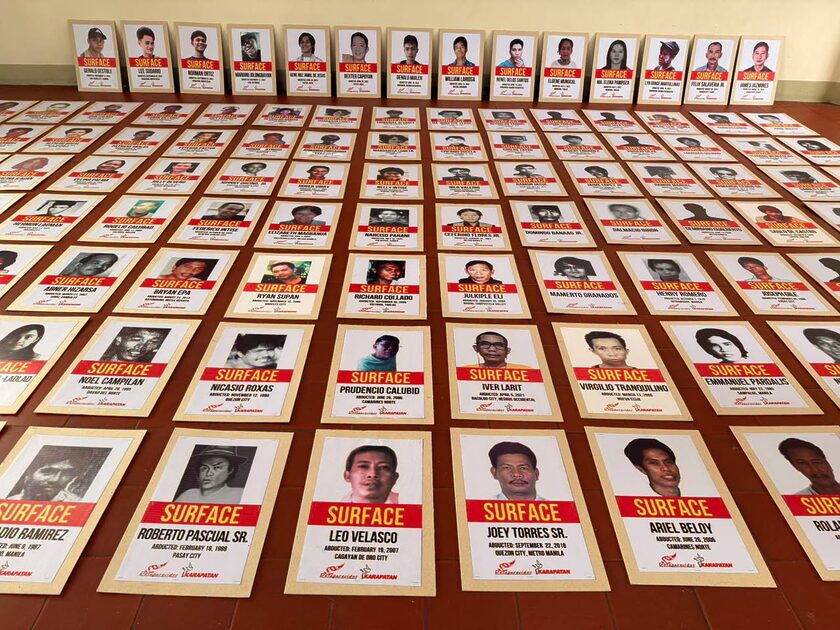
Considering this definition, do political killings not constitute acts of terrorism? Political killings are currently being done within the context of counter-insurgency operations. Counter-insurgency operations are supposedly directed against the CPP, NPA, and the National Democratic Front of the Philippines (NDFP). But the targets of political killings are members of legal organizations and the most articulate critics of the regime. The intent is to sow fear among the populace.
Extra-judicial executions of suspected members of the CPP-NPA-NDFP are wrong and are violations of international humanitarian law.
Political killings of unarmed civilians, especially in the scale being done now, already constitute terrorism. Add to this the militarization of the countrysides; the illegal house-to-house searches; the manhandling of ordinary folk for the slightest reason such as failure to produce cedulas (community tax certificates); the threats to local officials who complain of abuses by soldiers, the public labeling of legal organizations as “enemies of the state; and the filing of cases based on trumped-up charges and fabricated witnesses and these constitute state terrorism.
Imagine what the Arroyo government will do if it is granted the powers it is seeking under the proposed ATB. It will not only act with impunity, it will even be able to legally justify its violations of human rights and international humanitarian law under the pretext of combating terrorism. And given the legal mandate, it can broaden its repressive and violent acts to victimize not only left-leaning organizations and personalities but also all those opposing its continued claim to power, its policies and its programs.
Confronting terror
The Arroyo government does not need more powers to confront terrorism, it needs less of it. On the other hand, the Filipino people must not surrender their rights to confront terrorism, it needs more of it.
Dictatorship and the concomitant intensification of oppression, repression, and exploitation is the breeding ground of terrorism, both of the official and unofficial kind. Political killings and other forms of state terror can only thrive for as long as the people are paralyzed with fear or apathy.
Greater democracy is the best antidote to terrorism, both of the official and unofficial kind.
It has been said that public awareness and vigilance is the only way to confront the terror threat. This applies to bombings and more so to state terrorism. Only an aware and vigilant people militantly asserting their rights can effectively confront and subdue terrorism, especially of the state-sponsored kind. Bulatlat
 Save as PDF


0 Comments