
Last of three parts
Part 1: From unbridled globalization to controlling supply chains
Part 2: Unprecedented deepening of US military intervention
With U.S. patronage, the Philippines wants to transition from a buyer of foreign military hardware into a manufacturer of its own defense capabilities, as outlined in the country’s Self-Reliant Defense Posture (SRD) Revitalization Act of 2024. In March 2025, the two countries signed the Joint Vision Statement on US-Philippines Defense Industrial Cooperation, which identified priority areas for cooperation, including the production and logistics for unmanned systems; production, storage, and logistics for ammunition and energetics; maintenance and repair of ships and aircraft; production of system components and spare parts; logistics support; and refining of critical minerals.
But instead of fostering self-reliance, the joint vision will merely integrate the Philippine defense sector, as a neocolony, into the colonial master’s defense-industrial base. So-called defense industrial cooperation with U.S. imperialism will only bind the country more tightly to the U.S. war industry’s supply chain and U.S. strategic priorities, but it does not guarantee technology transfer, long-term modernization, or self-reliance.
This integration is actually underway through major ongoing and planned imperialist projects in the Philippines touted as “development initiatives” to attract investment, modernize infrastructure, and supposedly advance national industrialization. The Luzon Economic Corridor (LEC) and the proposed Economic Security Zone (ESZ) under the U.S.-initiated Pax Silica schemes are providing infrastructure for the U.S. defense industrial base, reinforcing the U.S. military presence in the country, and creating massive profit opportunities for Pentagon contractors and other American corporations.
The LEC, launched in April 2024, is a product of the trilateral development initiative of US imperialism, its junior imperialist partner in Asia, Japan, and its neocolony, the Philippines. It is part of the Partnership for Global Infrastructure and Investment (PGII), a project of the Group of Seven (G7), the traditional centers of imperialism (US, Japan, Germany, UK, France, Italy, and Canada), to counter China’s Belt and Road Initiative (BRI) in the imperialist competition to control and plunder the world’s resources and for spheres of influence.
The LEC involves major investments from various US agencies such as the US Trade and Development Agency (USTDA) and the State Department, as well as American private equity firms and U.S. defense contractors working in collaboration with local bourgeois compradors such as Ramon Ang, Manny V. Pangilinan, and the Aboitiz group. It involves big-ticket projects that aim to supercharge the connectivity and industrial integration of the country’s four major economic hubs—Subic, Clark, Manila, and Batangas.
The projects being advanced under the LEC are concentrated in areas already characterized by a substantial U.S. military presence, including EDCA sites, military exercises, maritime exercises, warship docking, and aircraft landing sites. The location and dual-use nature of these projects suggest that their purpose extends beyond economic development to strengthening the strategic infrastructure needed to support U.S. military presence and power projection in the region.
Across the energy sector, for instance, the LEC includes U.S.-backed civilian nuclear cooperation under the U.S.-Philippines 123 Agreement, hydropower development, and the construction of fuel storage facilities and a 72-kilometer pipeline linking Subic to Basa Air Base, an installation with clear military significance. In transport and logistics, major investments in railways, ports, airports, and cold-chain facilities are designed to improve the rapid movement of goods, equipment, and personnel. At the same time, digital infrastructure projects, including submarine fiber-optic cables, nationwide fiber networks, 5G expansion, and Open RAN technologies, are creating the communications backbone required for advanced logistics, data centers, and dual-use civilian-military operations.
The LEC’s advanced manufacturing projects further reinforce this strategic orientation. The Agila Subic Multi-use Facility, owned by US private equity firm Cerberus Capital, has evolved into a logistics and maintenance hub supporting the Philippine Navy, U.S. defense contractor V2X, and a large US-leased warehouse complex. Together with Hyundai Heavy Industries’ role in the Make American Shipbuilding Great Again (MASGA) defense-industrial and trade initiative and the Cerberus Maritime partnership, the Subic shipyard is being modernized into a strategic naval-industrial hub capable of manufacturing or servicing U.S. and allied warships. Meanwhile, the expansion of Collins Aerospace, part of RTX Corporation (formerly Raytheon Technologies), one of the largest US defense contractors, further integrates the Philippines into American defense supply chains. Taken together, these projects indicate that the LEC is not merely an economic corridor but also a platform for deepening US strategic, logistical, and industrial capabilities in the Philippines as part of its broader geopolitical competition in the region.
LEC’s strategic importance to the US imperialist agenda is underscored by the US International Development Finance Corporation (DFC)’s establishment of a regional office in Manila in 2025, serving as a hub to monitor and mobilize private-sector investments for the LEC. The DFC is a U.S. government development finance institution that provides businesses with financing, political risk insurance, and equity investments to spur private capital for major projects in other countries that further the US national security or strategic economic competitiveness.
Pax Silica and Economic Security Zone: Plunder for US wars
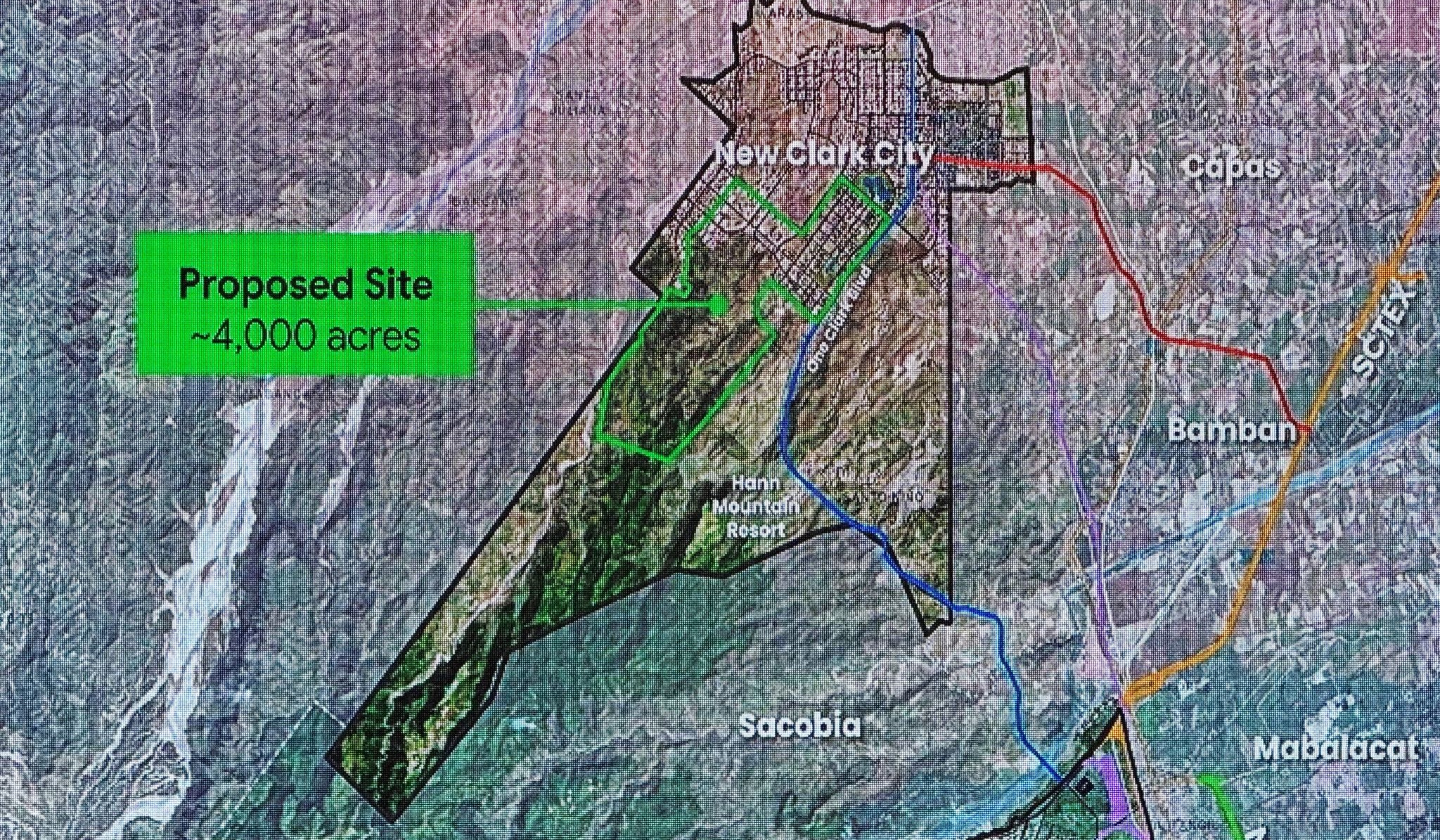
Further bolstering the strategic role of LEC in US imperialism’s scheme in the region is the 1,600-hectare Economic Security Zone (ESZ), announced in April this year, which the U.S. and the Philippines plan to build in the corridor’s New Clark City under the Pax Silica initiative. The Pax Silica is a U.S. project to bring together its allies and challenge China’s control over the global AI supply chains—from critical minerals mining, refining, and processing to semiconductor production to advanced software applications and platforms. For U.S. imperialism, AI, its computational power, and the minerals that feed it are to the 21st century what oil and steel were to the 20th century. Control over AI will determine an imperialist power’s industrial and military supremacy.
The ESZ is being described as “the first of its kind” and a “new model for AI-native investment acceleration hubs being developed under the Pax Silica Initiative.” It is designed to be a customized (“purpose-built”) manufacturing hub for U.S. allied countries. It means that what is actually built within the ESZ will depend on what the U.S. and the Pax Silica nations need. And what they need from the Philippines are its critical mineral resources that will be mined throughout the country and processed in the ESZ. The Philippines is exceptionally rich in critical minerals such as nickel (the world’s second-largest producer and fourth-largest reserves), cobalt (fluctuates between fourth and seventh-largest producer globally), and copper (holds massive underdeveloped deposits), all of which are highly vital for the modern high-tech and semiconductor supply chains that the US wants to control through Pax Silica.
In other words, beyond the 1,600-hectare industrial hub in New Clark City, U.S. imperialism intends to plunder tens of thousands of hectares more across the archipelago to supply these critical minerals, and potentially even rare earth elements, to the ESZ and its AI supply chains. Prior to joining Pax Silica and announcing plans to establish the ESZ, the Philippines signed a Critical Minerals Memorandum of Understanding with the U.S. that seeks to integrate the country’s mineral resources into supply chains controlled by the US and its allies.
Aside from critical minerals processing and refinement, the ESZ could potentially host high-tech manufacturers from the U.S. and allied countries. According to the Bases Conversion and Development Authority (BCDA), the main Philippine agency responsible for the ESZ, more than 50 companies, including “trillion-dollar tech titans,” are keen to invest in the planned industrial hub. The Department of Trade and Industry (DTI) and Board of Investments (BOI) also met with Israeli semiconductor and microchip design companies last May to sell them the ESZ. These companies include Pentagon contractors that supply the needs of the U.S. military and the Israeli Defense Forces (IDF), some of which are being used in its ongoing genocidal campaign in Palestine.
Creating a policy regime for US war and plunder
The implementation of U.S. imperialism’s geopolitical and economic agenda in the Philippines relies heavily on the collusion of a trusted and subservient puppet in the Marcos Jr. regime. To facilitate the LEC, Pax Silica, and the ESZ, Marcos Jr. actively crafted national laws and programs to create the best policy environment for US imperialist plunder of the country’s resources.
In November 2023, the Philippines signed a Memorandum of Understanding (MoU) with the US Agency for International Development (USAID) and the US Commercial Service for the Partnership for Sustainable Development and Investment in Mineral Extraction and Processing.
This agreement operationalizes a US-funded $5 million technical assistance program to exploit the Philippines’ critical minerals. By embedding USAID’s Regulatory Reform Support Program for National Development (RESPOND) Project directly within key Philippine government agencies, including the Department of Environment and Natural Resources (DENR), the Department of Finance (DOF), and the DTI, the Marcos regime has effectively institutionalized foreign bureaucratic control over native resource extraction. This mining initiative directly fulfills directives forged during Marcos Jr.’s May 2023 meeting with Biden in Washington.
To further smooth the path for foreign capital, the Marcos regime has systematically restructured the country’s legislative framework to benefit foreign investors at the expense of national sovereignty. The CREATE MORE Act, which Marcos signed in November 2024, aggressively slashes corporate income taxes for strategic investments from 25 percent to 20 percent and offers 100% tax deductions for power expenses, serving as a massive state subsidy for foreign-dominated, energy-intensive manufacturing, such as the expected activities in Pax Silica’s ESZ. Furthermore, the Philippines, long pressured by the American Chamber of Commerce (AmCham) and other foreign business interests to lift constitutional restrictions on foreign land ownership, signed the Investors’ Lease Act in September 2025, liberalizing land use and extending foreign lease terms from 50 to 99 years.
This legislative surrender extends deeply into national infrastructure through the new Public-Private Partnership (PPP) Code, in which USAID and the US Embassy in Manila directly train Philippine officials to navigate the rules and attract foreign capital. This is reinforced by the Accelerated Right-of-Way (ARROW) Act of September 2025, which expands the government’s aggressive power of eminent domain to private corporations. Crucially, Section 17 of the ARROW Act explicitly insulates foreign-assisted initiatives, such as large-scale infrastructure projects backed by the U.S., from local property disputes and court delays. Through these synchronized mechanisms, the Marcos Jr. regime ensured that Philippine land, laws, and resources remain entirely subservient to US imperialist ambitions and plans.
Opportunities for the anti-imperialist movement
U.S. imperialism in the Philippines today represents not merely a continuation of traditional neocolonial domination but a substantial deepening of imperialist control shaped by the intensifying U.S-China competition. The Philippines is increasingly being integrated into a unified military-economic architecture designed to contain China, secure strategic supply chains, guarantee access to critical resources, and preserve U.S. global dominance.
Military agreements, defense-industrial cooperation, infrastructure corridors, critical minerals partnerships, and economic zones are interconnected components of this strategy. Together, they transform the Philippines into both a logistical platform for US military operations and a strategic node in US-controlled supply chains.
They expose Filipinos to the dangers and destruction of regional conflicts, undermine national sovereignty and patrimony, and subordinate Philippine development and the rights and welfare of the people to the strategic interests of US imperialism in ways never before seen since the American colonizers granted the country its nominal independence 80 years ago.
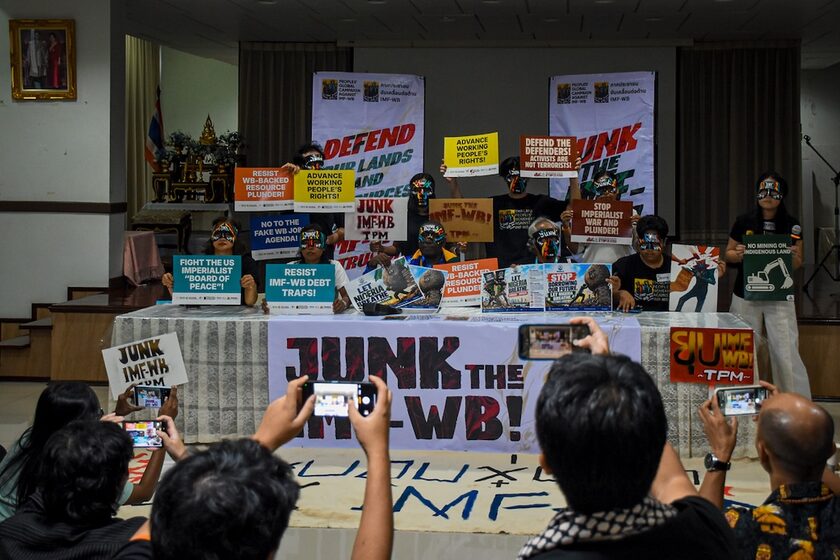
However, the current landscape also offers significant opportunities for the Philippine anti-imperialist movement to strengthen and expand. For instance, the intensifying U.S.-China rivalry provides a crucial opening to educate the public and build broad support for an independent foreign policy. Furthermore, the aggressive push for resource-intensive projects tied to the US strategic agenda, such as the LEC, Pax Silica, and ESZ, creates new avenues for broad-based coalitions. These projects can serve as rallying points against foreign military bases, imperialist plunder, and war, effectively mobilizing environmentalists, land rights advocates, Indigenous groups, and peace activists, among others.
 Save as PDF




0 Comments