
They told CMU personnel to respect the recent order from the Department of Agrarian Reform (DAR), as they are following it.
CAGAYAN DE ORO — Please wait until the validation process starts.
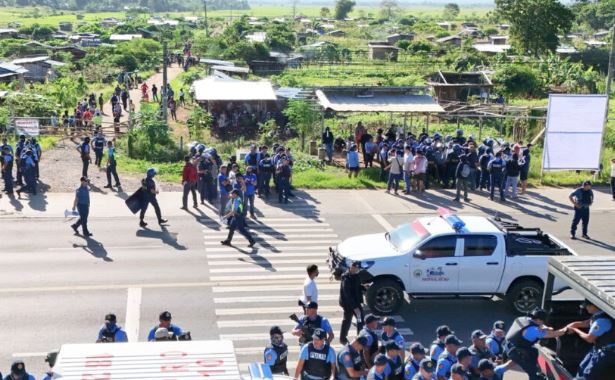
Farmers made this appeal to the administration of state-run Central Mindanao University (CMU) in Musuan, Barangay Dologon, Maramag, Bukidnon, after they had a confrontation with the school personnel following the latter’s reported fencing on the disputed land’s pathway on June 24.
They told CMU personnel to respect the recent order from the Department of Agrarian Reform (DAR), as they are following it.
The affected farmers are members of the Bukidnon Free Farmers and Agricultural Laborers Organization (Buffalo), the Triad Agricultural Manpower of Rural Active Workers (Tamaraw), the Landless Tillers Inhabitants of Musuan (Limus), and the Musuan Inhabitants’ Landless Farmers Association (Milfa). They are collectively known as Buffalo-Tamaraw-Limus-Milfa (BTLM).
They presented a DAR order dated May 28, 2026 and signed by Agrarian Reform Secretary Conrado Estrella III. It stated that CMU lands “not actually, directly, and exclusively utilized for educational purposes” are covered by Executive Order (EO) No. 75 (2019). The EO directed all government agencies to identify state-owned lands suitable for agriculture for distribution to qualified agrarian reform beneficiaries.
The DAR order directed DAR Region 10 and the Provincial Agrarian Reform Office-Bukidnon to conduct a validation and reclassification to determine if the subject land is suitable for agriculture.
“We should give respect to the order issued by the DAR secretary. This is to avoid commotion. This is to follow the correct process,” BTLM Spokesperson Herman Santillan told Bulatlat in an interview.
Decades-long struggle
According to a 1992 Supreme Court (SC) decision, the decades-long issue started with CMU’s lowland rice project in 1984 as part of the school’s self-help measures, leasing land to faculty members and employees who served as program participants for them to cultivate. Among the participants were the previous leaders of farmers’ group Buffalo.
The project was discontinued in 1986. However, another similar initiative was implemented in the same year and later on allowed former CMU workers to participate. The one-year contract ended in 1988. Some participants, namely Alvin Obrique, Felix Guinanao, Joven Caballero, Nestor Pulao, Danilo Vasquez, Aronio Pelayo, and other undetermined number of complainants, were not renewed which led to the filing of a complaint as they became landless peasants.
Other farmers’ groups, Tamaraw and Limus, were established in 1990 to share the 1,200 hectares that were previously occupied by Buffalo. Members of Tamaraw and Limus, Santillan said, were children of Buffalo members. After a year, another farmers’ group, Milfa, was founded.
Affected farmers continued to hold protest actions. On July 5, 1989, Leonardo Loable, a farmer, was killed after the CMU guards reportedly opened fire when protesters were able to enter the land to continue their program.
Read: Bukidnon land dispute shows failure of agrarian reform – Anakpawis
The DAR Adjudication Board (DARAB) ruled in 1989 that the farmer complainants were not tenants based on the project agreement and could not be qualified as agrarian reform beneficiaries. The board also ordered the segregation of 400 hectares of CMU land and included it in the coverage of the Comprehensive Agrarian Reform Program (CARP), which was affirmed by the Court of Appeals. These decisions were questioned by the state-run university.
The SC ruled in favor of CMU, declaring the decisions of DARAB and the appellate court null and void in 1992.
Santillan said that only farmers’ group Buffalo had a certificate of land ownership award (CLOA) at the time which was cancelled in the same year.
In 1997, CMU gave a six-month period for the farmers to vacate but they did not leave.
A tripartite civil law lease agreement between CMU, the affected farmers’ groups, and then Bukidnon Rep. Juan Miguel Zubiri (now a senator) was signed in 2002, allowing the farmers to till the land for five years. After the deal’s expiration in 2007, Zubiri offered to provide relocation or cash worth PhP40,000 (US$649.20). There were some who reportedly accepted the cash option. None of them accepted relocation because, according to Santillan, the proposed sites were allegedly already in possession by other people.
CMU offered a three-year individual contract with the farmers and free tuition for their qualified children in 2011. But they remained committed to the land they originally tilled.
In 2016, in CMU vs. Republic of the Philippines, the SC cancelled the land titles of CMU as it failed to substantially prove that “the land reservations registered in its name are alienable and disposable lands.” The SC ordered the land reverted to public domain. Affected farmers then trooped to the DAR Central Office in Quezon City in 2017 to assert their right to land.
Read: Bukidnon peasants camp out in Manila to assert right to land
However, the DENR-Community Environment and Natural Resources Office in Valencia City, Bukidnon, issued a certification in 2022 stating that a portion of over 1,800 hectares within the CMU land “has been verified and found to be within the portion of alienable and disposable.”
A demolition team composed of police personnel in Bukidnon carried out the demolition in June 2025 where five residents were arrested for alleged disobedience, direct assault, and obstruction of justice.
‘Status quo’
The recent DAR directive came after the agency granted the farmers’ appeal pertaining to a DAR Validation Committee (DVC) resolution issued on August 5, 2024, that excluded the CMU lands from agrarian reform coverage. CMU has a total land area of 3,080 hectares.
The order cited the same 2022 DENR certification stating that a portion of over 1,800 hectares of CMU land has been verified to be alienable and disposable. It also cited the same DVC resolution acknowledging that the said land is no longer used for CMU’s institutional objectives but is being used for agriculture.
Under the Comprehensive Agrarian Reform Law, all alienable and disposable lands of the public domain devoted to and suitable for agriculture are covered in the CARP.
BTLM, Santillan said, is composed of around 1,500 farmers and farm workers, claiming around 600 hectares of land.
Lawyer James Violon, CMU legal counsel, said in an interview with reporters on June 24 that they have not received the DAR order presented by the farmers’ groups.
Bulatlat sent an email to the DAR Central Office on June 30 to verify its supposed May 28, 2026 order. The agency acknowledged the email the same day, but it has yet to further respond as of this writing.
Santillan stressed that there should be a status quo while both parties wait for DAR’s validation. “I hope they understand our situation,” he said. (DAA)
 Save as PDF


0 Comments