
Health systems are challenged to deliver universal health coverage even at current levels of warming, with the majority of countries (108/194) experiencing worsening or no significant improvement in service coverage since the launch of the Sustainable Development Goals (SDGs) in 2015.
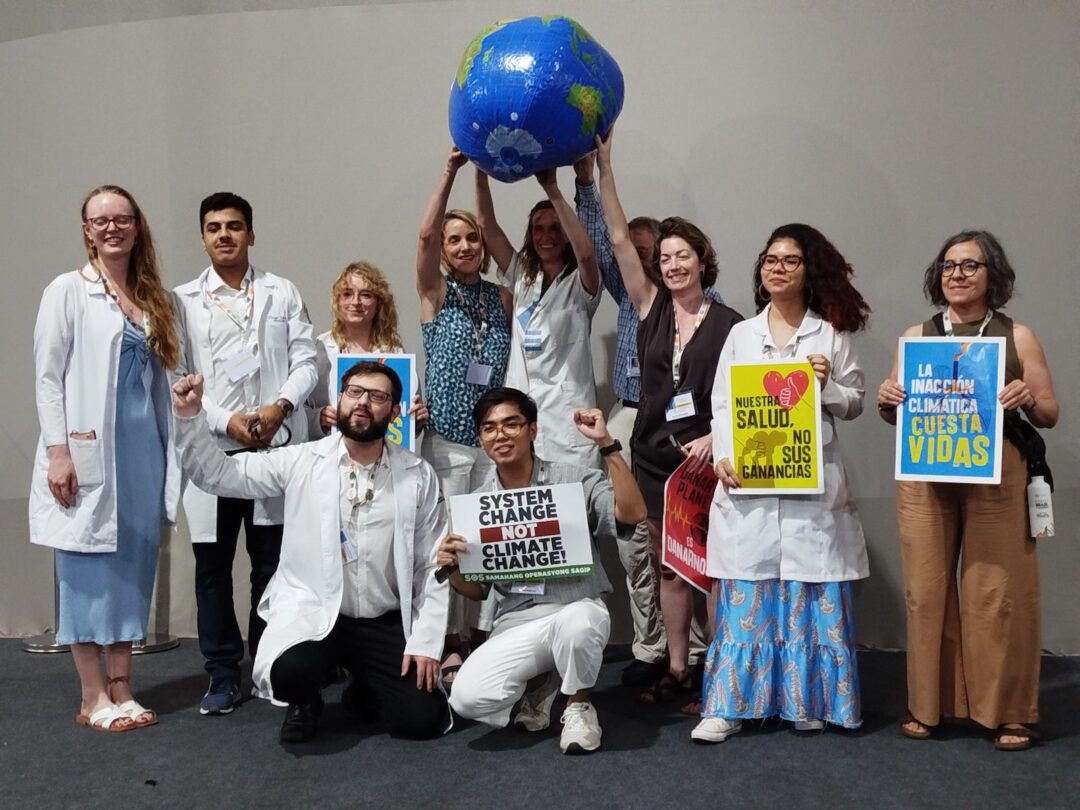
Belém, BRAZIL – Health professionals staged a protest inside the Blue Zone of the COP 30 on Thursday, Nov. 13, calling on world leaders to protect the people’s health amid the worsening climate crisis.
“We see that there’s major impacts of climate change on health. So we see that through infectious diseases, through mental health impacts, through extreme weather, through all kinds of impacts that are really widespread and that we see that are hitting some parts of the world much harder right now than others. It’s already happening, it’s already there and we need to recognize that it’s a huge problem,” medical doctor Iris Martine Blom of London School of Hygiene and Tropical Medicine told Bulatlat in an interview.
Blom cited the Lancet Countdown on Health and Climate Change, saying that climate change drives injury, disease and deaths from hazards such as heatwaves, wildfires, floods, droughts, storms, displacement, infectious diseases transmission including pandemics, food and water insecurity, non-communicable diseases, mental health impacts and threats to maternal-child health and sexual and reproductive health and rights.
The annual Lancet Countdown on Health and Climate Change is an international, multidisciplinary collaboration that gives an independent assessment of the delivery of commitments made by governments worldwide under the Paris Agreement.
Blom is among the medical professionals under the Global Climate and Health Alliance (GCHA) who were at the protest. The group represents more than 200 health organizations addressing climate change.
According to the GCHA, the impacts of climate change to health “are compounded by ecosystem degradation leading to massive biodiversity loss and rising antimicrobial resistance, which further impacts human wellbeing.”
“Health systems are challenged to deliver universal health coverage even at current levels of warming, with the majority of countries (108/194) experiencing worsening or no significant improvement in service coverage since the launch of the Sustainable Development Goals (SDGs) in 2015,” the group said in their recommendations for COP 30.
“The cost of adaptation in the health sector alone is estimated to reach $11.1 billion per year in 2030 for developing countries, with finance from developed countries being vital for implementation. These costs will continue to rise without accelerated emissions reductions, with highest emitters taking responsibility to act most rapidly. Without investment in climate action, by 2050, the costs of climate-related health impacts could far exceed these levels, surpassing $20.8 trillion in low- and middle-income countries (LMICs) alone,” it added.
Meanwhile, in a press conference, GCHA Executive Director Jeni Miller said that national delegations at COP 30 “must make people’s lives, health, and well-being central to the outcome they deliver.”
“Delegates must strive to achieve a future where children breathe clean air, health systems are resilient, and communities no longer face the daily threat of floods, heatwaves, and pollution,” Miller said.
Health is included in the articles of the UNFCCC and the Paris Agreement. It has gained traction since then with the adoption of the Health Commitments in COP 26 in Glasgow, Scotland, the GHCA said. The first health day was also conducted at COP 28 in Dubai.
The GCHA said, “The realisation of climate justice requires the experience, knowledge, priorities, and realities held and faced by these communities to be reflected in UNFCCC decision-making. COP30 must recognise that community partnership is a cornerstone of sustainable climate and health action, ensuring that climate action is grounded in local realities, protects human rights, and fosters community stewardship to support implementation that is locally relevant, culturally appropriate, cost-effective, and scalable.” (DAA)
 Save as PDF




0 Comments