Balik-Tanaw | Bruised and Broken, but Shared, and Remembered
We are just pilgrims here on earth. We are all travelers. We are just passing through this world. Our worldly existence is very much finite. Our worldly existence could not overpower time.

ADVERTISEMENT

We are just pilgrims here on earth. We are all travelers. We are just passing through this world. Our worldly existence is very much finite. Our worldly existence could not overpower time.

The Gospel this week is another well known verse in John 3:16-18 that talks of how God so loved the world, God sent Jesus to die for our sins so that we may have eternal life. But John goes on in the following verses that are less familiar to many to say remind us that Jesus was sent to save the World not to condemn it.

In the very beginning, the Holy Spirit, who’s feast we celebrate today, was with the Creator of the universe, moving over His creation. As the 2nd person of the Trinity, Jesus was very much aware of this. Hence, he promised his disciples before He ascended to His Father, that He will send an advocate to be with them. The disciples did not understand this promised. Hence, they were filled with FEAR. They were scattered, discouraged, and some even did not see any point in staying together as ‘followers’ or believers.

Many New Testament scholars agree that the Gospel of John is written for a beleaguered community torn from many sides. John’s community experience incessant harassment from their enemies. These enemies are (1) a well-established religious community and (2) a King who reads their loyalty swerving towards subversion. They earned their enemies because of their subversive belief that Jesus Christ was resurrected and now reigning from heaven. This theological belief has political implications that could spell life and death. This belief launches them into a political mission that directly offends the ruling elite.

Compassion is but a concept, mercy is elusive, hope seems unattainable for our poor brothers and sisters, for those in the margins of our society, and it will remain so if we continue to allow ourselves to become agents of evil, to be the festering wounds on the body of Christ.

“Kaya’t si Pedro at ang [isang] alagad ay nagpunta sa libingan. Kapwa sila tumakbo ngunit si Pedro’y naunahan ng kasamang alagad. Yumuko ito at sumilip sa loob. Nakita niyang nakalagay ang mga kayong lino, ngunit hindi siya pumasok” (Juan 20: 3-5).

It’s Holy Week, a moment of reflection, getting together, family and friends bonding moment, a break from hectic days, or a celebration from heydays. Wherever we are, I assume that we pray and reflect on these days apart from gallivanting and jubilating.

Death, brokenness and lament are overwhelming themes that surround the 5th Sunday of Lent. And these are part of the growing crescendo of spiritual disorder as we approach Easter, coming from themes of thirst and blindness. But, spoiler alert, there’s an invisible string that ties the different stories of death, brokenness and lament across our scripture. That invisible string is the promise of life and resurrection.

Weaving my random thoughts into one
Tapestry,
as my heart seeks new ways of sketching life,
and my mind, boggled as it is,
and my soul, messy as it may seem…
I am now
growing older, getting wiser, gravitating towards more changes
lifting burdens no more, for my bones ache and my knees shake,
leading life to a more loving encounter.

A journey of the people of God. They thirst for water. “Why did you ever make us leave Egypt?” They quarrelled and tested the Lord, saying, “Is the Lord in our midst or not?” In the book of Exodus 17:3-7 Moses is being threatened. A prophet chosen by God to lead the people of Israel out of Egypt- i.e. from slavery to freedom. Moses is being questioned. In the desert there is no supply of water. Moses cried to the Lord. The Lord directed him to strike the rock in Horeb with the same staff with which he struck the river. And so he struck the rock and the water flowed from it for the people to drink. God heeded the question of His people. He heard their cry through Moses. God never abandoned his people Israel. God quenched their thirst for freedom and salvation.

By SR. PAT FOX NDS Gn 12:1-4a Ps 33:4-5, 18-19, 20, 22. 2 Tm 1:8b-10 Mt 17:1-9 “God loves righteousness and justice; the earth is full of the steadfast love of the Lord” (Ps.33:5). These words from today’s Psalm reminding us that God is with us in history, drew me...

Time and time again, we are reminded of keeping our connections and relations with our kapwa. Just as the pandemic has taught us. Sadly though, it seems like the world is not learning and listening to the wisdom in the least. The world is still focused on producing more than what is needed, is fixated on owning and consuming more and more. Our modern lifestyle is contributing to the destruction of mother nature. We seem to be forgetting to see and hear our brothers and sisters that are hurting the most – the poor, the indigenous peoples, the farmers, the laborers, the women, the children. More and more women and children are still becoming victims of domestic abuse and sexual harassment. We, peoples of these islands seem to have forgotten the value of kapwa that is part of our spirituality.
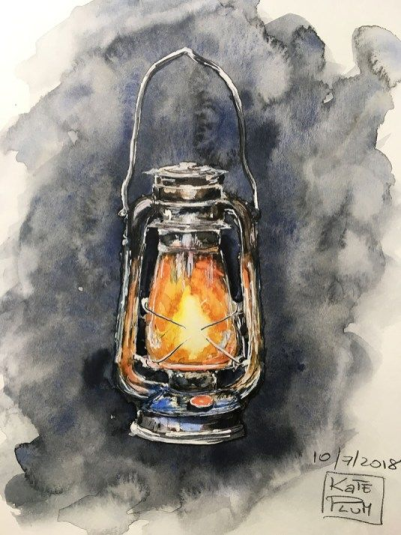
Saints are persons whose “light shines through.” This understanding of who saints are reminded me of the symbolic lanterns we carried during the Martial Law @ 50 Day of Remembrance last year.

JONEL B. DALIMAG CICM, Baguio City Isaiah 8:23—9:3 Psalm 27:1,4, 13-14 1 Corinthians 1:10-13, 17 Matthew 4:12-23 John is perhaps the youngest person at his time to recognize Jesus. John was still in the womb (unborn) of his mother Elizabeth when he leapt for joy in...

Before a revelation, there was a promise. There was a promise about the light- the true light that gives light to everyone who is coming into the world. John the Baptist testified about this. And the word became flesh and dwelt among us. There was a promise of a Messiah, which John the Baptist testified, and denied it was him – for a greater man that comes before him will come. These we can see in the prior verses 1-28 of the gospel of John, before the text for this lectionary.

Sometimes it is called The Three Kings or the Visit of the Magi. This feast is familiar to us. It conjures up colorful pictures of a journey, a search, with only a star as a guide. It is placed in the liturgical cycle to deepen and broaden an understanding of incarnation. The chosen Scripture texts are inspirational as they open us up to the needs of the world, and the wisdom of nature.

For centuries, monarchs have played a significant role in the civil and political life of a people. Its presence has either inspired its nation or caused so much suffering. There are evidences of dungeons in castles to torture subjects who do not give in to the whims and caprices of the King. There are stories of monarchy known to have given up life for charitable acts, deep spirituality, and saintly persuasions setting a new path for following Jesus, their beloved. From flag-waving-for-the-monarchy fanatics to enlightened-taxpayers-who-question-their -extravagant lifestyles, it is clear that monarchs of this world have imposed a presence that may be relevant or irrelevant for the people of our times.
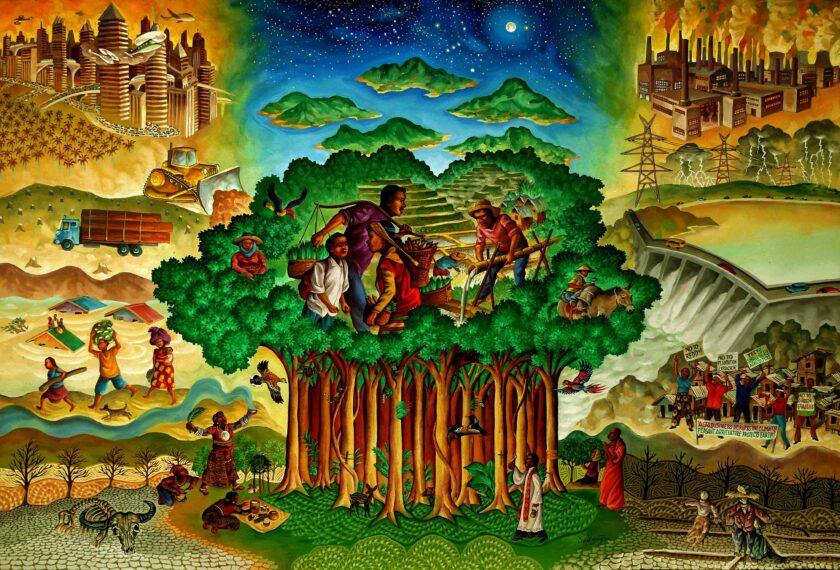
Many people have always imagined God’s coming to bring disasters, wars, earthquakes, famines, and destruction. Some would proclaim that God is coming back because the signs of the times mentioned in the Gospel text (Luke 21:5-19) occur occasionally, one after the other, causing so much suffering — especially among our society’s marginalized sectors.
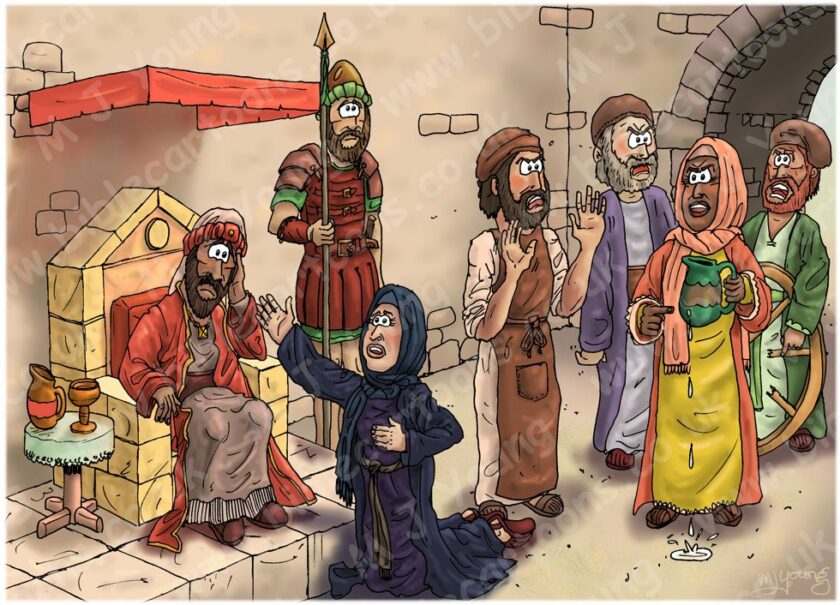
In Luke, a widow’s persistence, vigilance, and militancy were characteristics that challenged even the most heartless, unfeeling, and callous of judge. She banged the walls of a court dominated by men of power and influence. She raised her voice so loudly that they could do nothing to make her quiet.

Despite being scared, we must continue our mission towards a world with no violence, a world where peace and justice reigns. This should be our motivation, being followers of Christ. In the same way, those of you who do not give up everything you have cannot be my disciples. (Luke 14:33).
A community of readers and supporters that help us sustain our operations through microdonations for as low as $1.