
By Reachelyn Esona and Roselle Ochobillo
From bustling streets to empty sidewalks.
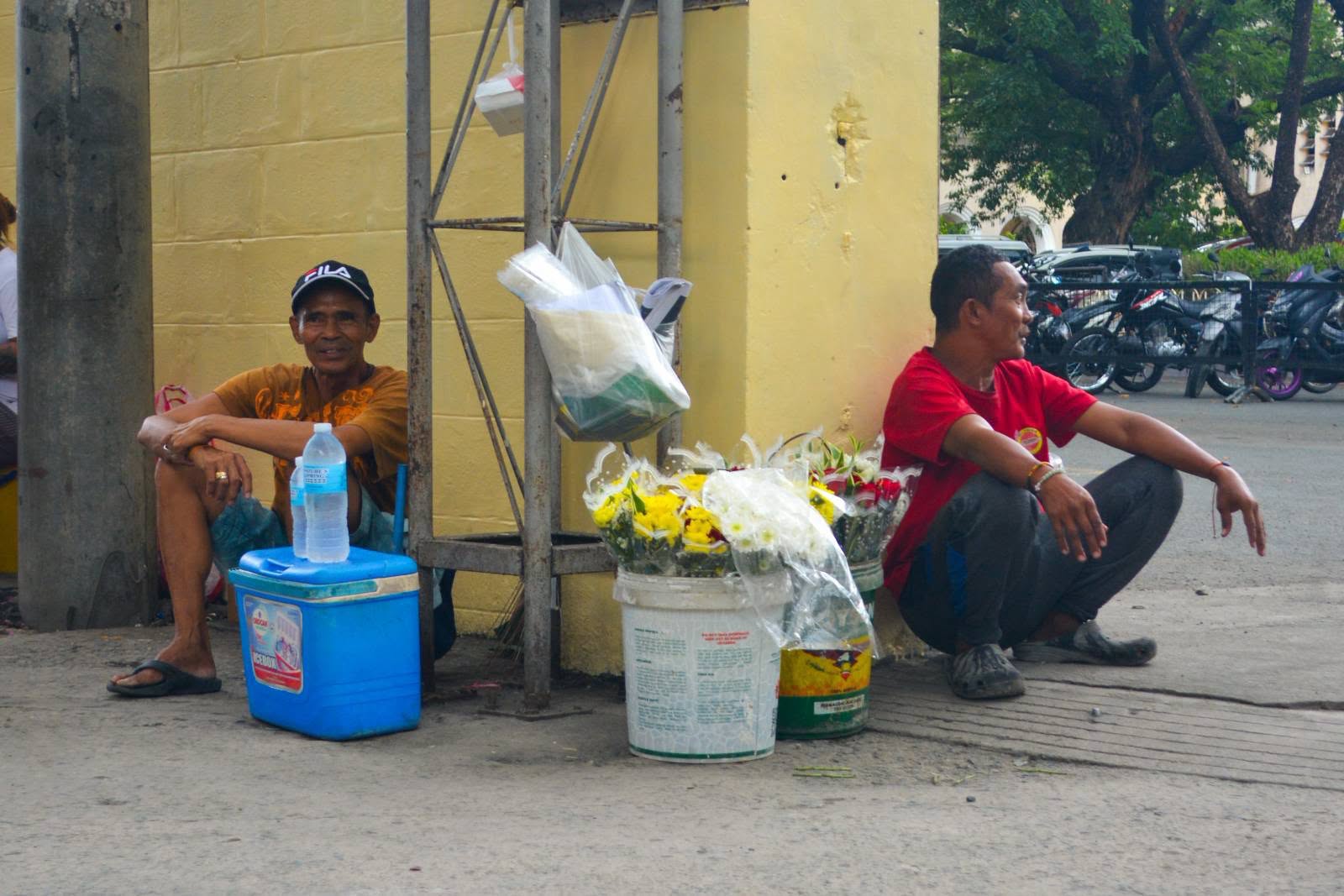
This may be an image of order for some, but for Baclaran street vendors, it can mean another day of uncertainty over whether they will have earnings to take home.
In the first week of November, the local government of Parañaque City ordered a clearing operation in barangay Baclaran in time for the 49th Association of Southeast Asian Nation (ASEAN) summit from November 15 to 17.
The Parañaque local government said that the barangay would temporarily prohibit street vendors along Roxas Boulevard, service roads, Redemptorist Road, Quirino Avenue, and beneath LRT-1 from November 2 to November 20, to clear the way for the arriving delegates.
Among those forced to leave their usual vending spots is Eduardo Bargas, 59, who’s been selling toys along Baclaran for almost 20 years to support his wife and only child. After being dislocated, he resorted to selling bottled water to earn a living despite the imposed clearing operation.
According to Bargas, they were informed about the operation as early as November 1. While larger vendors operating inside stall establishments were allowed to continue selling, ambulant vendors like him were temporarily ordered to stop their operations.
Bargas was nearly apprehended once by the authorities. Had he been caught, he said, his goods would have been confiscated. He begged the authorities not to take his items as it was all he had to live on.
Earning on pause
Like other vendors, Bargas’s income was severely impacted by the clearing operation. He said he used to earn up to P1,000 (approximately US$ 15.63) a day before the policy was implemented. Now, he takes home only around P300 (approximately US$ 4.69).
The same concern was shared by a 50-year-old towel and sack bag vendor, Marlyn Merioles. She sells along Baclaran to sustain her elderly mother who is on maintenance medication, and her sibling who is a person with disability.
Before the clearing, Merioles was earning around P300 (approximately US$ 4.69) to P500 (approximately US$ 7.82) a day. Since the operation began, there were days she went home with empty pockets.
Merioles said she felt disheartened by the policy. Vendors, she said, are now anxious and find it difficult to sell their goods. They are constantly on their feet, keeping an eye out for patrols roaming the area. Merioles fears that she might not see them coming as her eyesight is already failing.
They were also warned that their goods would be confiscated if they were caught. Merioles said it would be a loss they could not afford because even a whole day of selling was not enough to recover the capital they had borrowed.
Merioles said it would help if the government would sustain their daily expenses. However, she said, only a few of the vendors benefitted from the financial assistance provided for the vendors.
Beyond temporary aid
While the Department of Social Welfare and Development (DSWD) promised P10,000 (approximately $156.35) in cash assistance to vendors affected by the clearing operations in Baclaran, some vendors said they struggled to access the financial aid because it was reportedly limited to registered voters of Baclaran.
Rochelle Maale, who has been renting a stall in Baclaran for 10 years to sell ready-to-wear clothes, was among those who did not receive the assistance because she is not a registered voter in the area.
“The distribution of funds should be balanced… What about those who have been here for a long time but didn’t get anything?”Maale retorted.
Vendors argued that the assistance should be extended to everyone affected by the clearing operations, regardless of their place of residence, since they all experienced the impact of the clearing operations.
However, for many vendors, the issue goes beyond the limited eligibility for financial assistance.
They also questioned whether the P10,000 (approximately US$ 156.35) would be enough to sustain them after nearly 20 days of restricted operations.
Maale shared that the amount was insufficient to cover their daily expenses, especially amid rising costs of goods. “Will that P10,000 even last for a few days? No, it’s still not enough. That’s why vendors are struggling to make ends meet.”
She said some vendors have resorted to taking out loans to meet their everyday needs and restore their capital.
For vendors like Maale, the struggle extends beyond the clearing operations and financial assistance. What they need is a permanent and secure space where they can sell their merchandise, earn a living, and work without the constant fear of being arrested or displaced. (AMU, RVO)
 Save as PDF



0 Comments