
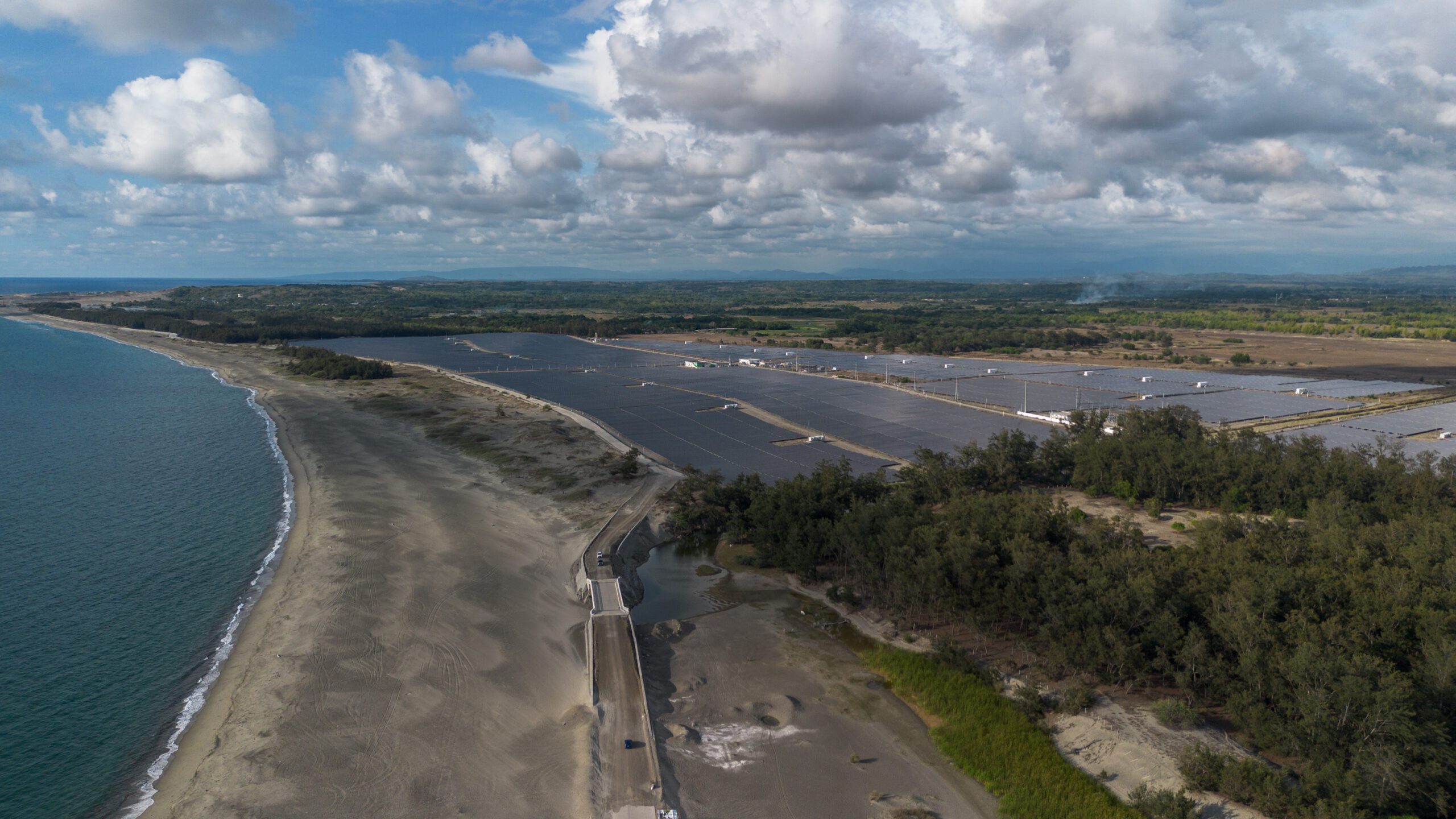
“Marcos Jr. has a big role in the currently existing environmental plunder.”
By Elisha Beatrice Umali
Bulatlat.com

MANILA — The country’s expansion of renewable energy (RE) sources places Filipino indigenous peoples (IP) groups, farmers, fisherfolk, and the urban poor at the forefront of environmental and human rights violations, health hazards, displacement and loss of livelihood.
Under the Philippine Energy Plan (2023-2050), the government aims for a 50% RE share in the country’s power generation mix by 2040 and a larger percent of RE in energy sourcing by 2050.
As of 2026, the country is still reliant on fossil fuels such as coal (56.4%) and gas (17.9%) for its energy supply. A 2025 report by the Philippine Center of Investigative Journalism showed that these “dirty” energy generation remains dominated by the Aboitiz, Ang, and Lopez families.
Cathleen de Guzman of Kalikasan People’s Network for the Environment asked, “Who are the ones actually benefitting from these renewable energy projects?”
Marcos Jr.’s renewable energy push
Under the Marcos Jr. administration, Department of Energy (DOE)’s Circular 2022-11-0034 opened the Philippine RE infrastructure to full foreign ownership. “Marcos Jr. has a big role in the currently existing environmental plunder. Indigenous peoples and farmers are forcibly evicted, because it is during his term that 100% foreign ownership of renewable energy projects were allowed,” de Guzman said in Filipino.
In his 2022 State of the Nation Address (SONA), Marcos Jr. said that the use of renewable energy is “at the top of our climate agenda.” RE is also positioned to answer the country’s energy demand crisis and rising electricity cost.
However, DOE Undersecretary Rowena Cristina Guevara said that electricity costs in the Philippines are currently the highest in Southeast Asia surpassing Singapore. A national average of P12.43 (approximately $0.20) per kilowatt-hour was recorded for June 2026. She also warned of an increase in electricity prices by July.
Read: Lawmakers urged to investigate Meralco over dubious electricity rates
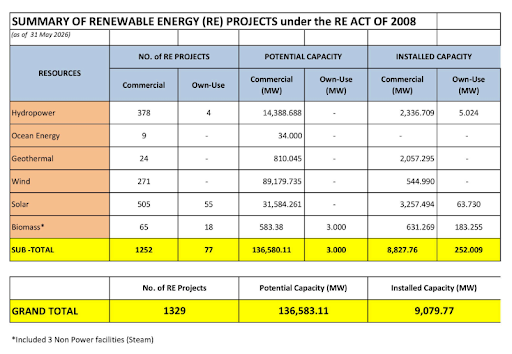
DOE reported a total of 1,329 RE projects in the country, including 505 commercial solar power projects and 271 commercial wind power projects.
Solar and wind power projects pose heavy environmental risks because of its high dependence on vast amounts of land. “The main problem [with solar and wind energy] is the land. Also, the energy density, the yield of converting this much land in relation to the tradeoff on how many gigawatts can these RE projects produce,” said Francis Quintana of PROPEL Pro-People Engineers and Leaders in Filipino.
Unjust transition
Marcos Jr.’s aggressive push for RE projects exposed an intersection between IP rights, environmental rights, and basic human right violations from affected communities.
This was reflected in Phase 1 of Aboitiz Renewables’ Olongapo solar power farm, its largest solar power project so far. Four barangays with IP communities and farmers were affected by the ongoing operations of the solar power plant.
Julius Roa of PROPEL Pro-People Engineers and Leaders said that the construction of the solar farm can disrupt biodiversity since trees cut for the plant meant lost habitat for birds in the area. “The loss of these trees, which prevent soil erosion during heavy rainfall, can possibly affect the quality of water supply of the communities,” he said. “The surface runoff will negatively affect the water quality. It was said before that there were fishes among the streams, but now there’s none,” Roa said in Filipino.
The lost tree and land cover also resulted in less resources for the residents whose main livelihood is by harvesting fruit-bearing trees and farming along the mountains claimed by the power farm. Residents also experienced higher levels of temperature, affecting their agricultural production.
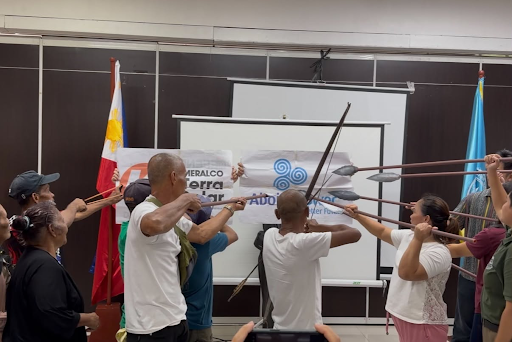
According to Katribu Secretary-General Funa-ay Claver, the lack of consultations and the disregard of the Free, Prior, and Informed Consent (FPIC) process also showed a blatant disregard for IP rights during the solar farms construction. “When we talked to the affected communities, the majority of them said that they were not consulted. They were not aware of the [solar power] project until its construction started.”
Residents also became more vulnerable to disaster and health risks, as well as geographic vulnerability due to the heat and susceptibility of the area to floods. Their calls for interventions from their local government unit, Aboitiz Renewables, and key government institutions, were ignored.
Nueva Ecija residents and small-scale farmers also had the same problems because of the ongoing MTerra Solar Project of the Meralco PowerGen Corporation (MGEN).
Read: Alliance formed vs destructive solar energy projects
Katribu called for a stop in using prime agricultural lands for RE projects. In a statement, Katribu said, “These [violations] are not isolated incidents but part of a broader pattern of large-scale renewable energy projects being imposed on communities without genuine consultation and respect for people’s rights.”
Rights groups called for national industrialization, creation of a People’s National Energy Plan, and strengthening the local RE manufacturing capacity.
De Guzman stressed the importance of the shift to renewable energy but she is opposed to its RE projects’ use for the plunder and excessive profit of a select few. “In the right usage of RE technologies, RE can be clean and an affordable energy source that caters to the needs of the Filipinos and the entire country.” (RTS, DAA)
Read the findings of Katribu’s May 29-31 Environmental Investigative Mission on the Olongapo Solar Project here.
 Save as PDF



0 Comments