
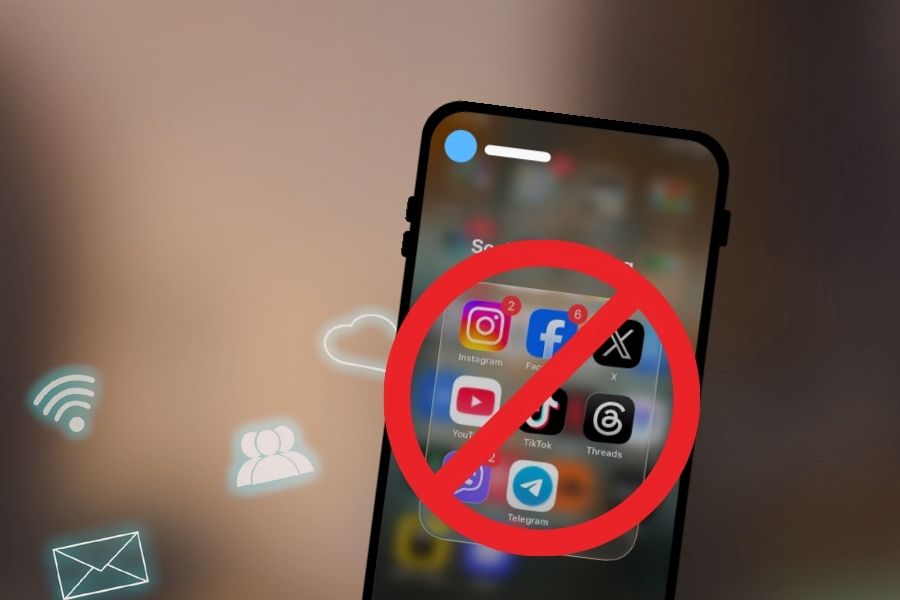
Child rights advocates have warned that a proposed social media ban could restrict children’s access to information, education, expression, and participation without addressing the perpetrators and platforms responsible for online abuse.
The warning followed the Senate’s approval of Senate Bill No. 2424, or the proposed Safe Media Access and Responsible Technology for Kids in Digital Spaces (SMART KIDS) Act, on third and final reading on October 8.
The Senate approved the measure by a vote of 16-1, with no abstentions, advancing a proposal sponsored by Sen. Robinhood Padilla that would restrict minors’ access to digital services classified as high-risk.
Salinlahi Alliance for Children’s Concerns argued that the government must protect children from online exploitation, grooming, bullying, and other forms of digital harm without treating their access to digital spaces as the problem.
“Banning children from social media does not make the internet safe. It impedes children’s right to participation while the perpetrators remain,” said Teacher Elle Buntag, Salinlahi secretary general.
The group warned that restricting children’s access would not, by itself, establish whether platforms would respond more effectively to abuse or whether authorities would investigate and prosecute offenders more consistently.
Instead, Salinlahi called on the government to strengthen investigations into online sexual abuse and exploitation, require platforms to detect and remove abusive content, improve reporting and rescue mechanisms, and provide survivors with psychosocial and legal support.
“If the government’s answer to online abuse is simply to remove children from the platform, then we are asking children to bear the burden of a problem created by perpetrators and enabled by weak systems,” Buntag said.
The group maintained that children have rights to information, expression, education, participation, and connection in digital spaces, and urged the government to protect these rights while making online environments safer.
“The state must not confuse restricting children’s access with protecting children. Protection means making the digital spaces they inhabit safe and holding those who exploit them accountable,” Salinlahi said.
Different approaches
The debate over the Senate measure centers partly on whether an under-18 restriction offers a proportionate response to online harm or whether lawmakers should adopt age-specific safeguards.
Sen. Risa Hontiveros, the sole senator who voted against the measure, argued for a more targeted approach that would allow older adolescents to use social media with adequate safety measures.
Hontiveros had proposed restricting access for children under 13 while allowing those aged 13 to 18 to use social media if platforms provided adequate safeguards.
The Child Rights Network Philippines’ explainer questioned the basis for setting the minimum age at 18, and urged lawmakers to examine the evidence behind a blanket restriction before limiting children’s digital rights.
Sen. Win Gatchalian, a co-author and co-sponsor of the Senate measure, argued that aligning the age threshold with the legal definition of a child under existing laws would make enforcement more consistent and easier for authorities, according to the network’s explainer.
Padilla, meanwhile, said lawmakers could amend the measure after assessing its effects, and cited other countries’ experiences with restrictions and subsequent policy reviews, the explainer said.
The Child Rights Network challenged the idea that ease of enforcement should determine the age threshold, arguing that lawmakers must also consider the measure’s effects on children’s rights and daily lives.
The debate therefore goes beyond whether authorities can enforce an age restriction and asks whether the restriction would protect children effectively without imposing unnecessary limits on their participation.
Beyond entertainment
Child rights advocates said children use social media for more than entertainment, including research, learning, creative work, communication, and maintaining relationships.
The Child Rights Network noted that children also use digital platforms to connect with friends and peers and to communicate with parents working overseas.
Salinlahi argued that the government must account for these uses when designing online safety policies, rather than assuming that removing children from platforms would resolve the dangers they encounter.
A restriction on access would not automatically ensure that platforms detect and remove abusive content, that authorities prosecute offenders, or that survivors receive adequate support.
The group urged lawmakers to prioritize prevention, accountability, platform responsibility, and survivor support in any policy intended to protect children online.
For advocates, the central issue is how the government can address online exploitation without undermining children’s access to information and their ability to participate in digital spaces.
Privacy concerns
The debate has also raised concerns about how authorities and digital platforms would verify users’ ages and protect their personal information.
In her explanation of vote against House Bill No. 11566, Kabataan Party-list Rep. Renee Louise Co argued that the House proposal’s age-verification requirements could compel users to submit government-issued identification or biometric information.
Co also objected to provisions she said would require internet service providers to preserve traffic, subscriber, and other data, warning that such requirements could expose users to privacy risks and surveillance.
Her objections concern the House measure and do not establish that the Senate bill contains the same provisions.
However, her statement raises a broader question about how lawmakers can verify users’ ages without collecting excessive personal information or exposing users to unnecessary privacy risks.
Any age-assurance system would need safeguards for data collection, storage, access, and security, particularly if it requires users to submit sensitive identifying information.
Different versions
The House of Representatives has advanced a separate measure with a different age threshold.
House Bill No. 11566, or the proposed Children’s Digital Safety, Protection, and Well-Being Act, seeks to restrict social media access for children under 13, while the Senate-approved version proposes a stricter threshold for minors using covered high-risk digital services.
The House requested a conference committee on October 12 to reconcile the two chambers’ versions.
The measure has not become law, and lawmakers must reconcile the differences before sending a final version to the president.
The Child Rights Network urged lawmakers to study international experiences before adopting a blanket restriction, pointing to the European Union’s approach to children under 13 and Australia’s experience with social media age restrictions.
The network argued that lawmakers should assess the evidence behind different approaches and consult affected groups before deciding which policy would work in the Philippines.
For child rights advocates, international examples should inform the development of safeguards rather than justify a sweeping restriction without sufficient assessment.
Calls to address the causes
Salinlahi called on lawmakers and government agencies to strengthen the mechanisms that prevent online abuse, hold perpetrators accountable, and require digital platforms to respond effectively to harmful content.
The group also urged authorities to improve reporting and rescue mechanisms and provide survivors with adequate psychosocial and legal assistance.
These measures would address the people and systems responsible for online harm rather than relying primarily on children’s exclusion from social media.
The proposed legislation has placed an important question before lawmakers: how can the government protect children from online exploitation while respecting their rights to information, education, expression, privacy, and participation?
For Salinlahi, the answer should not stop at restricting access. The government must make digital spaces safer and hold those who exploit children accountable, rather than simply keeping children out. (AMU, RVO)
 Save as PDF





0 Comments