
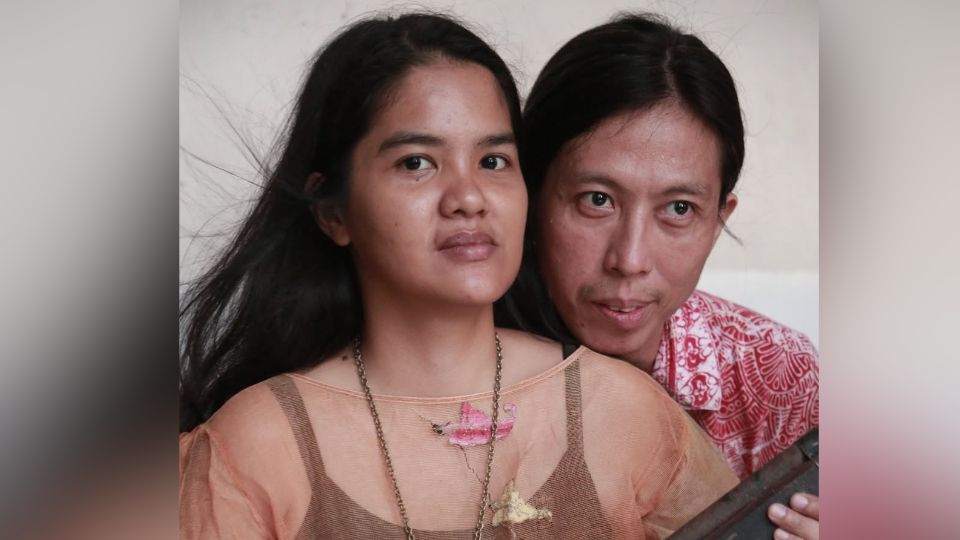
MANILA— To love is to struggle.
In activist lenses, there is this specific term for this—class love. Class love, as described by activists, is the idea that genuine love cannot be separated from the world’s social and economic realities. This idea considers love as a comradely bond, deeply tied to revolutionary goals and the discipline of the movement.
This kind of love is what both revolutionary poet Kerima “Ka Ella” Tariman and activist-musician Ericson Acosta carried on—enduring the vast distance between them due to political tasks in the countryside. Sacrificing their life as a couple by dedicating themselves and their art to the toiling peasant masses and their fight for land.
Peasant advocates and people’s artists
During Sama-samang Artista para sa Kilusang Agraryo’s (SAKA) “Kwentuhang Pesante: Mga gawaing pangkultura nina Kerima Lorena Tariman at Ericson Acosta,” the group described the lives of Kerima and Acosta as representing one of the most compelling and inspirational love stories within the modern Philippine revolutionary movement. Born just a few years apart—Ericson on May 27, 1972, and Kerima on May 29, 1979—they initially used their writings to criticize the oppressive and alienating urban life until their experiences extended it to the oppression of the peasants.
Ericson Acosta was described as a gifted songwriter and performer who had the potential to break into the mainstream. Despite this rock’n ’ roll lifestyle he was enjoying, his life took a detour in the mid-90s when he took part in theatre productions and volunteered for human rights organization Amnesty International. His life was colorful and somewhat wild. He also became an editor of the Kultura section of the Philippine Collegian, which introduced him to a cultural activist group in UP Diliman. Later on, this will lead Acosta to join discussions and protest actions. In 1995, he joined a cultural integration in Southern Tagalog and had exposure to the struggles of the peasant communities.
While Kerima Tariman, who was born in 1979 in Legazpi, Albay, grew up surrounded by books. She graduated as salutatorian from the Philippine High School for the Arts in 1996, where UP Professor Rommel Rodriguez recalled her going up the stage barefoot. She then went on to the University of the Philippines Diliman, where she served as managing editor for the Philippine Collegian from 1999 to 2000. Kerima was described as an immensely talented poet, with her poems appearing in several outlets, including the Sunday Inquirer Magazine and the Manila Chronicle. She also published her works Byahe (1996), Pag-aaral sa Oras: Mga Lumang Tula Tungkolsa Bago (2017), and Luisita: Mga Tula (2021).
Later on, Kerima became a fierce peasant advocate and an important figure within the Unyon ng mga Manggagawa sa Agrikultura (UMA), where she actively served as a writer and researcher. She gave extra diligence to organizing agricultural workers in Hacienda Luisita and led the formation of an organization that utilized theater as an instrument for awakening and agitation. She helped stage an annual theater play about the Luisita Massacre, engraving the cruelty of the fascist state and the heroism of the movement’s martyrs in the public’s mind. She also trained herself in calculating the rate of exploitation based on the actual conditions of agricultural workers and promoted collective farming (bungkalan). From this experience, she took notes in lessons in agroecology and spearheaded the writing of “Bungkalan: Manual on Organic Farming.”
Ericson’s own dedication to documenting the plight of the rural poor led to his illegal arrest in Samar in 2011 while conducting human rights research. Even behind bars, his artistry flourished; he secretly recorded acoustic protest songs with a guitar and raw vocals, a collection that circulated as the raw and haunting “Prison Sessions” album on SoundCloud, which became an underground anthem for the release of all political prisoners until his release in 2013.
On September 17, 2013, during a fact-finding mission, which was organized to investigate the land claims of Tadeco in Hacienda Luisita and the intensified militarization in the area—both Ericson and Kerima were arrested along with nine others.
Despite their immense potential as artists, the couple became well-regarded for their conviction that poetry must serve a higher social purpose. They both looked past the city lights and turned their attention to the vast struggles of the countryside. This dedication eventually led the two to reside in and continue their revolutionary task in the sugar bowl of the Philippines, Negros, in 2018.
Martyrs of Negros
Eventually, the systemic oppression they witnessed convinced them both that peaceful advocacy had reached its limitations, prompting Kerima to join the underground New People’s Army while Ericson utilized his intellectual background to serve as a peace consultant for the National Democratic Front of the Philippines.
Their commitment to the expanding front of the rural struggle ultimately demanded the ultimate sacrifice. Kerima was killed at the age of 42 during an armed clash with military forces in Silay City on August 20, 2021, prompting human rights groups to call for an investigation into whether she was captured alive. A little over a year later, on November 30, 2022, Ericson, along with a peasant leader, was murdered by soldiers in Kabankalan City.
Kerima and Ericson are just two of the long list of martyrs of Negros Island. Just recently, 19 individuals were killed by the military in Toboso, Negros Occidental. This list involves peasant advocates and writers alike, the couple.
Through their separate deaths on the same island, Kerima and Ericson Acosta permanently bridged the gap between revolutionary arts and reality—that love, art, and struggle were entirely inseparable.
To love is to revolt
The life of revolutionary artists Kerima and Ericson proved that love exists far beyond bourgeois ideals. In a country lacking genuine land reform and where peasants face systemic violence—love calls not for comfortable isolation, but for collective revolt.
As Kerima beautifully penned in her poem ‘Pag-Asa’, love within the revolution shall transform your partner into your comrade. Bond inside the revolution demands encouraging each other to excel in political tasks while courageously confronting internal contradictions.
Their shared path shows that true revolutionary love does not retreat from the world’s suffering. Instead, it delves into rice fields, with the masses—even if it involves sacrificing time with each other for the victory of the struggle for national democracy and the liberation of the oppressed. (RVO)
 Save as PDF
0 Comments