

“When I am outside, I am afraid that they will take or shoot me because that is what they always do to our colleagues.”
By Shannia Cabuello
Bulatlat.com
MANILA – For indigenous women leaders, the government enables violence against women, especially those who resist government-backed mining operations, energy projects, market privatization, and human rights violations.
“Indigenous women literally raise and give birth to the community. They nurtured their ancestral territories for centuries. Yet the government easily trades away these efforts enriched by women,” said Siklab Philippine Indigenous Youth Network national coordinator Kim Falyao.
On November 25 (International Day for the Elimination of Violence Against Women) at a public forum titled ‘Dayaw Ken Salaknib’ held at University of the Philippines Diliman, women from indigenous communities highlighted their role in defending their lands and upholding human rights despite state repression.
Deprived of land ownership, self-determination
Women rights leaders from indigenous communities Betty Belen, Sarah Abellon, and Julieta Gomez shared their struggle for land and self-determination, fundamental rights that they said are being systematically denied by the state.
They condemned government policies that allowed foreign companies to invest in mining and energy, including lifting the suspension of new mining agreements, removal of the ban on open-pit mining, and amending the Renewable Energy Act to allow 100% foreign ownership of renewable energy projects.
They also criticized the National Commission on Indigenous Peoples (NCIP) which pushed amendments to the 2012 Free, Prior, and Informed Consent (FPIC) Guidelines without consulting the indigenous peoples. This enabled big mining, energy companies, and market privatization to take over the Cordilleras and the indigenous communities.

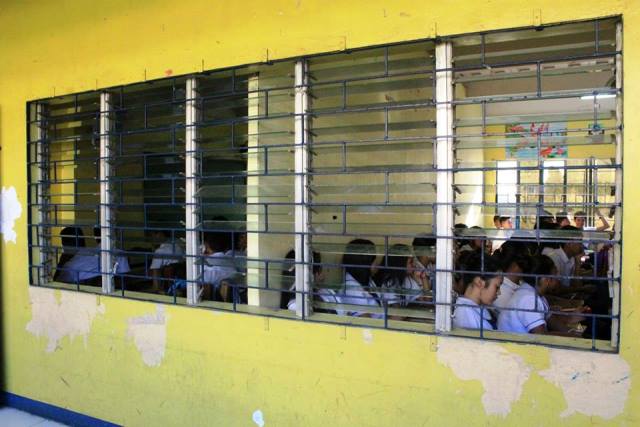
From 2016 to 2022, more than 200 Lumad schools were forcibly shut down by the state, affecting over 5,000 indigenous children.
For the indigenous women in the forum, this is the reason for being perceived as ignorant and illiterate as they lack educational attainment. This also makes them vulnerable to mining companies’ deception.
“We only dream of learning how to read, write, and compute so we can have our right to self-determination but the government deprives […] us,” Gomez said.
“We’ll take care of finding money to provide for the youth’s food and education, and the youth will take care of returning it to our communities,” Belen said in Filipino.
Intimidated
Gomez also criticized the Anti-Terrorism Act of 2020 which intensified terrorist-tagging of activists, including women. “If we Lumads will be afraid, what will happen to our youth and children?” she asked, asserting that being arrested for fabricated cases will not stop their movement.
“Lumads are being imprisoned and slain. We suffer from bombings. Do we look like we are the ones killing people?” Gomez said, stressing that they protect ancestral lands not only as indigenous people, but as citizens responsible for safeguarding the environment to prevent calamities.
She said that corruption thrives in government yet no one is being held accountable. “They plant our homes with guns, then we activists are being put in prison,” said Gomez, stating that indigenous women consistently suffer from state attacks.
Similarly, Belen shared that she was arrested just for defending their rights, detailing how the police officers raided their small home where they planted firearms and explosives.
“While you have nice comfort rooms here, we have none in our small homes. We relieve ourselves on the houses’ doorways. So I said, if the ammunition you found smells like urine, it’s ours. If not, they planted it in our homes,” Belen said, sharing that she was still being “invited” to the police station where she was forced to confess about the firearms.
Belen said that she had nothing to admit as she is not a member of the New People’s Army (NPA), a con, and a corrupt person.
“They did not allow me to go, so I flew into a rage inside the jail. If they had asked me when we were still in our house, I would answer nicely. But they asked me at the station where these policemen can team up against me,” Belen said. She explained that the situation made her angry and helpless, while the policemen only laughed at her.
She spent almost four months in jail worrying about her grandchildren she takes care of. “I stand as a community, woman, farmer, and a nanny leader. Even my relatives and our barangay do not believe I own those ammunition because my grandchildren are playful, always bringing friends and visitors into our homes,” Belen said.
Belen’s case was dismissed in 2021, yet she still lives in fear due to continuous red-tagging of state forces. “When I am outside, I am afraid that they will take or shoot me because that is what they always do to our colleagues,” she said, urging the youth to study hard but not emulate those who use education against the ‘innocent and ignorant’ Indigenous communities.
Receiving end of violence
As attacks persisted, indigenous women learned to turn violence to their advantage, refusing to remain at the receiving end. “Whenever trumped-up cases were dismissed, we could counter fabricators by filing cases against them,” Abellon said, sharing how illegal arrests in their communities expanded their network of allies.
Abellon observed how they were previously unfamiliar with courtroom procedures, yet the false charges against Indigenous communities brought greater lawyers and students to their cause.
“My case was attempted murder and illegal possession of firearms and explosives. It was all terminated because we acknowledged the power of unity and collective action,” Gomez said.
The women leaders also acknowledged the youth’s role in examining societal conditions and spreading it to a wider audience, influencing more individuals to join the struggle.
“You are healthy and full of initiative. Several ancestral lands have already been taken away. This is the time for educated youth to stop the larger land grabbing,” Belen said, advising the youth to use what they learned in school to serve the communities.
For them, learning from past mistakes is important to avoid repeating them. They stressed that schools should teach the experiences of indigenous people so that these stories are not preserved solely through verbal accounts within their towns.
Though most of them lack access to formal education, women leaders underscored that learning in broader classrooms in the streets is essential to academic excellence. “Youth is the hope of our nation so we should all unite for our collective future. After all, it is the new generation who will ultimately inherit the fruits of resistance,” Abellon said. (AMU, DAA)
 Save as PDF




0 Comments