

Corruption is not just about stolen money. It is about stolen lives and stolen futures.
By Shan Kenshin Ecaldre
Bulatlat.com
Calamba City, LAGUNA — In announcing a mass protest on Nov. 30 in Calamba City, progressive groups in Southern Tagalog denounced what they described as systematic plunder of public funds as a direct assault on the people’s right to life, livelihood, and a safe environment.
During a press conference on Nov. 28, the regional coalition Transparency and Accountability through People’s Action-Southern Tagalog (TAPAT), together with Bagong Alyansang Makabayan-Southern Tagalog (BAYAN-ST) and Bukluran ng Manggagawang Pilipino-Timog Katagalugan (BMP-TK), said that corruption in flood-control and public works projects has intensified the impact of disasters that continue to displace communities, destroy livelihoods, and place lives at risk across the region.
“For us, corruption is not just about stolen money. It is about stolen lives and stolen futures,” Bishop Joel Tendero of TAPAT said, citing findings of the Senate Blue Ribbon Committee pointing to entrenched collusion among contractors, engineers, legislators, and officials of the Department of Public Works and Highways (DPWH). “When corruption runs this deep, it is always the poor who pay with their lives and security.”
Tendero said that the formation of TAPAT-Southern Tagalog on Nov. 11 was meant to consolidate people’s action against corruption. The Nov. 30 mobilization in Calamba which coincides with the birth anniversary of national hero Andres Bonifacio focuses on demands for justice for disaster victims and accountability for those implicated in anomalous projects.
Billions lost, communities at risk
BAYAN-ST Spokesperson Lucky Oraller said that in Southern Tagalog alone, hundreds of infrastructure projects amounting to more than P120 billion are suspected of being anomalous. “These are funds that should have protected communities from flooding and disaster. Instead, they have become a source of danger.”
He stressed that corruption is a human rights issue. “When funds for flood control are stolen, people’s right to safety is also stolen,” he said. Oraller added that revelations on alleged budget insertions show that responsibility cannot stop at lower-level officials. “This kind of scheme cannot happen without the knowledge of those at the top,” he said.
Tendero agreed, saying the President cannot evade responsibility as the signatory of the General Appropriations Act. He urged the government to allow a transparent and independent investigation and to ensure the return of key witnesses. “Public accountability is meaningless if those in power are allowed to wash their hands.”
Affected sectors
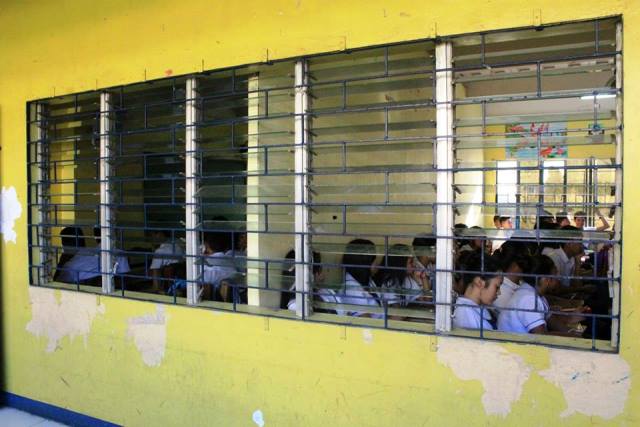
Education workers warned that corruption has deepened the crisis in public education. Jason Pozon of the All-UP Academic Employees Union-Los Baños said that budget cuts, classroom shortage, and the continued use of contractual labor in state universities and colleges reflect misplaced government priorities. “Corruption directly attacks the youth’s right to quality education and workers’ right to secure employment,” he said, adding that the shrinking budget of state universities, including the University of the Philippines, contradicts the government’s constitutional obligation to prioritize education. Pozon also warned against the growing political pressure on academic institutions. “Universities should remain free spaces for critical thinking and public service, not targets of political harassment.”
Jeverlyn Seguin of Katipunan ng mga Samahang Magbubukid sa Timog Katagalugan (KASAMA–TK) said that corruption has devastated farming and fishing communities already reeling from the effects of climate disasters. After recent typhoons, palay prices in parts of Batangas reportedly dropped to as low as P5 per kilo while rice prices in the market remain high.
“For farmers and fishers, corruption is not an abstract issue. It means hunger, debt, and the loss of our only source of livelihood,” Seguin said. She criticized dredging, reclamation, and large-scale tree-cutting projects which she said worsen flooding and environmental destruction. Seguin also said disaster assistance for affected farmers and fishers often takes five to six months to be released. “When it is for ordinary people, the process is slow. When it is for corrupt officials, approvals are fast.”
Neglected services
According to BAYAN-Laguna spokesperson Justin Umali, corruption lies at the root of the region’s recurring floods, the lack of hospitals and classrooms, and the displacement of urban poor communities. “Billions are spent every year, yet the same problems persist. There is no real solution because people’s welfare is not the priority.”
He also pointed to demolitions carried out in the name of development without clear and humane relocation plans for displaced families. “This is a violation of the right to adequate housing.”
Reyna Villafuerte of San Pablo Ayaw sa Korupsyon (SAPAK) said that their group, composed largely of senior citizens, retired teachers, and youth, was formed in response to repeated corruption scandals in agencies such as the DPWH and the Department of Health.
“Speaking out against corruption is not destabilization. It is the exercise of our rights,” Villafuerte said in an interview with Bulatlat. She confirmed their participation in the Nov. 30 protests in Calamba and Metro Manila.
Corruption as a human rights crisis
For BMP-Southern Tagalog, corruption is inseparable from the systematic violation of people’s rights. “While public funds are being stolen, wages, social services, and even lives are also being stolen,” BMP Spokesperson Ely Guzman said. He stressed the need for sustained mass action, saying corruption is “never just the tip of the iceberg.”
Organizers said that the Nov. 30 mobilization at Crossing, Calamba is expected to draw thousands of workers, farmers, youth, church people, disaster survivors, and urban poor from across the region. “The fight against corruption is a fight for people’s rights, dignity, and safety,” Tendero said. “Without accountability, the people will remain in danger.” (RTS, DAA)
 Save as PDF




0 Comments