

MANILA – In the Philippines, two million children were subjected to online sexual abuse and exploitation in 2021 alone. Another study in 2022 in 2022 showed that one in 100 Filipino children was found to be trafficked to produce child sexual exploitation material.
Despite this number, an International Justice Missions (IJM) study revealed that the disclosure rate of these incidents is still very low, primarily due to stigma. Only 0 to 3 percent are aware of how to report to police or use helplines.
From the time that Republic Act No. 11930 or the law punishing online sexual abuse and exploitation of children (OSAEC) and child sexual abuse or exploitation materials (CSAEM) was passed in 2022, reports from the National Center for Missing and Exploited Children decreased from over 2.7 million in 2023 to over 1.7 million in 2024.
According to the same study, 44 percent of children do not know where to seek help for online sexual abuse or harassment.
“There is still a lot of underreporting and we still need a lot to talk to in order to expand information dissemination and awareness raising, and ensure that those who report will not experience victim blaming,” said Gabriela Women’s Party Rep. Sarah Elago during a gathering of advocates at the Philippine Christian University, Nov. 14, 2025.
Present were representatives from the National Council of Churches in the Philippines (NCCP), Iglesia Filipina Independiente (IFI), Ecpat Philippines, Bahay Tuluyan, Kanlungan sa Er-ma Ministry, Children’s Rehabilitation Center (CRC), Philippine Interfaith Movement Against Human Trafficking (PHIMATH), and Salinlahi Alliance for Children’s Concerns.
OSAEC in the Philippines
According to the United Nations Children’s Fund (UNICEF) Philippines, more children are spending more time online. Fifty percent accepted social media friend requests from strangers, with 13 percent of those eventually meeting the online contacts in person.
“Many parents and teachers approach us [that their children] are meeting someone through Roblox or online gaming and add them in their contacts,” said Sarah Elago in the consortium.
Children disclosed that they were subjected to grooming and received offers of gifts or money in return for engaging in sexual acts. Some faced threats or blackmail compelling them to participate in sexual acts, according to UNICEF Philippines.
CSEM in the Philippines
The issue of CSEM production is a worldwide problem affecting communities globally.
The Philippines is identified as a global epicenter for the production of financially motivated CSEM, particularly through livestreaming, according to the IJM’s recent study titled ‘Scale of Harm.’
The production of CSEM is further hidden on encrypted platforms, including messaging
and video-chat apps, with companies and platforms not detecting or reporting livestreamed abuse, while CSEM image and video reports rarely specify if they are “new production.”
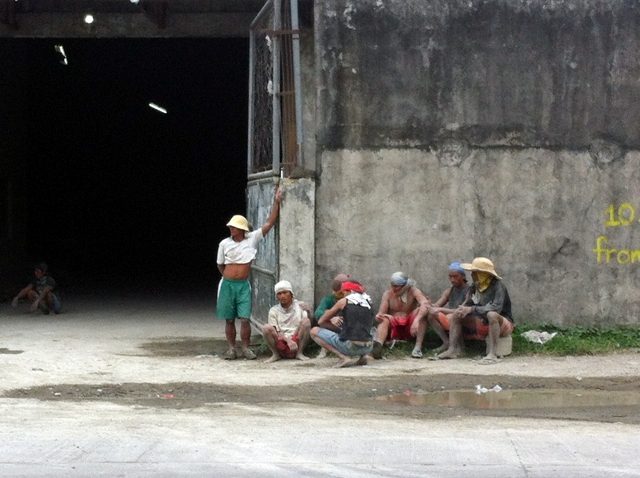
One of the enabling conditions for CSEM can be widespread poverty where legitimate means of income are scarce.
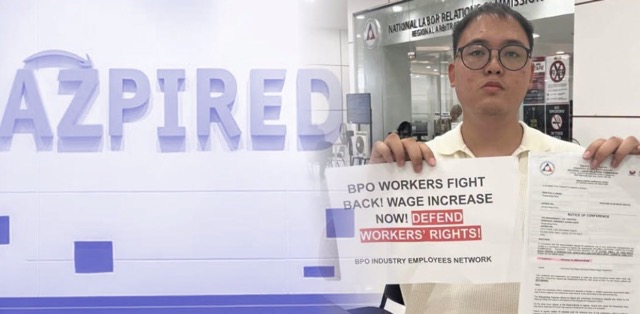
According to IBON Foundation, minimum wage is not enough to meet a family of five’s basic needs with the average nominal minimum wage being just P487 (USD8.25) or about 40 percent of the estimated P1,225 (USD20.70) average family living wage.
Olivia Bernardo, executive director of Children’s Rehabilitation Center, emphasized the crucial need for solidarity so that children can have a safe future. (RTS, RVO)
 Save as PDF


0 Comments