

By Dulce Amor Rodriguez
MANILA — When the Al Jazeera team took shelter in a makeshift tent outside Al-Shifa Hospital, they believed that the bright vests and press IDs would spare them from the worst of the fighting. On August 10, an airstrike flattened the tent and killed four Al Jazeera journalists and two freelancers, ripping open a hole in the idea that any place is safe for those who bear witness. The images from Gaza reproduced a dread many Filipino journalists already know—reporting the truth can invite death, and that the killers often walk free.
This is why the International Day to End Impunity for Crimes Against Journalists, every November 2 matters. The United Nations agency that tracks such deaths said that roughly 85 percent of journalist killings worldwide remain unresolved. When the law does not punish killers, the cost of telling the truth rises and the world loses its eyes and ears.
In the Philippines, the parallel is clear. The National Union of Journalists of the Philippines (NUJP) said the country again ranks among the worst on the Committee to Protect Journalists’ (CPJ) Global Impunity Index, ninth in 2024, and reminded the public that the culture of impunity keeps journalists under constant threat. The NUJP urged authorities to stop dismissing the problem and to treat every killing as “presumed work-related until proven otherwise.”
From Gaza’s rubble to a provincial newsroom in the Philippines, the same tactics stack against reporters: delegitimization, criminalization, and institutional inaction. Together they form a global narrative of silence.
Journalists in Gaza
Since the outbreak of full-scale hostilities in October 2023, reporting from Gaza became among the deadliest assignments in modern journalism. Multiple organizations that monitor attacks on reporters documented an extraordinary number of deaths among media workers.
Reporters Without Borders and other groups counted hundreds of media workers killed as the fighting intensified in 2024–2025; Al Jazeera and the Financial Times chronicled sustained attacks on Palestinian journalists and media infrastructure. The scale of fatalities in Gaza made 2024 one of the deadliest years for journalists since the documentation began.
How did reporters die? The incidents varied. Some died while covering bombardments and evacuations. Others died when Israeli strikes hit buildings and tents that housed journalists and media workers.
The August 10 airstrike near Al-Shifa Hospital that killed several Al Jazeera staff typified the grim danger. A press tent with vests and equipment became a target and turned into a mass casualty scene. International monitors and press groups said that the attack exemplified a pattern in which combatants question journalists’ neutrality by alleging ties to armed actors, then fail to account for civilian deaths.
A recurring tactic accelerates the violence: delegitimization. Reporters in Gaza faced accusations, sometimes from official sources, that they worked for or colluded with armed groups like Hamas. CPJ and other watchdogs documented instances in which authorities labelled journalists as combatants or propagandists, often without independent evidence. That narrative precedes, and sometimes excuses, attacks. When authorities deny the status of reporters or paint them as enemies, the moral and legal bar to investigate and prosecute falls.
Investigations, where they occur, rarely result in accountability. UNESCO’s observatory shows a chronic failure by states to pursue justice. The consequence is global. When killers go unpunished in high-profile conflicts, it signals to other actors that attacks on the press can succeed without cost. That signal travels across borders.
Journalists in the Philippines
The Philippines knows well the culture of impunity. Since 1986, local monitors count hundreds of journalists killed in connection with their work. The NUJP’s recent statement during the International Day observance stressed that the country remains on CPJ’s Global Impunity Index and that many cases remain unresolved for years. The NUJP insisted that labeling or minimizing these killings “does not make journalists safer.”
CPJ’s Global Impunity Index listed the Philippines ninth in 2024, citing 18 unsolved journalist murders—a measure that captures only cases authorities have not resolved for the past 10 years where the killing was work-related. Local reporting shows how these numbers translate into personal tragedies, where families wait years for hearings, small newsrooms fear reporting local corruption, and provincial reporters receive no effective protection.
Under the Marcos Jr. administration, authorities offered various gestures—task forces, memoranda of agreement, and public promises—to address media safety.
The Presidential Task Force on Media Security (PTFoMS) announced partnerships meant to protect journalists and curb harassment. But press groups, including NUJP, criticized some PTFoMS statements and policy talk when they seemed to downplay the scale of the problem. Both PTFoMS and the Philippine National Police (PNP) have repeatedly refused to acknowledge systemic failures that allow attacks to persist. NUJP warned that such denialism undermines genuine reforms, stressing that institutional commitments require transparency and urgency to be meaningful.
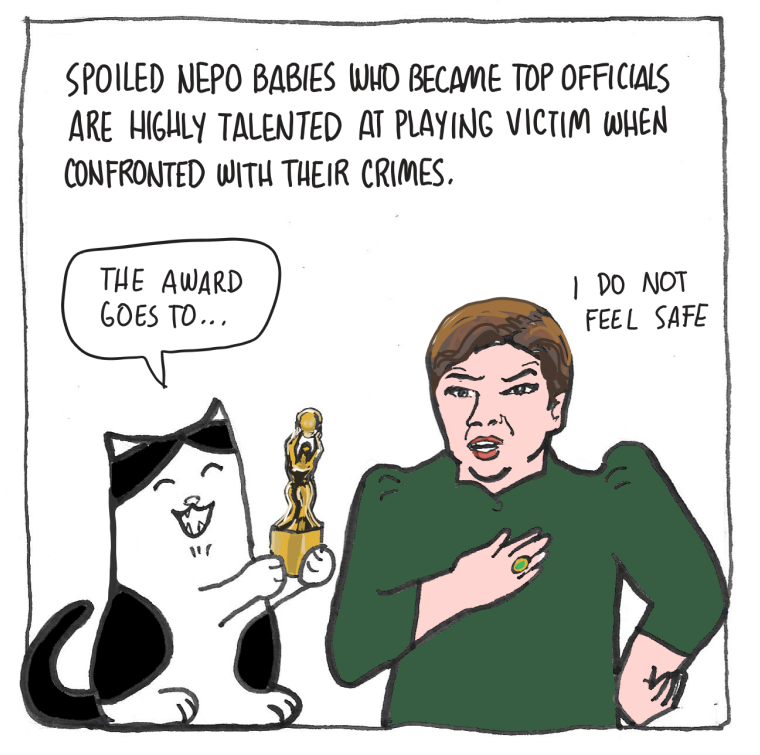
Red-tagging, such as labeling activists, human-rights defenders, and sometimes journalists as communist or terrorist sympathizers, compounds the risk. NUJP and human-rights groups said that such labeling often precedes legal or physical attacks, and that when authorities accept these labels uncritically, they undermine investigations and public protection. The parallel to Gaza is stark in both contexts as delegitimization precedes violence.
Case studies show the human cost. The 2009 Ampatuan massacre in Maguindanao which killed 32 journalists and media workers remains a touchstone. The victims’ families pursued justice for a decade before partial convictions came in 2019. Many leaders and alleged masterminds still remain at large, and some families keep litigating for reparations and full accountability. What happened in Ampatuan, Maguindanao is clear proof that convictions can come but only after extraordinary pressure and long legal fights.
More recent killings under the Marcos Jr. administration include a string of provincial attacks that watchdogs and unions scrutinize. Many of those cases still lack convictions for masterminds. Families speak of stalled probes, missing witnesses, and official narratives that treat killings as personal vendettas rather than work-related crimes—an interpretation journalists reject.
Tactics, denial, and impunity
At first glance Gaza and the Philippines occupy different threat landscapes: Gaza as a war zone, the Philippines as a politically volatile democracy with local power struggles. But the mechanics that enable attacks on journalists overlap.
Delegitimization and labeling (terror-tagging red-tagging) appear in both. In Gaza, Israeli officials at times accused Palestinian journalists of ties to armed groups, shaping public narratives that rationalize strikes on media targets. In the Philippines, red-tagging and accusations of being “enablers” or “terrorist sympathizers” functionally narrow public sympathy for a journalist under attack. In both contexts, accusation precedes prosecution—or non-prosecution—and often precludes impartial investigations.
The culture of impunity compounds the harm. In Gaza, the sheer number of deaths overwhelms investigative systems and international mechanisms. Bodies of reporters sometimes never receive comprehensive, independent investigations. In other cases, the fog of war complicates evidence collection. In the Philippines, impunity persists in different ways like slow prosecutions, missing witnesses and occasional political interference. CPJ’s index reflects this pattern: the Philippines has consistently appeared on the Global Impunity Index since it started, signaling entrenched failure to prosecute killers of journalists.
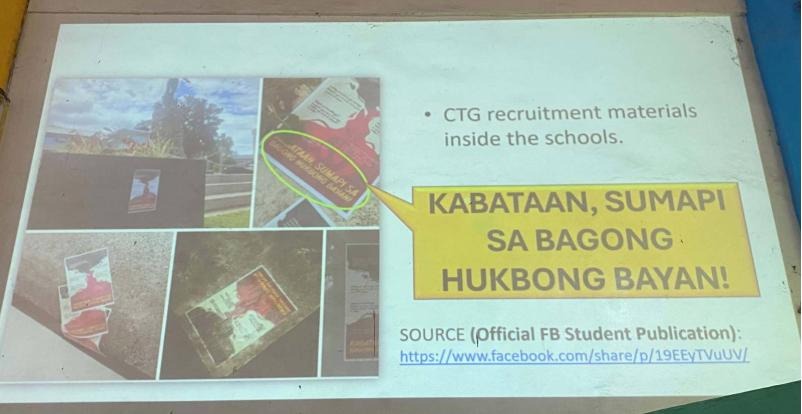
Both contexts produce a chilling effect. Reporters retreat from high-risk beats. Editors mandate self-censorship. Community and campus papers—traditionally vital sources of local accountability—feel the pressure. In the Philippines, campus journalists told Bulatlat that subpoenas and intimidation limit their capacity to report on corruption and human-rights abuses.
As killings mount and justice stalls, journalists around the world mark a day to insist that remembrance must lead to accountability.
Commemoration
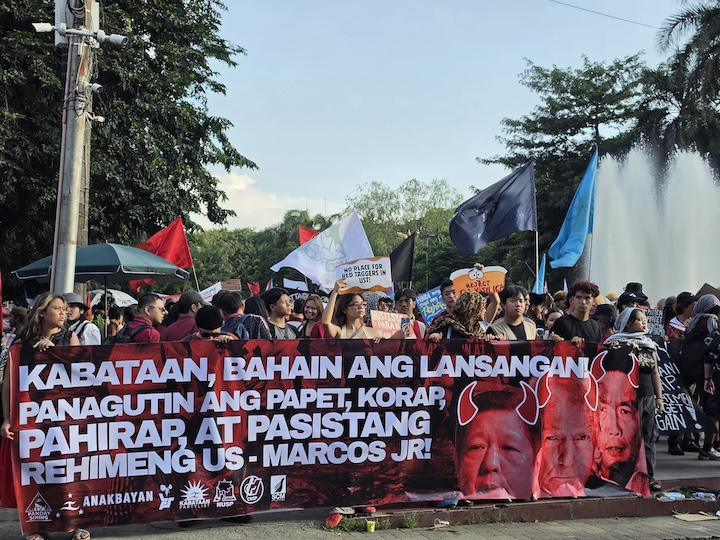
November 2 is more than a memorial. It is a demand to investigate, prosecute, and punish. The date traces its origin to the killing of two French journalists, Ghislaine Dupont and Claude Verlon, who were abducted and murdered in Mali in 2013 while on assignment. In response, the UN General Assembly recognized the date to focus global attention on the persistently high rate of unresolved attacks against journalists. UNESCO’s observatory reports coordinate data and presses states to answer for their failures. On this day, civil-society groups worldwide, including in the Philippines, collect names, hold rallies and issue demands for reforms.
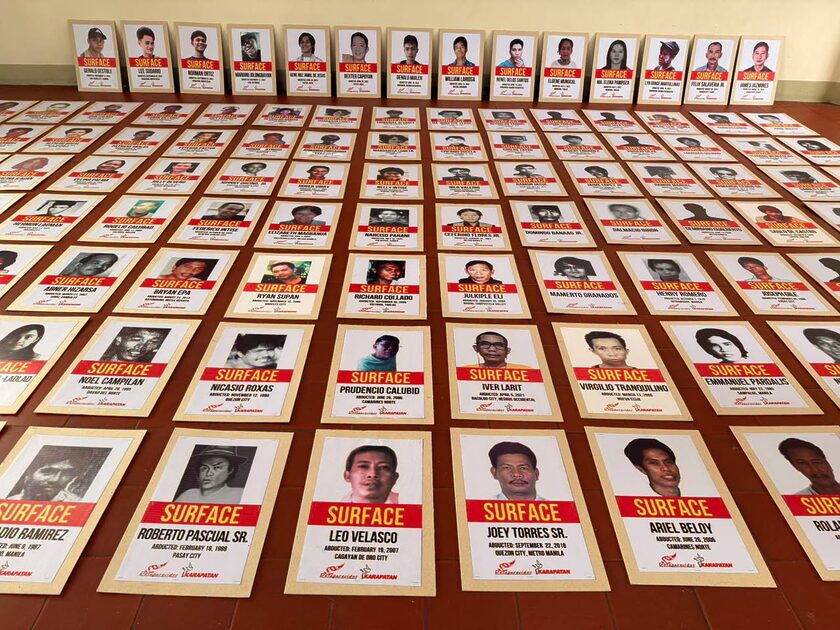
In the Philippines this year, NUJP led remembrance activities that linked local names to global losses. The union highlighted the Gaza casualties alongside Philippine cases, explicitly connecting the two as part of an international crisis of impunity. NUJP’s statement stressed that government pledges must translate into transparent investigations and faster prosecutions.
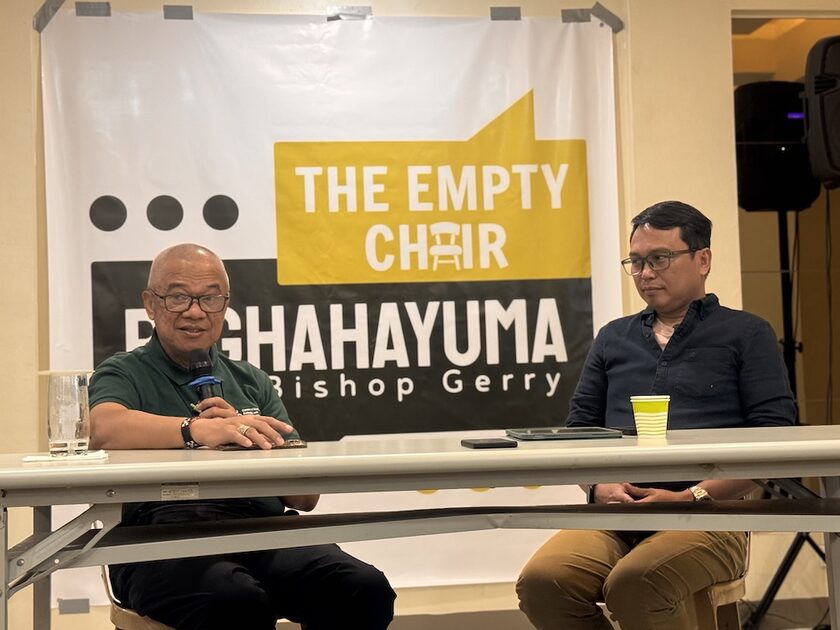
Veteran journalist Raymund Villanueva of Kodao Productions and Altermidya reminded fellow journalists and the public that the enemies of press freedom remain powerful. “Being here is part of seeking justice and defending the right to free expression—to remind everyone that the enemies of press freedom are still the ones in power. They must be watched, they must be opposed, they must be fought,” he told Bulatlat in an interview.
For Villanueva, remembrance without resistance means surrender. He urged journalists to stay vigilant and to confront the same forces that perpetuate impunity from Gaza’s bombed newsrooms to Philippine broadcasters killed in their provinces.
Beside veteran journalists stood members of the College Editors Guild of the Philippines (CEGP), one of the country’s oldest alliances of campus publications. Brell Lacerna, CEGP’s national spokesperson, stressed that the struggle for press freedom begins inside the schools. “Campus publications are already being suppressed inside schools, yet their journalism remains powerful because it opens the eyes of the youth to discuss and resist human-rights violations happening across different parts of the world.”
From professional journalists risking their lives in conflict zones and provinces, to student editors fighting censorship within their campuses. Villanueva and Lacerna called for solidarity across generations.
When a news tent in Gaza collapses under an airstrike, or when a provincial radio host dies on a midnight street, the aftermath looks different on the surface. But both tragedies fit the same pattern of delegitimization, weak investigation, and legal systems that fail to hold masterminds to account. When that happens repeatedly, public life loses a critical check on power.
Journalists are not martyrs by choice. They pursue facts so citizens can choose. When the press falls silent because of bombs, bullets or bureaucratic delay, democracy itself suffers. If the world is serious about justice, November 2 must become a day of action for families who still wait in the Philippines, for the besieged newsrooms of Gaza, and for every reporter who goes to work knowing the risks and still insists on telling the truth. (DAA)
 Save as PDF



0 Comments