
If everything proceeds according to the regime’s plan, the expense and logistical requirements of holding a plebiscite to ratify the amendments to be passed by the constituent assembly is of no consequence to the Arroyo government, which is desperately laying down measures to ensure its future beyond 2010.
Charter change, through a constituent assembly, is a desperate political gamble being played by the Arroyo government. Perhaps it figured that enabling Gloria Macapagal-Arroyo to extend her immunity by allowing her to run as representative of her district and then become prime minister is less costly politically — with less chances as well of inviting an upheaval — than postponing the 2010 elections or declaring martial law, without completely closing its doors on these options.
The Lakas-Kampi merger makes it more formidable in a parliamentary system where elections are exclusively by district, and henceforth more manageable, than in a presidential system where its unpopularity would trump any advantage it has in terms of machinery. Have you noticed that the Arroyo government has been sounding out the possibility of a parliamentary system and that all it has been committing to is the holding of the 2010 elections? Nevertheless, even just removing the term limits to enable Arroyo to run for reelection has less political costs.
But the recent move by Arroyo’s minions in the Lower House is a political gamble nonetheless. Arroyo has been consistently unpopular, with the latest Social Weather Station survey (first quarter of 2009) showing that 59 percent of Filipinos are dissatisfied with her performance. The February 2009 Pulse Asia survey showed a lower disapproval rating of 46 percent with a distrust rating of 45 percent but her approval rating was also way below. More importantly, the Arroyo government would have to contend with the overwhelming plurality of Filipinos opposed to charter change to extend the president’s term, comprised of 66 percent of the population, according to the latest survey of the Social Weather Station, and 64 percent by Pulse Asia’s reckoning.
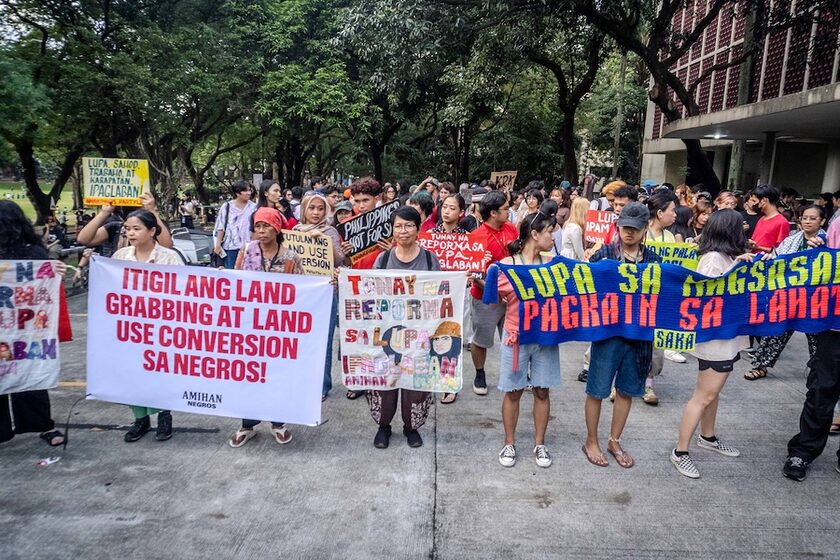
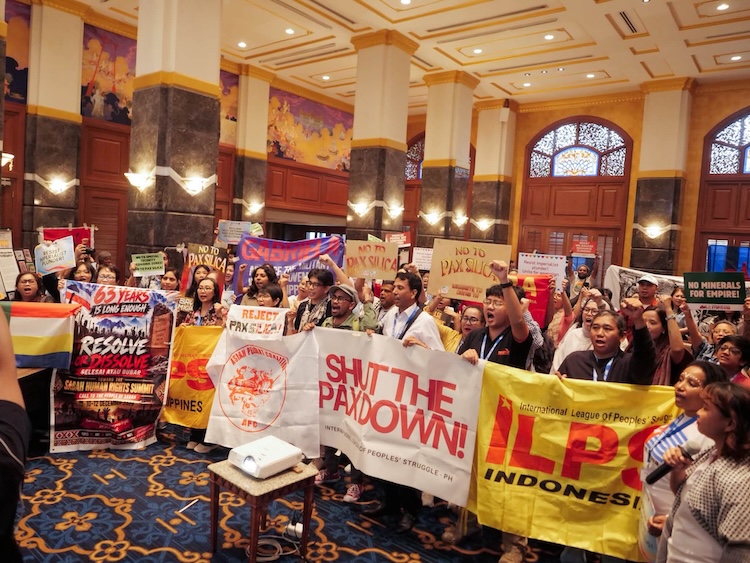
Already, progressive organizations such as Bayan, Kilusang Mayo Uno, Kilusang Magbubukid ng Pilipinas, Gabriela, Anak ng Bayan, among others, and the opposition led by UNO have vowed to conduct coordinated mass actions to put a stop to the cha-cha train of the Arroyo government. Even the Catholic and Protestant churches are opposed to these maneuvers of the Arroyo government. If the Filipino people would come out in numbers to show their disgust toward the railroading of cha-cha and toward the Arroyo government, the political gamble may yet backfire on the administration and put an abrupt end to its rule. Then, it would have to face the clamors for justice against the blatant corruption, the extrajudicial executions and enforced disappearances of political activists and human-rights defenders, the killings of journalists, and the attacks on people’s rights earlier than 2010. (Bulatlat.com)
 Save as PDF


sir,
mabasa ko na io sa ibang babasahin,
di mo napalalim masyado ito article.
sama tinignam mo ng malalim ang role ng US sa sitwasyon ito dahil malaki ang pakinabang nila pag aprob na hr1109, role ni gma at iba pang kalyado sa labas (negosyante, banker at iba pa), Militar.
gumawa ka na rin ng opinyon mo ratsadahin mo na.
ano sa palgay mo.
slamat more power.
rebecca