2010 Elections: Four G’s during Abra polls

By JENNY S. DE VENECIA
International observer intimidated by the Armed Forces of the Philippines in Abra

ADVERTISEMENT
By JENNY S. DE VENECIA
International observer intimidated by the Armed Forces of the Philippines in Abra

By CAMILLE ANNE DE ASIS
“Though the automation of the elections brought quite a few positive changes in the electoral system...Unfortunately, these improvements were not sufficient to break the established system of command votes, in which political leaders dictate people’s choices, and continues to thwart the true exercise of the right to suffrage,” said Salik Ibrahim of the Citizens’ Coalition for ARMM Electoral Reforms.

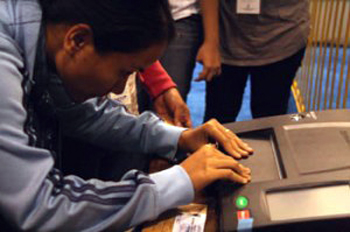
By CHERYLL D. FIEL / Davao Today
The City Board of Canvassers in Davao lowered the threshold of votes necessary for the winning candidates to be proclaimed winners. The Board proclaimed the winners five hours after it resumed counting of votes on Wednesday, May 12.
By JETTY AYOP-OHAYLAN AND MARIETTA BASTE-HERNANI / Davao Today
In Marahan Central Elementary School in the city’s third district, the voting pace was slow, and even those who went before the poll centers opened waited for five hours for their turn to vote. The school had two precincts with 1,000 total voters. By noon, only 30 percent of the total number has cast their votes.

By GERMELINA LACORTE / Davao Today
Carmen Gultiano, a voter in one of the precinct clusters at the Daniel Aguinaldo National High School, came out of her precinct tired, agitated and unable to hide her frustrations after spending six hours just to vote. Gultiano arrived at her precinct at eight o’clock in the morning and was only able to vote at two thirty in the afternoon.

By CHERYLL D. FIEL / Davao Today
It was not the machine glitches that many people were worried about but the poll clerk’s hunt for names of registered voters and other verification procedures that slowed down the voting process in the recently-concluded elections.
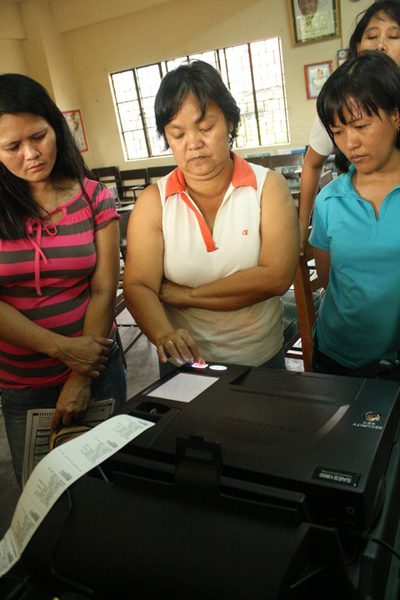
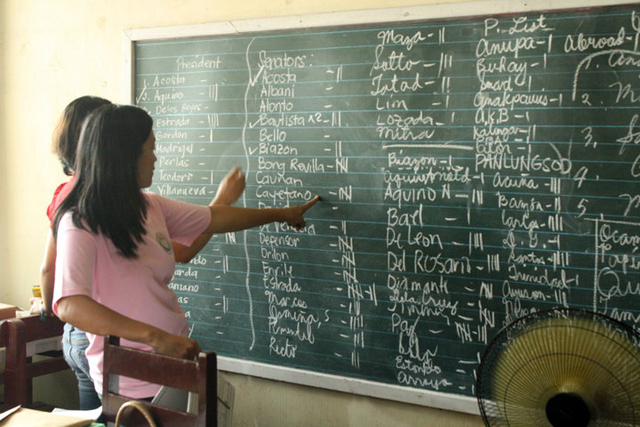
By PAULINE GIDGET R. ESTELLA
Teachers who served during the May 10 elections had to carry the burden of the lack in preparations of the Comelec. They also had to endure the people's anger at the long queues and yet some have not yet been paid.

By JANESS ANN J. ELLAO
"We came to observe a clean, democratic elections, but I cannot conclude that it was," said Justine Kiwanuka, a delegate of the People's International Observers' Mission.
A community of readers and supporters that help us sustain our operations through microdonations for as low as $1.
 Save as PDF