Food producers go hungry
Farm workers are calling for higher wages as they battle every day to put food on the table.
ADVERTISEMENT
Farm workers are calling for higher wages as they battle every day to put food on the table.
"What follows the food crisis will be the worsening hunger of the people.”
“What good are farm-to-market roads if they do not have anything to transport? Agriculture and fisheries productivity has worsened due to continuous hikes in production costs."
"It's not just because of the Duterte administration, it's because of decades of accumulating policies which started during the Marcos dictatorship."
The “Tax Reform Act for the Masses and the Middle Class," seeks to exempt those making P33,333 ($590) monthly or less from paying income tax. It is also looking into providing tax breaks for families of persons with disabilities, those caring for elderly parents or relatives, and those with children.
Dev't groups say Filipinos are seeking tangible solutions, looking at the upcoming election as a turning point for democracy and development.
"The next administration must do away with previous and existing neoliberal policies that wreaked havoc on our agriculture and productive forces.”
For Filipino transport drivers, the incessant oil price hikes may force them to stop operating. Worse, it keeps them from putting food on their table.
According to the Organization of Petroleum Exporting Countries (OPEC), there is "no physical shortage" of oil. So, what is happening then? As in the case of major oil price volatilities this century, excessive speculation in the oil derivatives markets is pushing up prices, not the disruptions in oil's actual or physical trading.
Farmers and fisherfolk groups reiterated the need for aid as the incessant oil price hikes have significant impacts on their production and cost of living.
"DA stands for Department of Agriculture, not Department of Importation. The agency's primary focus should be the strengthening of the domestic agriculture and fisheries sectors."
For Filipinos running micro and small businesses, overworking has become the new norm as they confront the incessant rising of prices of oil and basic commodities.
The stinginess of the Philippine government’s COVID-19 response only reflects how thoroughly the state has internalized its role as prioritizing the interests of capital over the working classes. It is not spending what needs to be spent on COVID-19 containment, health measures, assistance to distressed families and small enterprises, and others.
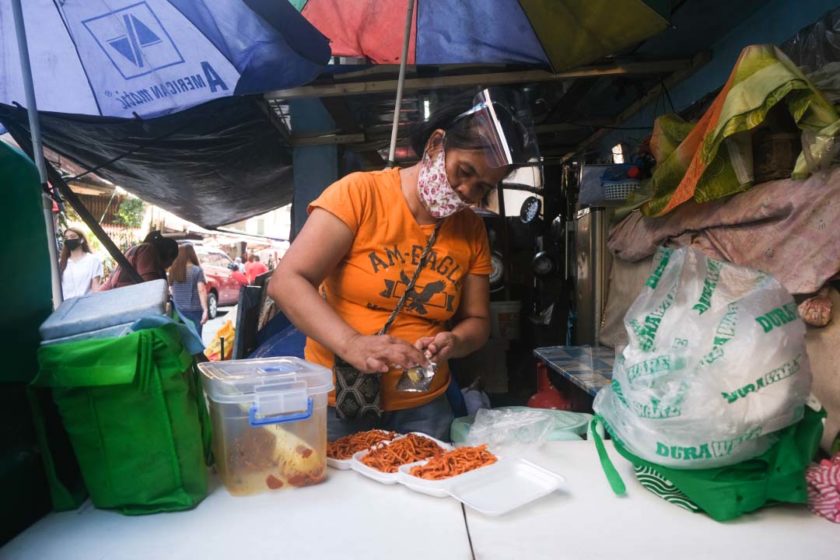
The increasing prices of staple commodities are making access to food even more difficult, even for vendors themselves.
Filipino commuters have to wait 20 to 30 minutes to secure a ride and another one to 2.5 hours of travel time to reach their destination.
A 20-passenger jeepney usually has a full tank capacity of 60 liters, which means that the driver is spending ?1,107 ($21.83) more to fill up his tank. That is equivalent to about 29 kilos of rice - or two weeks’ worth of the regular consumption of a five- to six-member household.
Women peasant group Amihan called on the government to aid Typhoon Maring-hit farming and fishing communities in Northern Luzon provinces that have been battling very low farm gate prices due to massive importation.
Overpriced gasoline and diesel, for instance, gave oil firms an estimated P38.47 billion (US$757.13 million) in additional income, of which P4.62 billion ($90.93 million) went to the government as value-added tax (VAT).
“The Department of Agriculture never learns. Every time there is an alleged shortage, the default solution is to flood our market with imported fish. Yet this measure never addresses and resolves the crisis in our fisheries production that happens on a yearly basis."
“Substantial revenues can be raised by taxing the country’s super-rich who can well afford to contribute much more to COVID-19 response and other needs. This is aside from how the administration can realign funds from bloated infrastructure, military and police, and debt servicing items in the proposed 2022 budget.”
A community of readers and supporters that help us sustain our operations through microdonations for as low as $1.