
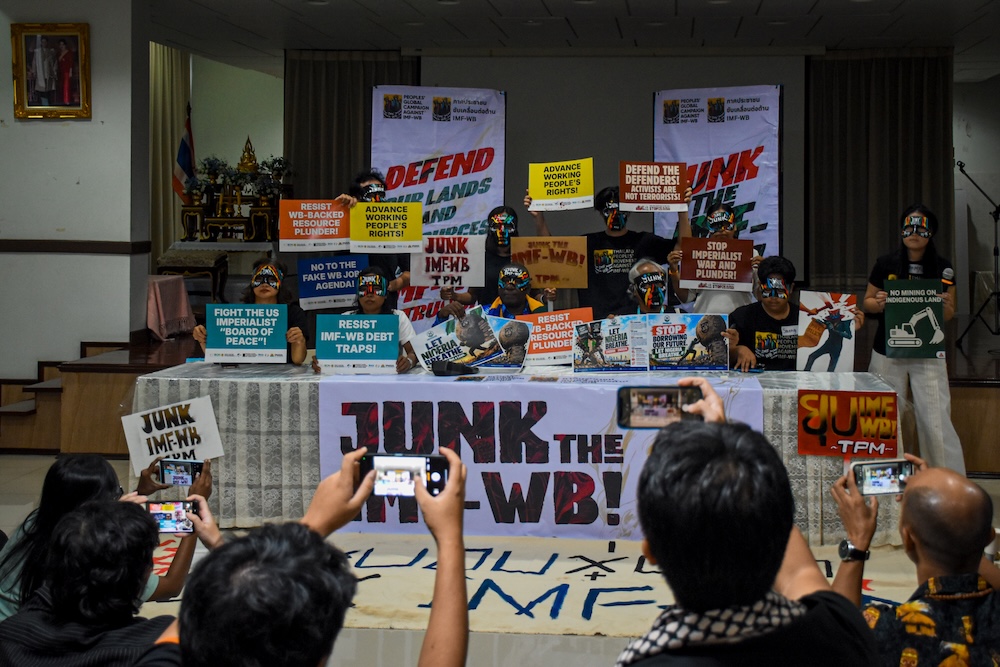
We are really delegitimizing the IMF-WB.
BANGKOK – The People’s Global Campaign (PGC) against the International Monetary Fund and World Bank (IMF-WB) marked October 12 as the Global Day of Action against the two Bretton Woods institutions.
The Bretton Woods Institutions or the IMF-WB are financial institutions established in 1944 at a conference in Bretton Woods, New Hampshire in the United States. The goal was to establish a stable international economic system after the devastation of World War II. The IMF and World Bank have been criticized for imposing loan conditions that push governments to adopt liberalization policies, including deregulation and privatization.
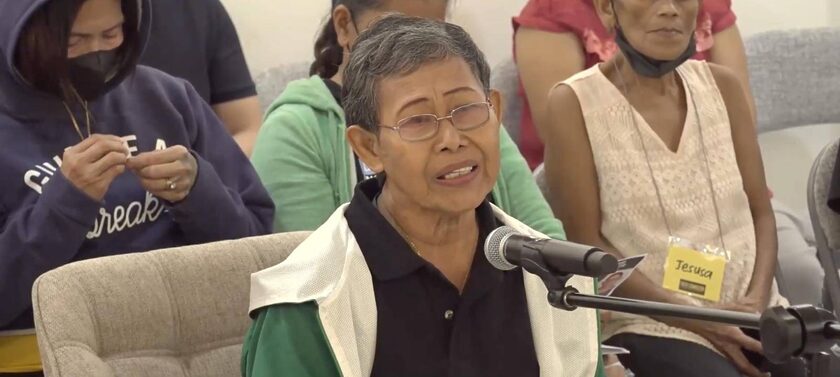
In a press conference on October 12, representatives from the women, indigenous peoples, migrant workers as well as leaders in local organizations in Thailand spoke how the IMF-WB destroyed people’s lives through neoliberal policies implemented around the world.
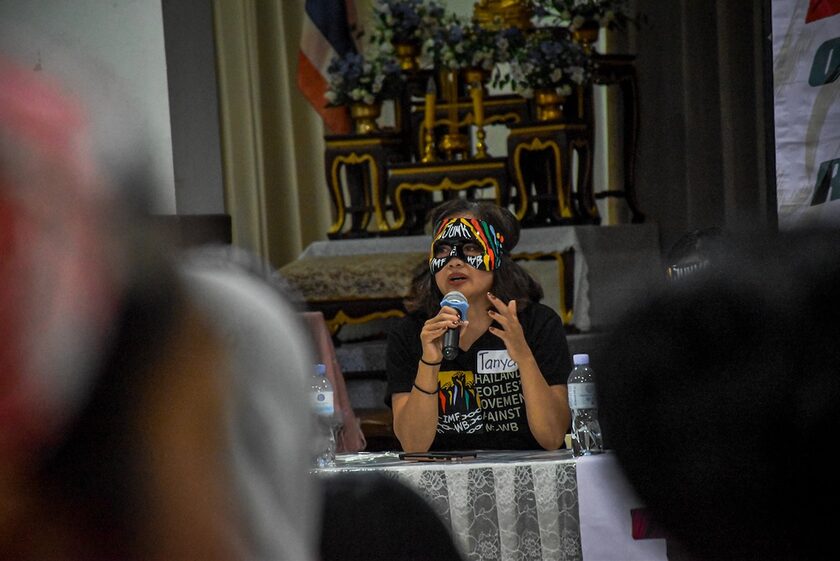
“Today marks the start of the Annual Meetings of the IMF-WB, and for the next several days, behind closed doors, they will be deliberating on the next major neoliberal scheme as the world economy plummets into further crisis and the people slip into further destitution,” said Donna Denina, spokesperson from the PGC.
The press conference was also joined by the Thai People’s Movement (TPM) against IMF-WB.
October 12 was the first day of the Annual Meeting of the IMF-WB which ends on October 18. Thailand is the host of the said event which will be attended by more than 15,000 participants from 191 countries, including central bank governors, economic policy makers and business leaders to discuss the world economy.
Denina said that the Global Day of Action protests also happened in different parts of the world, including the Philippines.
80 years of people’s suffering
In its 80 years of existence, the IMF-WB plundered land, exploited the people and destroyed the environment, said Emily during the press conference.
“Since 1970, the number of migrants has continued to surge. In 2026, the number of migrants reached 304 million or 3.7% of the world’s population. Meanwhile, the number of refugees reached 117.8 million. This number will continue to rise alongside the plundering of natural resources and repression,” said Emily of International Migrants Alliance (IMA).
She lamented how governments have failed to address the root cause of migration and have only complied with the IMF-WB’s labor migration and labor export policies. “In this scenario, migrants become the new commodity for export,” Emily said.
Now with the aging population in the developed countries, Emily stressed that more migrant workers would be further exploited. “Under the slogan ‘migration for development,’ the World Bank frames labor migration as a way to address labor shortages in developed countries caused by aging populations so the business will not lose profit. To generate super profits, migrants are exploited to an even greater extent and treated like modern-day slaves.”
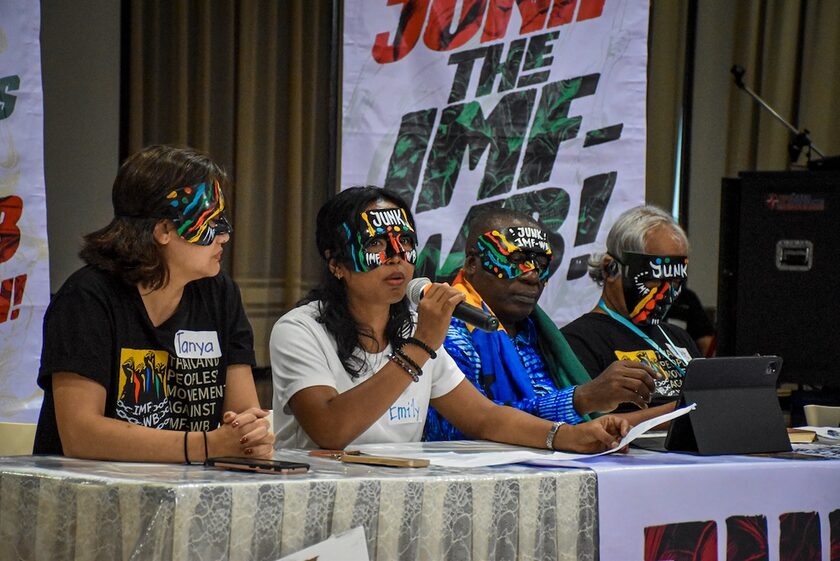
She said that migrant workers are often granted fewer rights and they enjoy less protection than local workers. They also face discriminatory and degrading conditions, including extremely low wages, restricted residency rights, quota systems, and the denial of other labor rights. They would tend to be isolated through “live-in” arrangements, requiring them to live in their employers’ homes or on company or plantation premises.
“Restrictions on their freedom to settle, move, or change jobs further limit their autonomy. They are also stigmatized, prevented from organizing or speaking out, and made scapegoats during crises, as seen during the 2008 global financial crisis and the COVID-19 pandemic in 2020,” she said.
Indigenous People leader Celestine AkpoBari represented the Ogoni people of Nigeria and the International Indigenous Peoples Movement for Self-Determination and Liberation (IPMSDL) said that Indigenous People are the primary caretakers of the world’s last frontiers “and are more often than not sidelined in the political and economic conversations of our countries.”
“We have every reason to join the resounding call of the peoples of the world: ‘Shut down the IMF and the World Bank!’ Indigenous Peoples are among those most affected by these traps, loan conditionalities, and other forms of deceit,” he said. “Our lands, forests, and waters are first to be targeted for plunder, while we face displacement, criminalization, and killings. Yet, we are also among the most militant, having defended our ancestral domains for generations, often at the cost of our lives. It is a historical truth that our collective values and long tradition of struggle offer real alternatives. The global fight against plunder and war grows stronger as Indigenous Peoples join the struggle against imperialism.”
He also criticized the IMF-WB’s promotion of liberalization, privatization, deregulation, debt dependency, and so-called “development” projects that “benefit corporations and creditor states while deepening poverty and inequality in colonized and neocolonial nations.”
“We, Indigenous Peoples, reject these schemes and their attempts to entrench our dependency,” he said.
Protesting vs IMF-WB
Several civil society organizations are here in Bangkok to hold activities exposing the IMF-WB and to share experiences and solidarity among the Thailand-based grassroots communities. This is despite the security issues faced by activists.
Thai student leader Nakita said that local police have been surveilling activists and those who organize events against the IMF-WB.
“The government has actually banned protests in the IMF-WB meeting area,” Naktia said in the Thai language. “I’m not sure whether they care or not but what I know is that they try to destroy us and only care for the benefits they can get.”
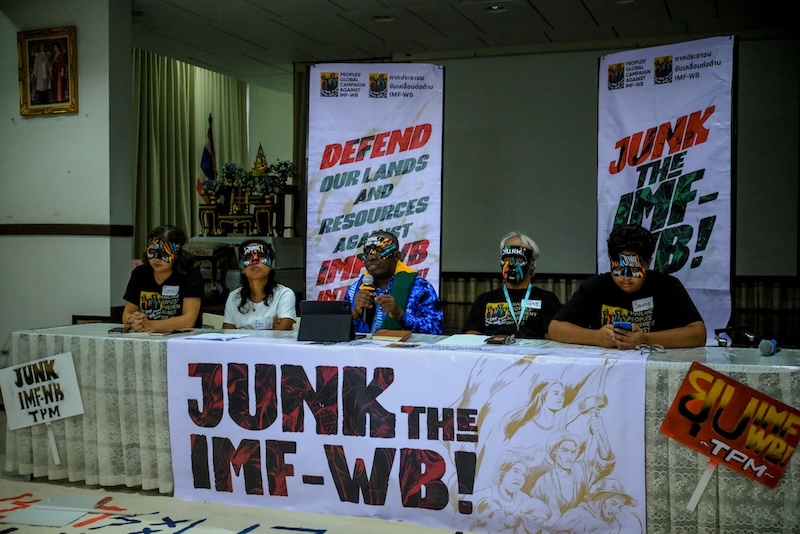
Denina said that no matter where the IMF-WB meeting will take place, the people will be there to respond. Historically, she said that the first major international protest against the IMF-WB happened in 1988. “Since then there has been a global response to these neoliberal policies because every year the conditions of the people continue to worsen. The economic crisis continues to be felt and is widespread. So when the IMF-WB comes to these countries, the people need an outlet to express their rage and I am sure that they expect to be met with resistance. So we have to continue that momentum amplifying the calls and even louder and stronger showing solidarity and resistance.”
Emily stressed the importance of organizing and educating people on the ills of IMF-WB. “[They] will have to meet every year, what we have to do is for the public to understand [issues affecting them], that is our responsibility.”
She said that there are many ways to express dissent against the IMF-WB, in person and online protests. “The more people protesting on the ground, I think that we are really delegitimizing the IMF-WB,” Emily said. (DAA)
Author’s note: Speakers’ full names are withheld upon request for security reasons.
 Save as PDF


0 Comments