

The Bureau of Corrections should investigate its erring personnel, file the necessary charges and demand that she return what she embezzled instead of squeezing the PDLs dry.
MANILA — Where did the political prisoners’ money go?
Political prisoners and support groups are demanding an investigation into millions of pesos in missing funds belonging to Persons Deprived of Liberty (PDLs) at the Correctional Institution for Women (CIW).
They stressed that prison authorities should hold accountable those responsible instead of passing the burden to inmates.
The controversy emerged after CIW officials disclosed the results of an internal audit that reportedly found a major discrepancy in the institution’s trust fund system where money sent by families to PDLs is deposited and managed by prison authorities.
In a statement released on August 6, political prisoners at CIW said Superintendent Daisy Castillote announced on July 30 that funds entrusted to the institution for PDLs could not be fully accounted for.
According to the prisoners, records showed that the trust fund should contain around P13 million, but an audit found that only about P6 million remained, leaving roughly P7 million unaccounted for.
The political prisoners said the discrepancy did not yet include jewelry and other trust fund accounts not reflected in the system.
For many inmates, the trust fund serves as a lifeline.
CIW limits the amount of cash PDLs may personally hold, prompting families to send money through remittances that prison authorities place in trust accounts from which inmates can withdraw small amounts each week for daily needs.
The prisoners said that they immediately demanded the return of the missing funds. However, they said that prison authorities proposed recovering the lost amount through income generated from inmates’ telephone calls.
Under the proposal, the cost of a five-minute phone call would increase from P3 to P5, while inmates would temporarily lose access to their share of telephone revenues that they previously used for dormitory expenses and other collective needs.
“PDLs were robbed, yet PDLs are being made to pay for it,” CIW political prisoners said in Filipino.
The prisoners also reported problems involving remittances sent through LBC following the announcement, stressing that some inmates did not receive money sent by their families and received no clear explanation from prison personnel.
They called for the immediate return of the funds, the abolition of the trust fund system, and investigations by the Commission on Human Rights, Department of Justice, and Congress.
Support groups back prisoners
Former political prisoners and human rights advocates have since joined the calls for accountability.
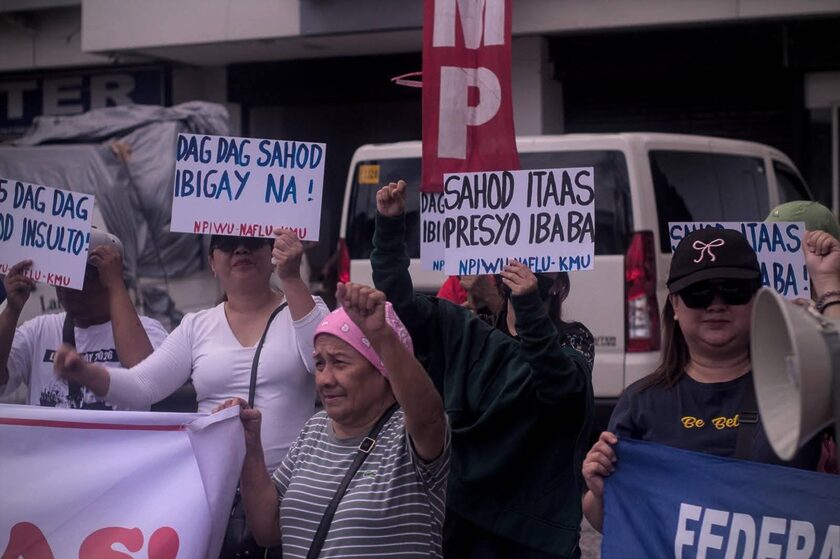
In a joint statement released on Aug. 12, the Samahan ng mga Ex-Detainee Laban sa Detensyon at Aresto (Selda) and the LAYA Campaign for the Release of All Political Prisoners expressed support for the demands raised by CIW political prisoners.
They criticized proposals to replenish the missing funds through increased telephone charges imposed on inmates.
Selda Vice Chairperson Danilo dela Fuente said that prison authorities should pursue those responsible instead of requiring inmates to shoulder the losses. “The Bureau of Corrections should investigate its erring personnel, file the necessary charges and demand that she return what she embezzled instead of squeezing the PDLs dry.”
LAYA spokesperson Amanda Echanis said that government agencies must conduct an impartial investigation into the missing funds.
“The Commission on Human Rights, the Department of Justice and other pertinent government agencies must get to the bottom of this,” Echanis said. “A thorough and impartial investigation must be done.”
Echanis said that the controversy reflects broader concerns about corruption in government institutions. “While poor Filipino people are easily put in jail, plunderers in government remain in power,” she said. “Accountability must be upheld.”
Questions over prison fund management
Beyond recovering the missing money, prisoners and support groups questioned the trust fund system itself.
Political prisoners said that they no longer have confidence in a mechanism that places funds sent by families under the control of prison authorities.
They demanded that inmates regain control over funds intended for their welfare.
Echanis said that money remitted by families should remain under the management of prisoners themselves and should be used solely for their collective needs. “No part of it should be taken anymore by the jail as a humanitarian consideration, especially to the PDLs who have no means to support themselves.” (DAA)
 Save as PDF

0 Comments