
Detention is neither romantic nor heroic. Writing about it even less so.
To be detained is to be denied your rights, whether for a few hours or for years. For activists, detention is the state’s reward for standing up to fight. For me and the rest of Southern Tagalog Lakbayanis, detention was a method of last resort.
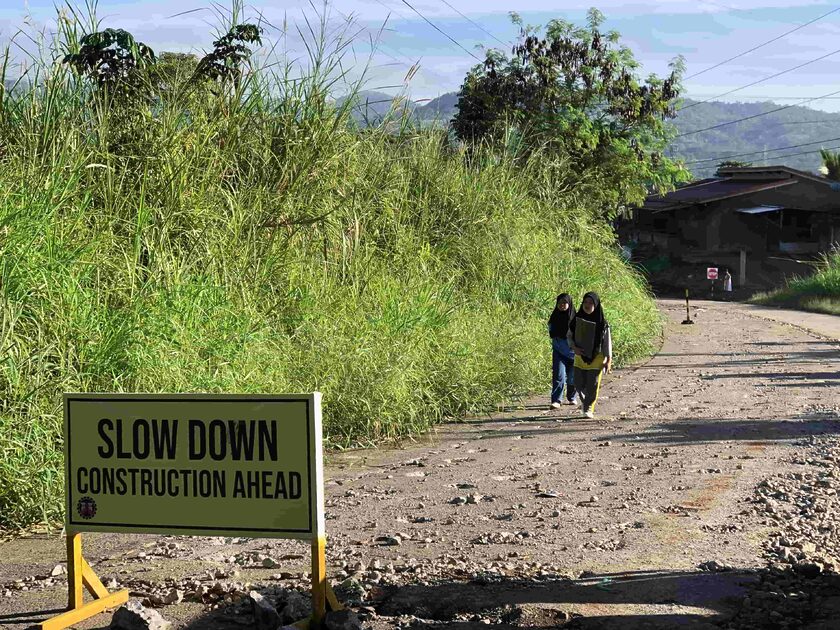
November 15 was the fourth day of the Lakbayan. What was supposed to be a protest march from Los Baños, Laguna to Liwasang Bonifacio became a daily struggle against police checkpoints and blockades. On the second day, our jeep’s brake lines were cut, and we were held for four hours in Biñan, Laguna. On the third day, we were blocked from crossing from San Pedro to Muntinlupa.
So we found ways to skirt around and continue our Lakbayan. On the fourth day, the police had cordoned off all routes going outside of Brgy. Sucat, Muntinlupa. Regardless, we were determined to find a way to continue.
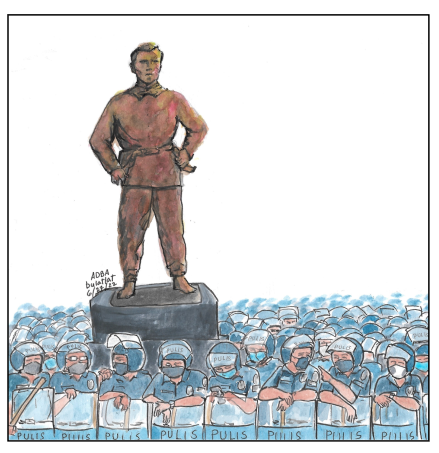
Thus, the arrests. It took the police roughly two hours to brutalize and transport us to Camp Bagong Diwa. At least eight officers manhandled me while I tried to rescue Southern Tagalog Exposure journalist Marky Casaquite. I felt the back of my head kiss the concrete pole before the two of us went down on the ground.
The rest of us received similar treatments. Some of us were sucker punched. Others were kicked around. The worst had his knee dislocated. The entire time we asserted that there were no charges against us.
There is nothing romantic about police brutality. The state, with its monopoly on violence, can choose to impose it on the people at will. We were activists, unionists, media workers, paralegals, peasants, and indigenous youth from all over Southern Tagalog. Our weapons were our words and our principles. What could we have done against truncheons and riot shields?
But despite the brutality, I saw firsthand how determination beats physical strength. The police had barely begun their arrests when we started sending our alerts, communication, and other means. In the police trucks, we consoled each other that things would be fine while medics tended to our injuries. Those of us who were familiar with the legal system explained to the others what our rights were and what was to be expected.
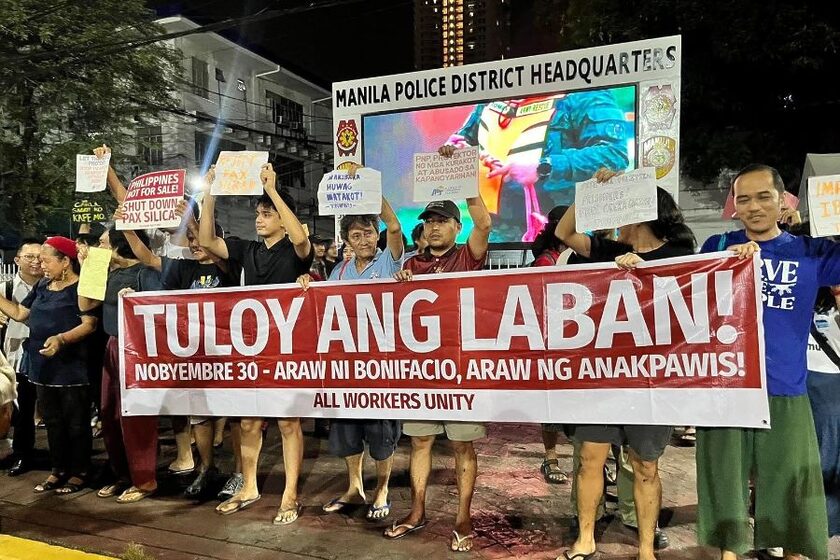
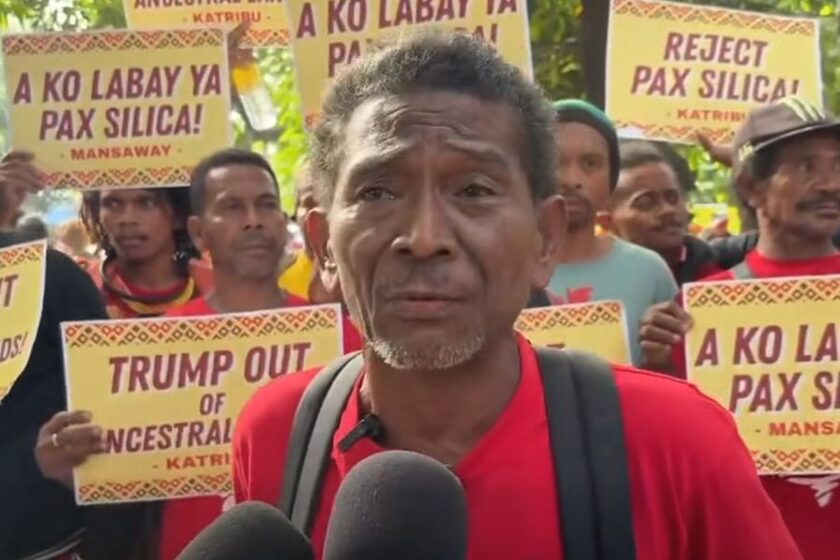
When our trucks finally began to move, we started chanting: “Ang tao, ang bayan, ngayon ay lumalaban!” “Timog Katagalugan, tuloy-tuloy ang laban!” and “Reject, oppose, junk Pax Silica!” The neighborhood responded by cheering, raising their fists, and thanking us for fighting the good fight.
Even before the arrests, they were already showing their support by giving what they can. Some residents climbed a gate to give us packs of water bottles. One resident gave out hats that we could wear.
Another woman went back and forth to a nearby grocery store to buy snacks and water. She was a sari-sari store owner who asked me where we came from. When she found out that we started the Lakbayan in Los Baños, she said that she couldn’t imagine why anybody would march from Laguna to Muntinlupa. But she understood what we were marching for, and for me, that was enough.
A few days after the ASEAN Summit, President Ferdinand Marcos Jr. went on record to say that he was “perplexed” why people were protesting against Pax Silica. He couldn’t imagine the ordinary Filipino being able to dissect the issue and see the initiative for what it really was: a sell-out of Philippine sovereignty for US interests.
In Sucat, coastal communities are threatened by the construction of the Laguna Lakeshore Road Network, a stretch of highway meant to expedite the transportation of raw materials and finished products from Laguna’s industrial enclaves to Manila, and ultimately, to the economic security zone in Capas, Tarlac. The reasons why the people of Sucat oppose Pax Silica are blatantly obvious.
Because we were organized and determined, we already knew going to Camp Bagong Diwa that we were only being detained to ensure that the US-Marcos II regime wouldn’t be embarrassed by popular dissent. Any charges were trumped-up and superficial. The police must have calculated that this would scare us into silence. Police officers aren’t known for being good at math.
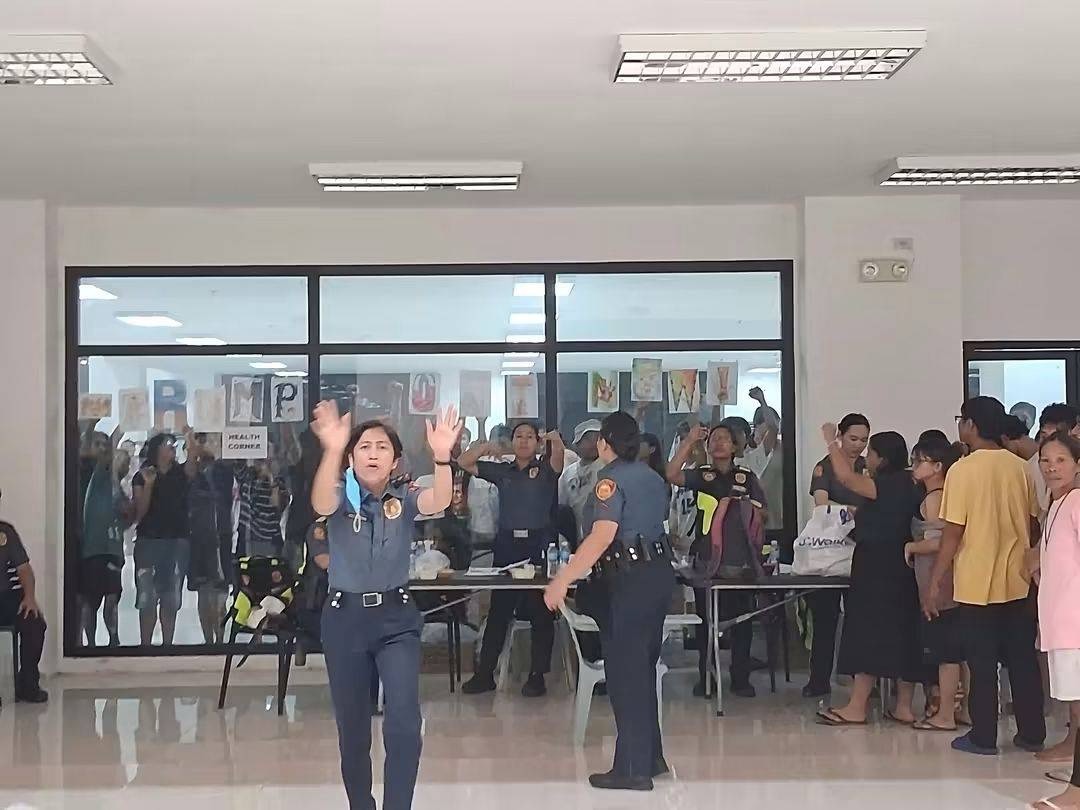
The detention “facility” in Camp Bagong Diwa was a run-down multi-purpose hall. The tiles were broken and there were shards of ceramic on the ground. There was no ventilation to speak of. Only three out of eight air conditioners worked. Water in the bathrooms was intermittent, especially in the afternoons. Toilets were frequently clogged. Some of us fell ill during detention.
The police tried to intimidate us during detention. They tried to separate us and prevent communication. They disoriented us by using random head counts and name checks. At one point, they denied us access to our medicine.
But determination beats intimidation. We quickly asserted our rights during our stay while also organizing ourselves within. Our volunteer medics set up a makeshift sick bay for patients. There was a system for food, water, and sanitation. A negotiating team was tasked with talking to the police. Paralegals went around documenting human rights violations. By the second day, police weren’t allowed inside the detention room unless we allow them. We might have been in their camp, but the detention facility was ours.
Our second best weapon was creativity. Detention, when you strip the inhumanity of it, is incredibly boring. You spend hours in the heat waiting for something, anything, to happen.
Thankfully there was hardly an idle moment during our detention. Cultural workers played music non-stop. Some of us engaged in focused group discussions with peasants and indigenous people. Others wrote poems or drew illustrations.
Outside the detention facility was a lobby where visitors, lawyers, and paralegals were busy. People were called up constantly for visitors or for consultations with lawyers. The rest of us would stand by and watch the “television:” the large glass wall separating us from the lobby.
The “television” also helped us ground ourselves. Seeing a familiar face, like a relative or a comrade, helped buoy our morale. On our brief visits, they’d tell us about what was going on: the large protests in Liwasan, the growing protest camp outside Camp Bagong Diwa, cheap gossip, other news and updates.
Creativity was often mixed with humor. Activists have a very dry sense of humor, bordering on endless sarcasm. Humor was also the best way to make sense of the absurdity of arbitrary detention.
Slowly, the seriousness of detention was replaced by catty remarks. Detention became an “extended staycation.” Head counts and attendance checks lost their bite since the police never managed to keep a consistent count. Small attempts at intimidation were met with sarcasm.
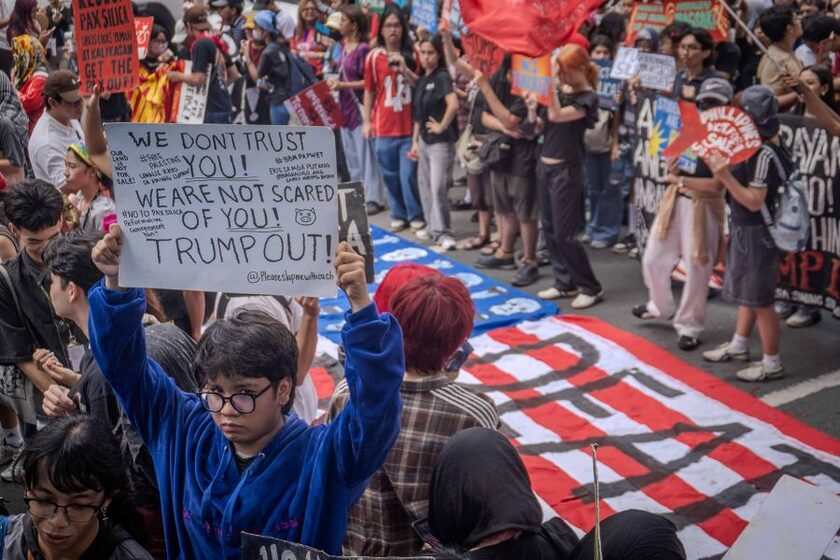
November 17 was the third day of our detention and Donald Trump’s arrival to the Philippines. We had decided that detention did not stop the Lakbayan and so resolved to hold a protest inside. We began our preparations and waited until 6:00 pm.
I was outside when the protest began, talking with friends who came to visit. I told them to stay a while and wait. Just then, some Lakbayanis went up to the “television” and held out pieces of paper that spelled “TRUMP OUT NOW!”
We held a program shortly after. During a cultural performance, one of us took out a flag. Then another one, and another one. Soon, an impromptu flag dance was happening in the middle of a performance of Pandaigdigang Awit. The police were less than amused and took our flags away.
There was a palpable anticipation on November 18. We were already detained for more than 48 hours. The revised penal code was clear: for small crimes like ours, a person cannot be held for more than 18 hours before being sent for inquest. It was also the last day of the ASEAN Summit, and we had been told that the people marching on Mendiola would come to Camp Bagong Diwa after to help clamor for our release.
It was around 6:00 pm when our lawyers informed us that the inquest resolution was out, and that we were being released pending further investigation. The words felt like thunderclap and the entire facility shook with joy. Finally, we all thought, our detention was over.
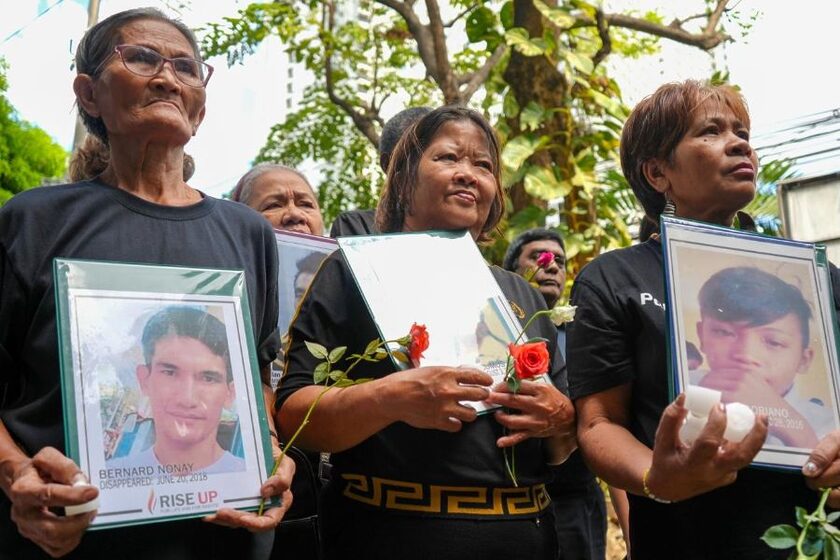
Words cannot fully describe what it felt when we exited the gates of Camp Bagong Diwa, newly released and free. By the most cynical accounts, our four day stay pales in comparison to the years of incarceration faced by political prisoners nationwide. But detention is not a measurement of time, but a symptom of a broken system.
I am reminded of the Lakbayan song. “Lakbayan nati’y hindi papipigil, kahit harangan ng baril,” so goes the line. The four-day detention may have physically stopped the Lakbayanis. But it did not stop the Lakbayan. Delegates from Southern Tagalog still managed to reach Liwasang Bonifacio. We still managed to protest against Pax Silica and Trump’s visit to the Philippines. Our campaigns continue: “Once we are free, we return to our duties,” said Bayan Southern Tagalog spokesperson Lucky Oraller. “We return to them with determination and the courage to continue struggling.”
There is nothing romantic or heroic about detention. To be a detainee is to be stripped of your rights and be subjected to the violence of the state. But detention is not the loss of freedom, so long as we continue to struggle. To struggle, and to continue to persist in that struggle is the most free that one can be. (RVO)
 Save as PDF



0 Comments