
The Philippines is not just being exploited from their resources but it is also exposed to the enemies of the U.S.
Condrad Belasa, 28, witnessed military aircraft of Iran and the United States carrying out bombings while working as a seafarer. Although their route was far from the Strait of Hormuz, he said that he still felt afraid.
He recalled an incident on March 11, a month after the U.S started its attack on Iran, when their ship passed through the Green Zone. They saw military aircraft bombing one another in real time. Their crew could do nothing but hope that no missiles or ammunition would hit their ship.
“While we are sailing, we see in the radar that we are being followed by military aircraft. Some of my colleagues said it was a fighter jet but in my personal opinion, I think it was a drone,” Belasa told Bulatlat in an interview.
In his five years of working as a seafarer, this was the first time he found himself caught in the middle of a war. The experience worried him, especially because he has a two-year old child waiting for him to come home.
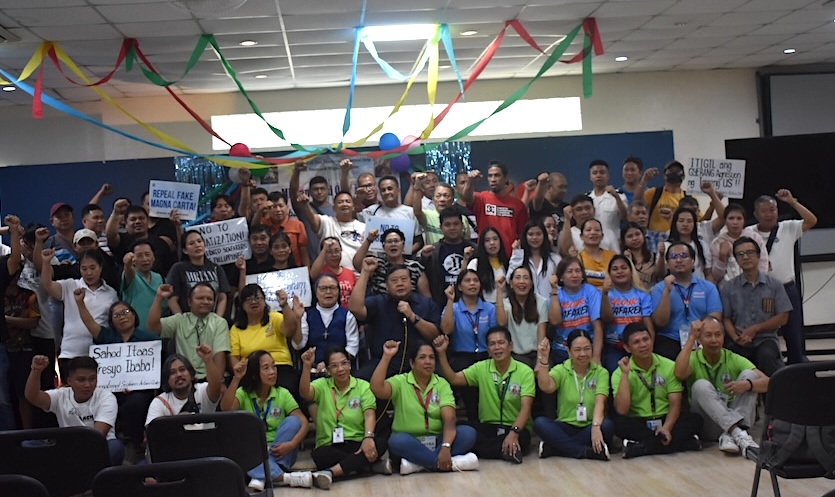
He and other seafarers gathered at Redemptorist Church, Baclaran for National Seafarer Day on September 25 and condemned the government’s lack of action to protect their welfare as well as its strong military ties with the U.S., which they said put them more at risk.
“I told my wife jokingly that she will be instantly rich when something bad happens [to me] because of the benefits that she will receive. But on a serious note, it is difficult for my family if something happens to me because the benefit they will receive is not for a lifetime,” Belasa told Bulatlat in Filipino.
There were reportedly five seafarers who died in the Strait of Hormuz.
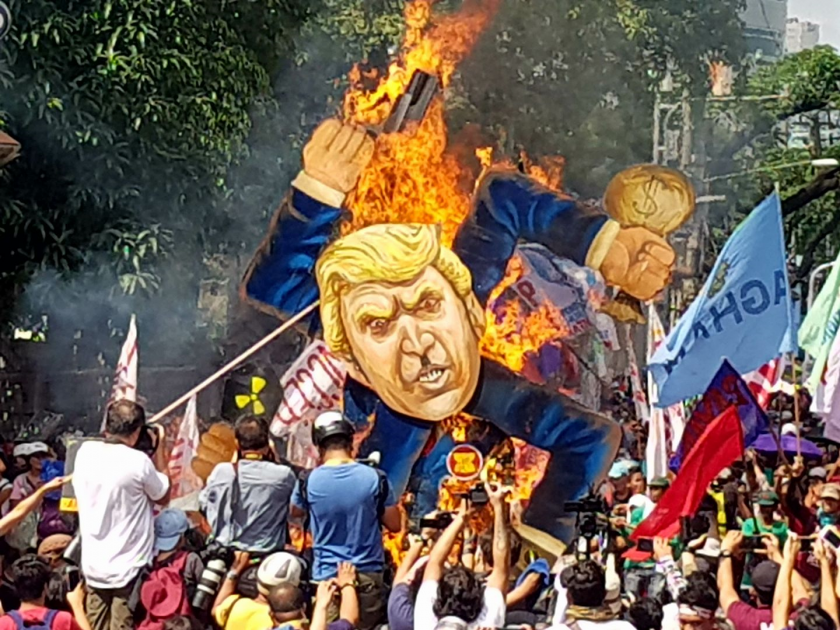
Stop US war
“Whoever the enemy of the U.S will make the Philippines prone by their retaliation. Just when the U.S. bombed schools in Iraq, it retaliated and bombed US military facilities,” said Atty. Edwin Dela Cruz, president of International Seafarers Action Center (ISAC).
In terms of critical minerals, Dela Cruz said that the U.S. resorted to aggression, citing the kidnapping of former Venezuelan President Nicholas Maduro and the attacks on Iran to gain natural resources.
“That is why the Philippines is not just being exploited from their resources but it is also exposed to the enemies of the U.S. even though we don’t see them as the enemy,” Dela Cruz said.
Just like the other Filipino seafarers, Belasa hoped that the U.S should stop its aggression against any country as they only gained a little but lost a lot of innocent people’s lives. “We just want to make a living and to be with our family safe and sound.”
Unprotected
Xavier Bayoneta, chairperson of Concerned Seafarers of the Philippines (CSP), said that there has been a lack of protection for the seafarers whose lives were at risk every time they worked at the sea.
When the Magna Carta of Filipino Seafarers was signed on September 23, labor lawyers and seafarers groups criticized it.
Bayoneta pointed to the requirement to post a financial bond when a seafarer wins a labor dispute if the employer appeals the decision to a higher court. He also cited the bank “escrow” framework which he said prevents seafarers from immediately receiving medical or death benefits.
“If before we’re worried about pirates, now our worries doubled due to advanced military aircraft like drones. Instead of protecting our rights, the DMW [Department of Migrant Workers] is not doing anything or we don’t feel it if they are doing something,” Bayoneta said.
Belasa said that laws are meant to protect its constituents and not to suppress their rights. “There should be a proper consultation with us seafarers before they come up with laws that genuinely protect us instead.”
He also urged his co-seafarers to speak up despite the consequences of being blacklisted. (AMU, DAA)
 Save as PDF


0 Comments