
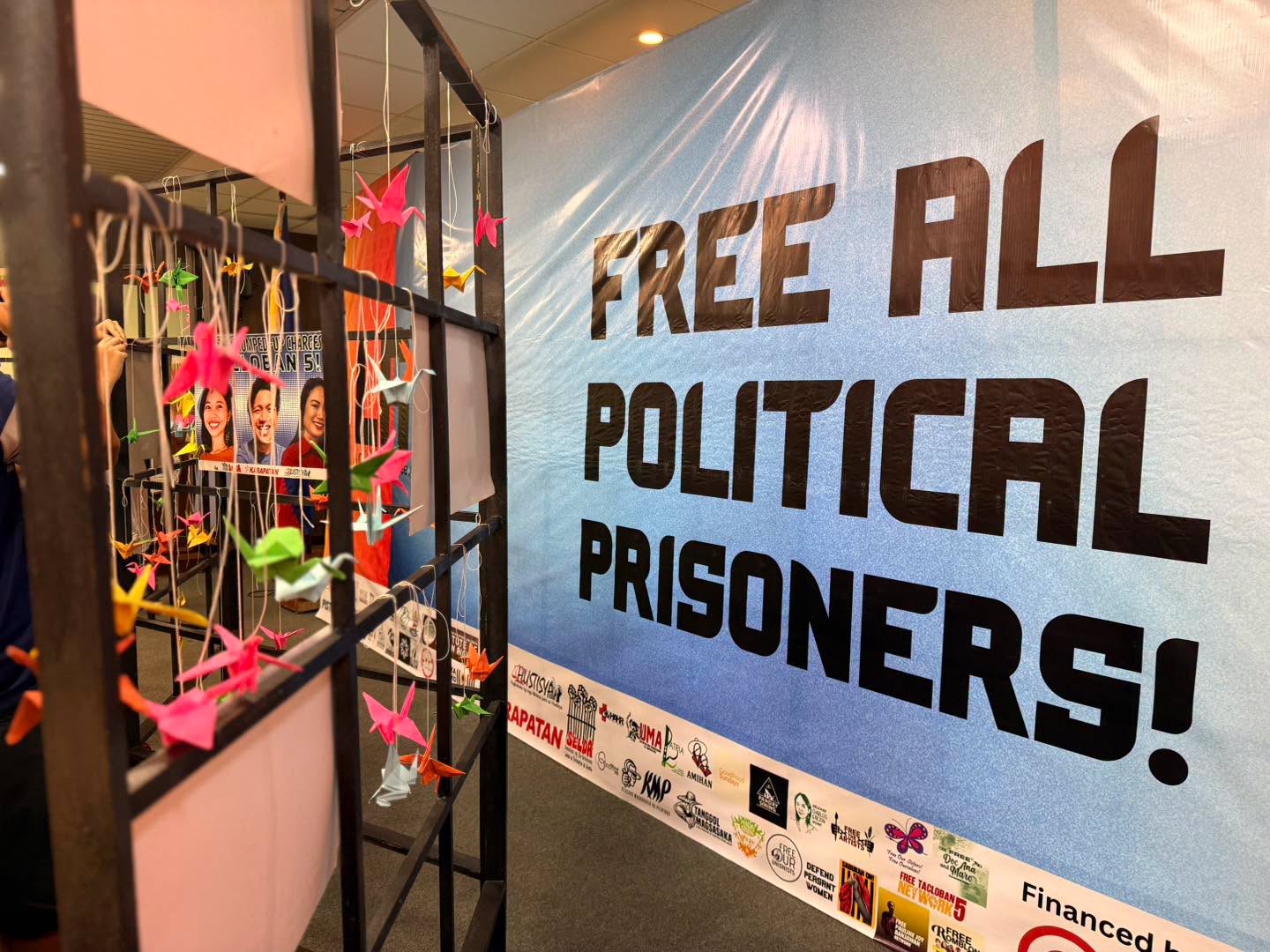
“More than five decades have passed yet the painful legacy of martial law—human rights violations, injustice and lack of accountability—remains deeply entrenched.”
Fifty-four years after the declaration of martial law under the Marcos Sr. dictatorship, political prisoners stressed that abuses continue through corruption and the use of state institutions and laws against dissent.
The warning came from political prisoners detained at the Metro Manila District Jail Annex 4 in Bicutan. They issued a statement through Kapatid ahead of the September 21 commemoration of martial law.
Their statement came days after the Supreme Court overturned former First Lady Imelda Marcos’ 2018 Sandiganbayan conviction on seven counts of graft involving her alleged financial interests in private foundations in Switzerland.
The Supreme Court, in a decision dated June 10 but made public on September 9, acquitted Marcos after finding that prosecutors failed to establish her guilt beyond reasonable doubt. The court cited, among other issues, the failure to properly authenticate key Swiss documents and to establish that the foundations were “businesses” covered by the anti-graft law.
The ruling reversed the Sandiganbayan’s 2018 decision which sentenced Marcos from six to 11 years in prison for each of the seven graft counts. The Supreme Court clarified that its decision concerned her criminal liability and did not determine whether assets involved in separate civil forfeiture cases constituted ill-gotten wealth.
For the political prisoners, the development underscores the continuing struggle over accountability and the historical legacy of martial law. “More than five decades have passed yet the painful legacy of martial law—human rights violations, injustice and lack of accountability—remains deeply entrenched.”
Beyond history books
Some of those detained in Bicutan are veteran activists already involved in political struggles before martial law was declared on September 21, 1972.
They said that commemorating martial law should not be limited to remembering the abuses committed during the dictatorship. It should also involve examining the conditions that allowed authoritarian rule to emerge and the conditions that, they said, continue to enable corruption and impunity.
In their analysis, political and economic power remains concentrated among entrenched interests, allowing state institutions to be used to protect political and economic power. “As long as the three scourges of imperialism, feudalism, and bureaucrat capitalism remain as leeches clinging to the country’s political and social institutions, the danger of the reemergence of an even more ferocious fascist dictatorship and martial law will persist.”
The statement also linked the return of the Marcos family to national political power with the continuing contest over the historical narrative of martial law.
The Marcos Jr. administration has faced criticism from activist and human rights groups over its handling of human rights issues and its approach to historical narratives surrounding the Marcos dictatorship. Meanwhile, Marcos Jr. welcomed the Supreme Court ruling acquitting his mother. He said that he was happy that the decades-old case had been resolved.
Criminalization of dissent
For the political prisoners, repression cannot be understood only through the existence of an openly authoritarian government.
They said that institutions associated with democratic governance, including Congress, courts, laws, prisons, police and the military can also be used to suppress dissent. “We, political prisoners, are victims of political persecution. We are living witnesses to how laws and courts are weaponized and wielded to suppress our rights and imprison us on the basis of fabricated charges.”
They said that political prisoners face multiple criminal cases, violations of civil and political rights, and prolonged detention while awaiting trial. They pointed to the Anti-Terrorism Act of 2020 and the Terrorism Financing Prevention and Suppression Act of 2012 which they said have been used against activists and progressive organizations critical of the government.
The government, however, has claimed that anti-terrorism measures are intended to address threats to national security and terrorism even if the Anti-Terrorism Act was challenged before the Supreme Court over constitutional concerns.
Only a day before the political prisoners issued their statement, Karapatan criticized the Office of the Ombudsman’s dismissal of complaints filed by activists Jonila Castro and Jhed Tamano against government and military officials over their alleged abduction and detention in 2023. The two were later presented publicly as supposed “surrenderers.”
The cases illustrate, for rights groups, how questions of accountability remain unresolved decades after martial law
Political prisoners
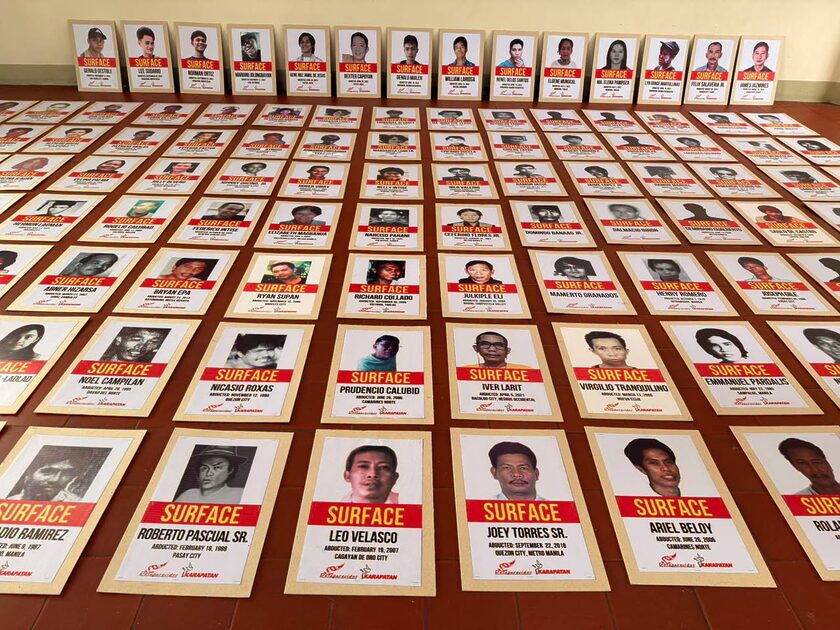
According to Karapatan, there are 553 political prisoners being held nationwide as of September 20, 2026. KAPATID said that the actual number could be higher because undocumented arrests and alleged forced or fabricated surrenders may not be reflected in official counts.
The group pointed to insurgency-affected areas like Negros where there are arrest quotas and military bounty incentives that contribute to the undercounting of political detainees.
The political prisoners said that their own experiences provide a continuing perspective on the consequences of state repression. They stressed that prolonged detention, multiple criminal cases and restrictions on civil and political rights show that the issues associated with martial law did not simply disappear with the fall of Marcos Sr. in 1986.
For the political prisoners, remembering martial law should therefore go beyond commemorative events and historical accounts. “For the people who cherish democracy and freedom, remembering the dark history under the US-Marcos dictatorship and seeking justice for the victims of martial law do not end there.” (RTS, DAA)
 Save as PDF

0 Comments