
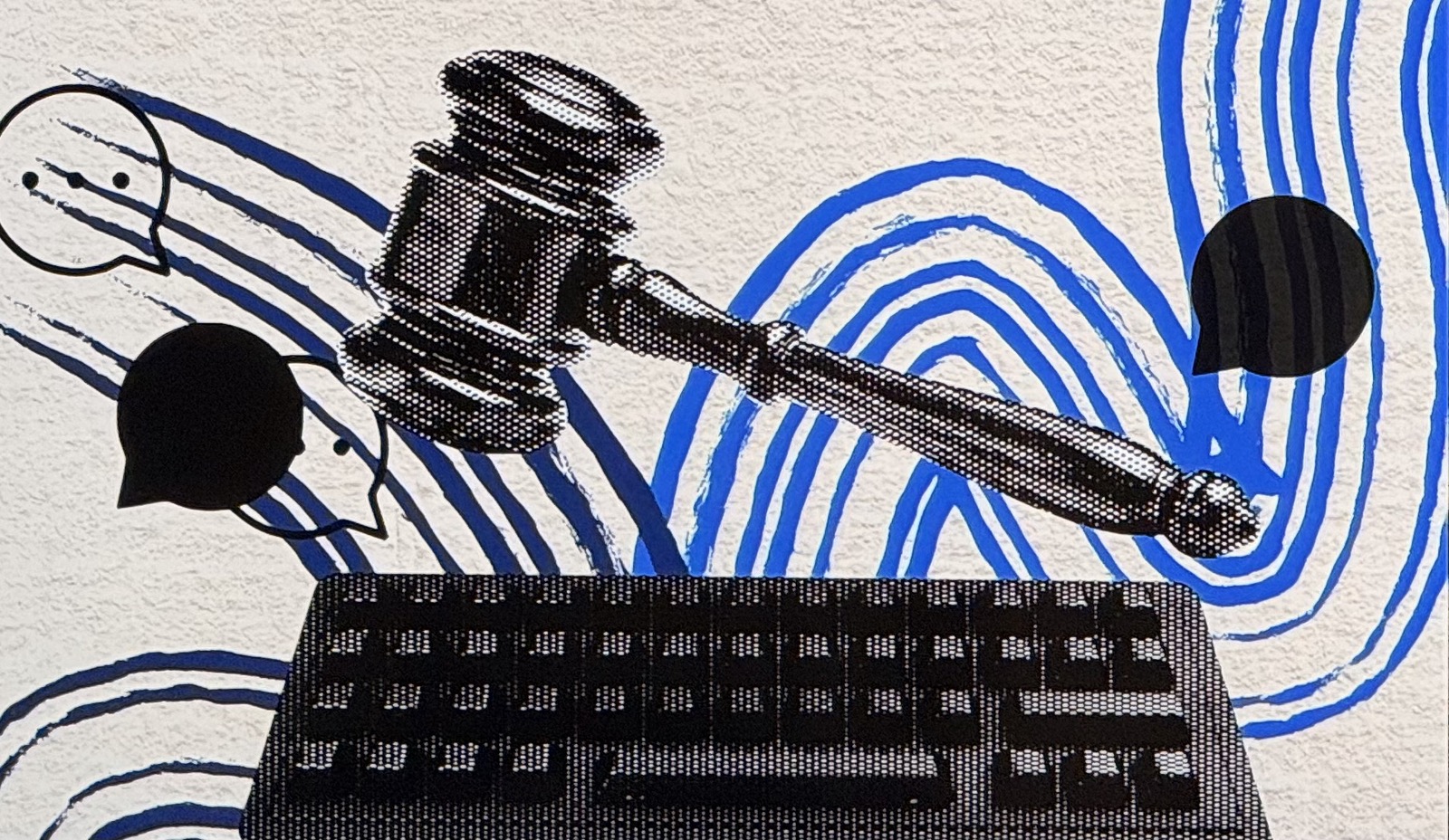
- Context: Libel and cyber libel are criminalized under Article 355 of the Revised Penal Code and the Cybercrime Prevention Act of 2012. Journalists and media freedom advocates are calling for its decriminalization and its classification as a mere civil case, thus removing the penalty of imprisonment.
- Human rights: Civil and political rights – freedom of the press, expression, and opinion
- Rights-holder: Public, journalists, advocates
- Duty-bearer: House of Representatives, Senate, Marcos Jr. administration, public officials
MANILA – Public resources should not be used for the prosecution of libel and cyber libel, according to human rights lawyer Gilbert Andres, executive director of CenterLaw Philippines that handles journalists’ cases.
“Since this is a case of private reputation of an individual or a corporation, they should be the one to shoulder it,” Andres said at a forum organized by the National Union of Journalists of the Philippines (NUJP) and Ateneo de Manila University on August 26.
According to NUJP, there are 15 cases of libel and cyber libel under the Marcos Jr. administration. For the group, it is a “weapon of choice” of people in power against journalists for practicing critical reporting.
“The intent of libel is to harass and exhaust. Exhaust our resources and time that we could have been utilizing to perform our work,” said Ronalyn Olea, NUJP secretary-general. “We see a worsening trend: filing in multiple courts, often ones that are far away.”
The NUJP stressed that the continuous criminalization of libel is a violation of the Philippines’ international human rights obligations as a state party to the International Covenant on Civil and Political Rights (ICCPR).
The United Nations Special Rapporteur Irene Khan also affirmed this position during her 2024 visit in the Philippines and submission of a final report to the United Nations Human Rights Council in June 2025.
“I firmly believe that decriminalizing libel would send a strong signal nationally and internationally of the Philippines’ commitment to accept criticism and debate, even against prominent personalities,” Khan said during her visit.
In October 2011, a year before cyber libel took effect in the Philippines, the United Nations Human Rights Committee’s (UNHRC) declared that the criminal sanction for libel in the Philippines is “excessive” and in violation of the ICCPR.
The Commission on Human Rights (CHR) stated in its 2025 human rights advisory that the threat of criminal prosecution discourages individuals from speaking out on matters of public interest. “This is particularly true in the context of investigative journalism, which frequently involves criticizing high-ranking public officials by closely scrutinizing their official actions.”
The CHR said that the law is not only used to combat defamation but also to intimidate media practitioners, social advocates, human rights defenders, and ordinary citizens. For its part, NUJP stressed that the impacts of libel and cyber libel against journalists are extensive: imprisonment, self-censorship and takedowns, mounting legal fees, chilling effect, and psychological trauma.
“I thought I was already brave enough since my case was dismissed,” Kimberly Quitasol, editor-in-chief of Baguio-based alternative media Northern Dispatch, recalled in a video statement. “But when I was set to cover the arraignment of an indigenous woman leader, also charged with cyber libel by the same general, I could not move forward to enter the courtroom. My body froze.”
She said, “Even if I told myself that I am brave enough to overcome it, there are these kinds of trauma that you would only know later on. If this is the kind of experience that people face, then democracy is threatened. It is not only a press freedom issue, we need public support.”
In April 2022, the La Trinidad Regional Trial Court dismissed the cyber libel charges filed against her due to the prosecution’s failure to establish the offense.
“Our best defense is to uphold ethics, practice self-regulation, and build solidarity. What we need to do is push back,” Olea said, adding that the NUJP formed the Media Legal Defense Network in partnership with lawyers groups to provide pro-bono legal services for journalists facing legal harassment or Strategic Lawsuit Against Public Participation (SLAPP).
Article 19 of the ICCPR states the right to freedom of expression as a cornerstone of democratic societies and essential for the realization of other human rights. It is also enshrined in the 1987 Philippine Constitution, particularly Section 4 of its Bill of Rights.
In the 20th Congress, there are at least five bills in the House of Representatives that call for decriminalization of libel and cyber libel. There are also three bills of the same nature in the Senate. But as of this writing, they remain pending. (DAA)
Disclosure: Ronalyn Olea is the editor-in-chief of Bulatlat.
 Save as PDF


0 Comments