
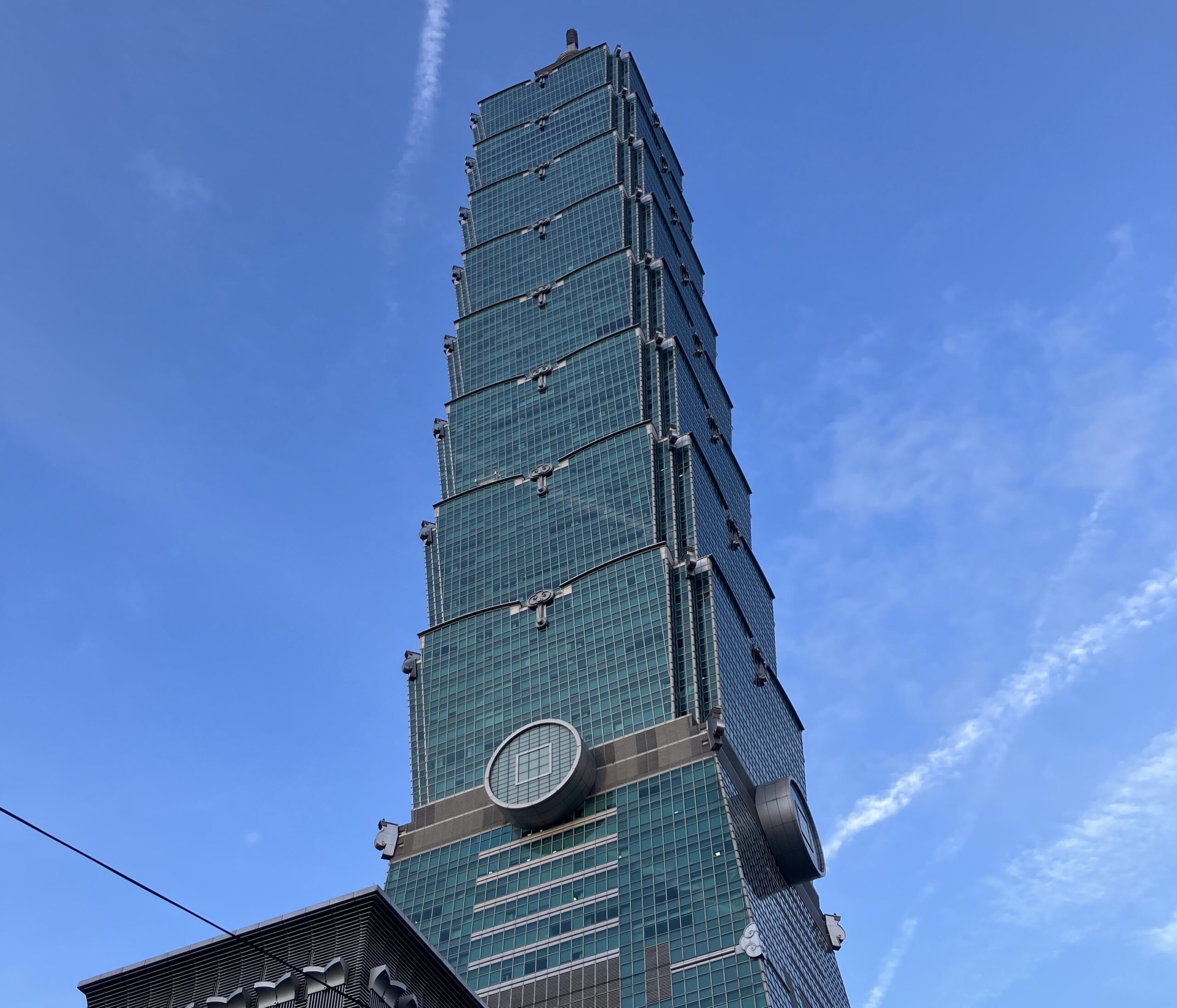
Too often, Taiwan appears in international discourse only as an object of competition between states. Its people become secondary to calculations about military deterrence, economic security, or technological supremacy. Progressive movements, or anyone who cares about human rights and peace, should reject this framework.
By Girard Mariano Lopez
Let’s say the quiet part out loud: Taiwan is one of the reasons why Pax Silica is happening and U.S. military presence in the Philippines is expanding. So why aren’t they in our conversations about these issues?
For months, discussions surrounding the Philippines’ Enhanced Defense Cooperation Agreement (EDCA) and the emerging US-led “Pax Silica” semiconductor alliance have been framed by mainstream media and progressive movements alike through an emerging yet commonly-used lens: inter-imperialist rivalry between the United States and China.
The narrative is straightforward. Washington seeks to contain Beijing. Beijing seeks to challenge American hegemony. Countries across Asia are forced to choose sides. Yet this framing often obscures a more fundamental reality: at the heart of both EDCA and Pax Silica lies Taiwan.
Taiwan is not merely a geopolitical flashpoint. It is one of the most important economic powers in the world that produces more than 60 percent of global semiconductors and roughly 90 percent of the world’s most advanced chips. These chips power everything from smartphones and AI systems to advanced weapons and critical infrastructure.
Without Taiwan’s semiconductor industry, the modern-day worldwide economy as we know it would face severe disruption. The self-governing island has become a critical chokepoint in the global neoliberal order.
This reality explains why Taiwan quietly sits at the center of many security developments across Asia. The expansion of EDCA sites in northern Luzon, including facilities in Cagayan and Isabela facing the Luzon Strait, cannot be separated from discussions of a potential Taiwan contingency. Analysts across the political spectrum have noted that these locations would be strategically important in any cross-strait conflict.
Officially, both Manila and Washington insist that EDCA is intended for “defense cooperation, disaster response, and regional stability.” Philippine officials have repeatedly stated that the agreement is not designed to target any specific country.
Yet geography is difficult to ignore.
Northern Luzon sits only a short distance from Taiwan. Military planners, researchers, and policymakers increasingly acknowledge that any conflict in the Taiwan Strait would inevitably affect the Philippines, whether through refugee flows, disruptions to trade routes, or military operations in nearby waters.
If Taiwan is the unspoken center of EDCA, it is equally central to Pax Silica.
Presented as a cooperative network among U.S. allies to secure semiconductor and artificial intelligence supply chains, Pax Silica aims to reduce strategic vulnerabilities in advanced technology production. Yet one of its most revealing is its implicit recognition that the United States remains deeply dependent on Taiwan’s chip industry.
Washington’s response has not been to strengthen Taiwan’s central role indefinitely. Instead, it has sought to replicate and relocate portions of Taiwan’s semiconductor ecosystem onto American soil.
The Taiwan Semiconductor Manufacturing Company (TSMC) has already begun producing advanced chips in Arizona with substantial support from the U.S. government. American officials have openly described the goal of dramatically expanding domestic production of advanced semiconductors and reducing dependence on overseas manufacturing.
This raises an uncomfortable question for those who portray the U.S.-Taiwan relationship as a partnership grounded in shared democratic values.
If Taiwan is indispensable, why is Washington investing billions to make itself less dependent on Taiwan?
The answer is not difficult to discern. Great powers rarely operate according to sentiment. They operate according to strategic interests.
Pax Silica demonstrates that while Washington continues to rely on Taiwan today, it is simultaneously preparing for a future in which critical segments of the semiconductor supply chain can survive without the island. The message is unmistakably transactional. Taiwan is valued because of its strategic utility. The long-term objective is resilience against the possibility that Taiwan becomes inaccessible due to war, blockade, or political change
But discussions of Taiwan cannot stop at semiconductors, military strategy, or great-power competition.
Taiwan is home to 23 million people, 16 officially recognized Indigenous nations, and more than 160,000 overseas Filipinos. Long before it became a semiconductor powerhouse, the island experienced successive waves of colonial domination under Dutch, Spanish, Qing, Japanese, and Kuomintang rule. Questions of sovereignty, identity, and self-determination have therefore never been abstract concerns. They are deeply embedded in Taiwan’s historical experience.
Too often, Taiwan appears in international discourse only as an object of competition between states. Its people become secondary to calculations about military deterrence, economic security, or technological supremacy. Progressive movements, or anyone who cares about human rights and peace, should reject this framework.
Yet, it has to be noted that the government of Taiwan has not been a passive actor amid rising geopolitical tensions, going leaps and bounds to appease the United States and its allies—including increased military transactions with Washington, providing support to Israel, and shaping its economic and trade policies to favor the U.S. For all its posturing of human rights and democracy, it readily ignores other concerns that do not fit their prerogative—such as the human rights record of its only African ally Eswatini or calls to divest from complicity in the ongoing genocide in Palestine.
The current Lai administration also signed a declaration endorsing Pax Silica despite the environmental repercussions and displacement this would cause elsewhere on top of exploiting cheaper labor in poorer economies.
As such, genuine support for the Taiwanese people’s self-determination cannot come at the cost of others. The militarization of Okinawa, the expansion of military infrastructure in the Philippines, and the intensification of geopolitical tensions across East Asia all carry consequences for local communities who also deserve peace and democratic participation in decisions affecting their futures.
This is why emerging dialogues among progressive activists in Okinawa, Taiwan, and other parts of East Asia are significant, such as through the “East Asia Peace Walk”. These seek to imagine alternatives beyond the binary choices offered by competing nationalisms and rival empires.
Such conversations must also deepen between the Philippines and Taiwan.
The two societies share far more than geographic proximity. Linguistic, archaeological, and genetic research traces Austronesian origins to Taiwan almost 5,000 years ago–linking indigenous Taiwanese peoples with communities across the Philippines and the wider Pacific. These connections offer foundations for solidarity that predate both American military alliances and Chinese territorial claims.
As tensions continue to rise across the region, the greatest danger may not be military conflict alone—it is the fragmentation of international solidarity itself.
Neoliberal and increasingly authoritarian political projects thrive when communities are isolated from one another and encouraged to view their neighbors as threats. Progressive movements must resist this logic. Taiwan should neither be reduced to a strategic asset of the United States nor abandoned to the ambitions of Beijing.
Instead, the challenge is to build a regional politics rooted in peace, self-determination and international solidarity—one capable of recognizing that the futures of Taiwan, the Philippines, and the broader region are already intertwined. (RVO)
 Save as PDF




0 Comments