
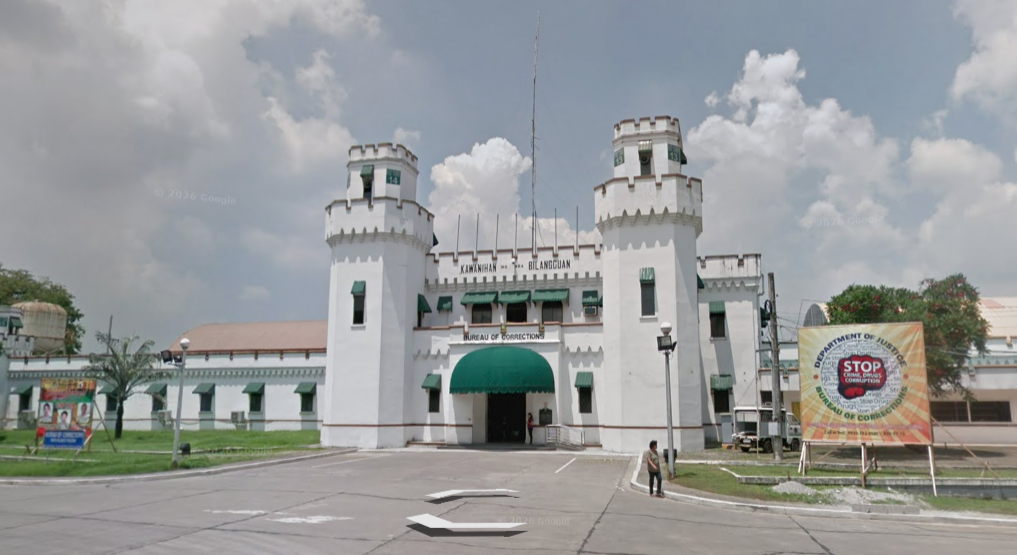
“We mean protecting 366.7 hectares of public land so it can be transformed into a modern, humanized center for custody, legal aid, and reformation.”
By Wendyl Geronimo
Davao Today
Political prisoners’ support group Kapatid urged Congress to investigate plans to commercialize the New Bilibid Prison (NBP) reservation in Muntinlupa City, warning that the proposed closure of the facility could displace not only inmates but also long-time residents living within its grounds.
Kapatid received reports that some residents got three eviction notices and that hearings were underway. The group called on Congress to include the affected communities in its proposed legislative inquiry and to ensure their welfare and protection.
Kapatid also launched its “Protect Bilibid Lands” campaign, calling for the preservation of the entire NBP reservation as a permanent national correctional center and an immediate halt to plans to close the facility by 2028 and convert its grounds into a commercial real estate venture.
The group urged both chambers of Congress to investigate Bureau of Corrections (BuCor) Director General Gregorio Catapang Jr. ‘s reported moves to commercialize 366.7 hectares of public land identified under Proclamation No. 1159. The area is 52.79% larger than the 240-hectare Bonifacio Global City and is projected to generate P1 billion to P2 billion in annual lease revenues.
“When we say ‘Protect Bilibid Lands,’ we do not mean preserving a broken, corrupt prison system. We mean protecting 366.7 hectares of public land so it can be transformed into a modern, humanized center for custody, legal aid, and reformation,” said Fides Lim, Kapatid spokesperson. “Amid widespread corruption scandals and the lack of accountability, a congressional inquiry is urgently needed to compel full transparency since mass transfers are being used as a pretext for decongestion to empty prime public land for commercial profit.”
Prisoners’ access to families, rehabilitation at stake
Kapatid said that retaining NBP as a national correctional center is necessary to keep prisoners near their families and support their rehabilitation.
Citing BuCor data, the group said that 12,878 of the 21,129 persons deprived of liberty (PDLs) at NBP, or nearly 61%, came from the National Capital Region, CALABARZON and Central Luzon.
The NCR accounted for 5,998 prisoners, or 28.39% of the population, followed by CALABARZON with 4,199 or 19.87%, and Central Luzon with 2,681 or 12.69 percent. Including Bicol’s 2,028 prisoners, Kapatid said that 14,906 PDLs, or 70.55% of the total, came from these four contiguous Luzon regions.
“Retaining NBP ensures that 6 out of every 10 inmates remain near their families for regular visitations which are clinically proven to improve mental health and rehabilitation success,” Lim said.
She also cited Rule 59 of the United Nations Standard Minimum Rules for the Treatment of Prisoners, known as the Nelson Mandela Rules which calls for prisoners to be allocated to facilities close to their homes or places of social rehabilitation.
Kapatid warned that transferring prisoners to remote penal colonies would increase travel expenses for low-income families and weaken the family support networks needed during rehabilitation.
The group also cautioned that mass transfers could merely shift overcrowding to other facilities. It cited occupancy rates of 541% at Iwahig Prison and Penal Farm, 504% at Leyte Regional Prison, and 399% at San Ramon Prison in Zamboanga City.
KAPATID further cited 6,538 prisoner deaths across BuCor facilities from 2020 to 2025, warning that separating vulnerable prisoners from their families could worsen the prison health crisis.
Beyond prison transfers
The group said that the proposed commercialization must be assessed against Republic Act No. 10575, or the Bureau of Corrections Act of 2013 which establishes BuCor’s responsibilities for the safekeeping and reformation of national prisoners and provides for standard correctional facilities, including hospitals and visiting areas.
Kapatid maintained that decongestion should address systemic problems in the criminal justice system rather than rely on the transfer of prisoners to distant penal colonies.
“Real decongestion requires judicial efficiency and structural reforms, including clearing administrative backlogs that force prisoners who have fully served their sentences to resort to costly habeas corpus petitions for release; releasing elderly and very ill prisoners on humanitarian grounds; and ending the drug war that fuels extreme prison overcrowding,” Lim said.
The group’s campaign builds on a petition submitted to the Department of Justice on July 24 signed by 45 political prisoners at NBP, including 12 senior citizens and 18 people with medical conditions.
The petition opposed forced mass transfers to distant penal colonies and called for human rights safeguards, including prior formal notice and written consent from PDLs.
Kapatid said that preserving the NBP reservation does not mean maintaining the existing prison system unchanged, but transforming the public land into a modern correctional facility that upholds human dignity, access to legal assistance and rehabilitation.
The group called on Congress to investigate the proposed land conversion, ensure transparency in decisions involving public property, and protect both prisoners and long-time residents who could be affected by the planned closure and commercialization of the reservation. (DAA)
 Save as PDF








0 Comments